Finding rot at the base of your exterior door is a frustrating discovery. It is one of the most common residential water-damage issues, occurring because the entry system’s “splash-zone”—comprising the threshold, the vertical jamb legs, and the underlying subfloor—is constantly bombarded by moisture. Unsealed wood end-grain at the bottom of a door jamb acts like a straw, absorbing up to 250% more moisture by volume than flat-sawn wood. When you see soft wood at the sill, it is critical to treat the system rather than applying a cosmetic patch.
Blog Post
Published: Oct 8, 2026
The Entryway Rot Triage (The Decision Tree)
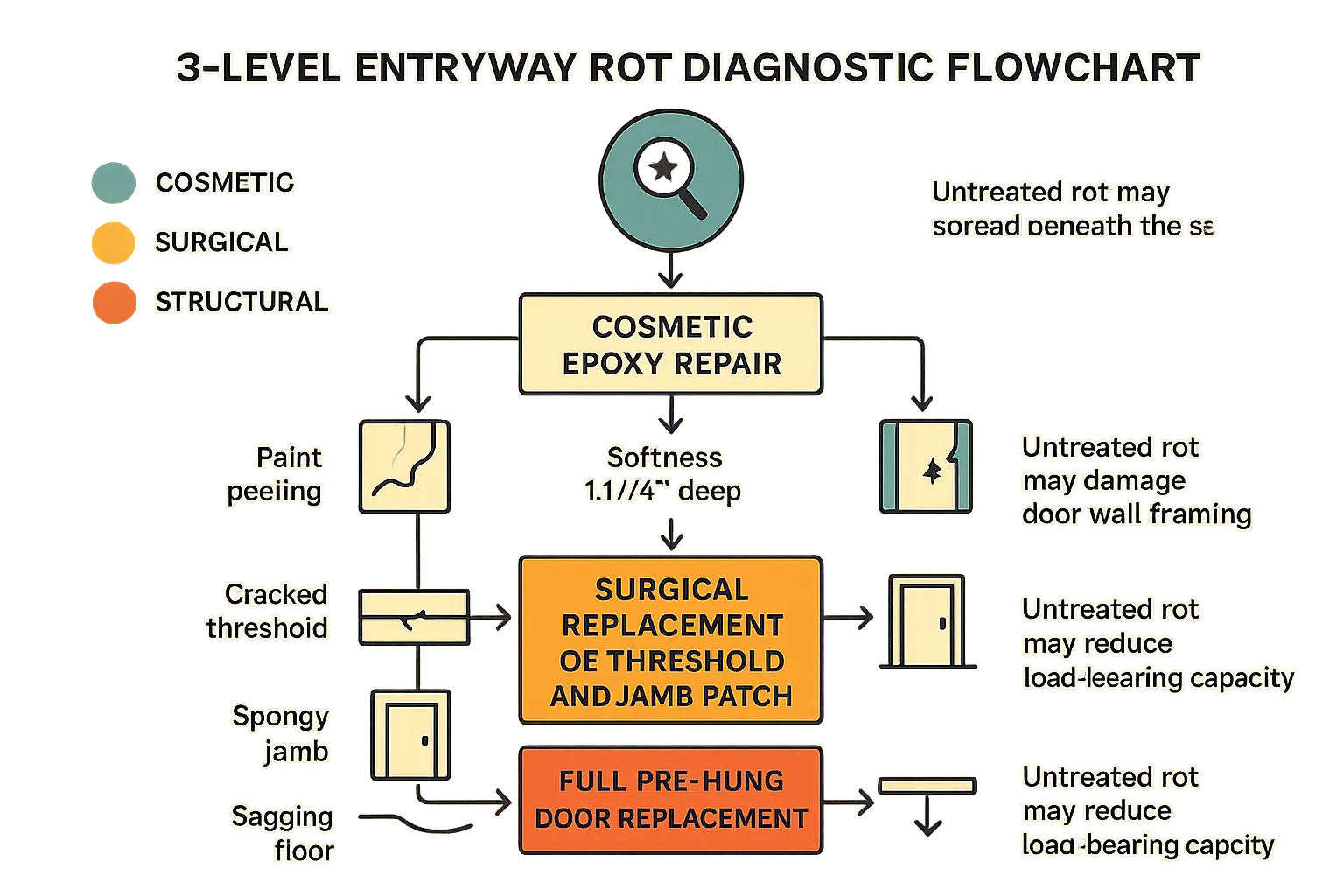
Before purchasing tools or materials, you must diagnose the severity of the decay to determine if this is a minor fix, a targeted surgical replacement, or a sign that your door needs replacement.
- Level 1 (Cosmetic): Paint peeling and surface softness less than 1/4-inch deep. This can be resolved with a high-quality two-part polyester wood filler or epoxy.
- Level 2 (Surgical Replacement): The threshold is cracked or soft, or the bottom of the jamb is spongy, but the door operates smoothly. A physical threshold replacement and jamb patch are required.
- Level 3 (Structural Tear-Out): The door frame is crooked, the subfloor beneath the threshold sags, or there is active insect damage. This requires professional framing work or complete replacement.
While a surgical DIY threshold replacement costs between $70 and $150 in materials, a professional repair of an exterior frame and threshold ranges between $350 and $850. If structural subfloors are damaged, professional costs can reach $1,500 to $3,000+.
Material Selection Matrix (Evaluating the Alternatives)
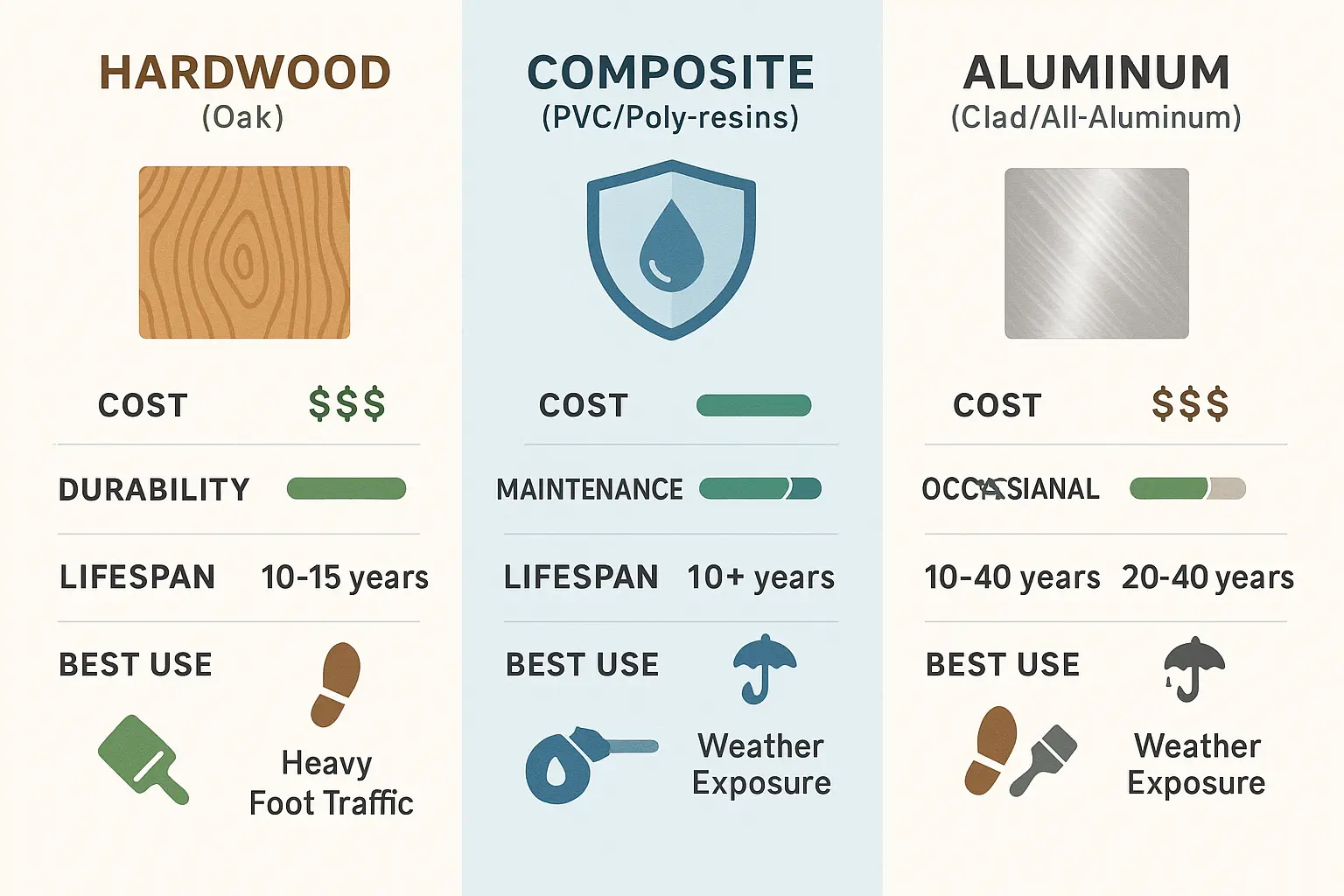
Choosing the right sill material dictates how many years your entryway will resist weather. While traditional hardwoods look beautiful, modern composites offer unrivaled longevity. When reviewing types of door materials, consider these three primary options:
- Hardwood (Oak): High structural strength and traditional aesthetics. However, it requires bi-annual sealing to protect against water pooling.
- Composite (PVC/Poly-resins): 100% rot-proof, highly stable, and paints easily. It is the absolute best choice for active splash zones.
- Aluminum Clad: Extremely durable with a low profile. Quality options feature a built-in thermal break to prevent cold transfer and interior condensation.
Phase-by-Phase Replacement Blueprint
Before starting, ensure you have an oscillating multi-tool, reciprocating saw, flat pry bar, wood chisel, butyl flashing tape, a rigid sloped sill pan (like SureSill), low-expansion polyurethane foam, and hybrid polymer sealant. Taking the time to properly seal and repair front door hardware during this process ensures an airtight fit.
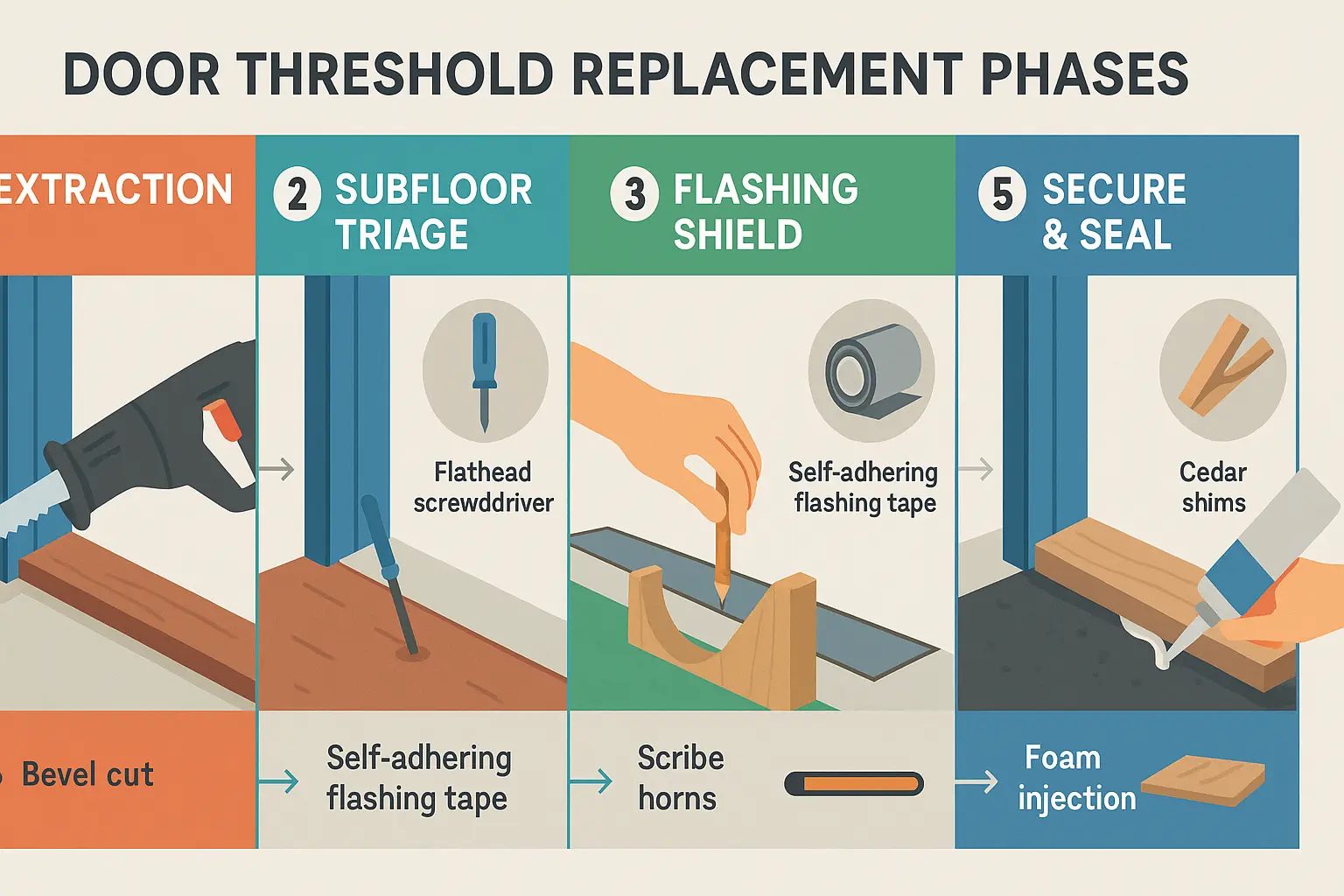
Surgical Extraction
Cut two angled bevel cuts through the center of the old rotted threshold using a reciprocating saw. Slide the center section out. To remove the remaining horns without damaging the frame, slide an oscillating tool with a metal-cutting blade under the vertical jamb legs to cut any hidden nails cleanly.
Subfloor Triage and Flashing Shield
Inspect the exposed subfloor. If you find minor softness, dig out the soft wood and treat the remaining structural framing with a concentrated borate solution to kill dormant mold spores. Install a rigid, sloped PVC sill pan over the subfloor. Lay self-adhering butyl flashing tape over the pan, rolling a 1/2-inch lip on the interior side to create a perfect moisture dam.
Notching and Fitting the New Sill
Measure from jamb-to-jamb and casing-to-casing. Mark and cut the new threshold “horns” so they slide perfectly around the exterior casing. Test-fit the threshold, ensuring it sits level by using pairs of cedar shims underneath if necessary.
The No-Fastener Sealing Protocol
Never drive screws straight down through the top of a wood threshold, as this creates a direct pathway for water. Instead, apply generous beads of hybrid polymer sealant underneath, slide the threshold into place against the door stops, and inject low-expansion polyurethane foam into the gaps underneath. The foam acts as a structural adhesive, insulation barrier, and mechanical lock.
If the bottom of the frame is rotting, consider installing a composite jamb that won’t rot. Seal all edges with hybrid polymer sealant to finalize your exterior door guide installation standards.
Frequently Asked Questions
How much does it cost to replace a door jamb?
Depending on the severity of the damage, the average professional how much does it cost to replace a door jamb and threshold ranges between $350 and $850. If structural framing or subfloors are compromised, repairs can increase to $1,500 or more.
When is a full entry door replacement necessary?
A full entry door needs replacement when the rot has spread deep into the structural stud framing, the door slab itself is warped and drafty, or the entryway has settled out of square, making simple component replacement impossible.
How do I prevent water from rotting my new entryway?
Ensure your threshold has a proper slope away from the home and install a high-quality storm door replacement to shield the entryway from direct rain. Regularly inspect caulking joints and apply a hybrid polymer sealant at the first sign of cracking. If you need local expertise, search for a1 doors near me to find a licensed technician who can execute a permanent solution.