(855) 676-0881

Complete Guide to Residential Back Door Replacement and Installation


Published: Sep 14, 2026

Evaluating a residential back door replacement often presents unexpected complexities. Beyond aesthetics, homeowners must balance energy efficiency, home security, and regional weather resilience. For over 15 years, A1 Doors Services has helped Connecticut homeowners navigate these choices. Choosing a back door is more than choosing a style; it requires understanding how materials and installation techniques affect your home’s security and thermal envelope. Properly timed door maintenance for weather control can prevent early failures, but when a door reaches the end of its functional life, a professional replacement is the only way to restore performance.
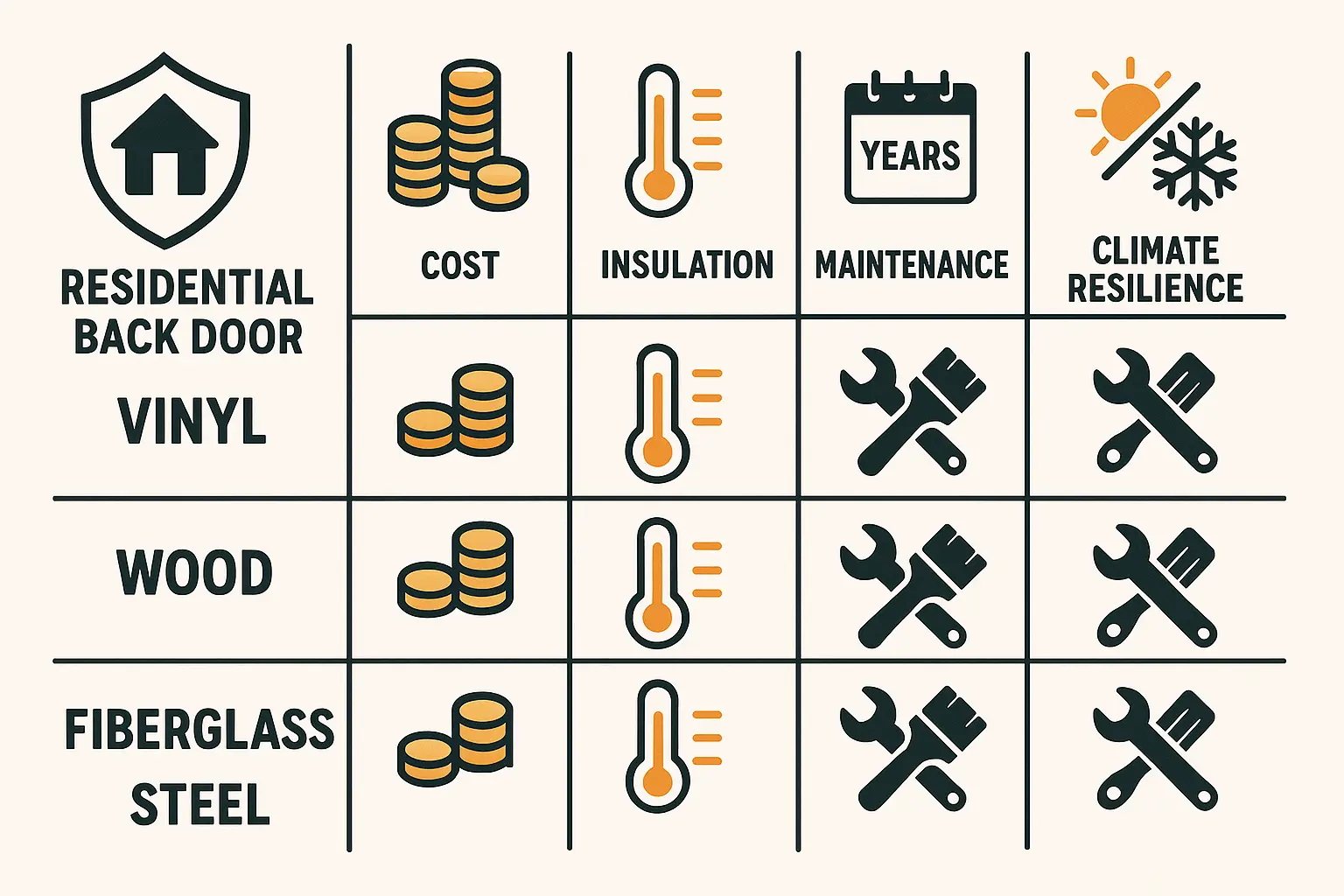
This infographic clarifies the key differences between common back door materials, helping homeowners quickly grasp cost and performance trade-offs for their home installation decisions.

Professional Installation vs. DIY: Protecting Your Warranty


Tempted to install a back door yourself? Consider the warranty risks. Major manufacturers (such as Pella, Andersen, and Therma-Tru) explicitly state that improper installation voids the product warranty. A minor plumbing error or failing to install proper sub-sill flashing can cause quiet, structural water damage behind your drywall.

Consulting a licensed technician helps you assess whether your current door needs replacement or if a professional repair can restore its structural integrity.

Material Performance: Choosing Vinyl, Wood, Fiberglass, or Steel


The material you select directly impacts your door’s lifespan, thermal performance, and maintenance requirements:

  • Vinyl: Features a 20-year average lifespan. It is budget-friendly and virtually maintenance-free, but can contract and expand significantly during extreme temperature swings.
  • Wood: Offers unmatched natural aesthetics and can last 30 to 40 years, but requires regular painting or staining to prevent moisture absorption and warping.
  • Fiberglass: The premium standard. Highly resistant to dents, mimics the texture of wood, and boasts a 30 to 40-year lifespan without warping or thermal bowing.
  • Steel: Provides maximum structural security. Often utilized for utility back doors, high-quality steel entry doors offer excellent energy performance when built with a thermal break.

In Connecticut, look for doors with high Design Pressure (DP) and Performance Grade (PG) ratings to handle seasonal coastal winds, alongside a low u-factor to ensure optimal insulation.

Securing Your Back Entrance Against Forced Entry


Back doors are primary targets for intruders due to their secluded locations. Sliding glass patio doors are particularly vulnerable because factory latch locks can easily be bypassed, and large glass panes can be shattered.

To secure this opening, consider upgrading to multi-point locking systems, which secure the door at three distinct points along the frame. Affordable secondary safety additions include loop locks (around $11) installed at the top of the frame and floor-mounted barricades (around $49) that prevent the door from being forced off its tracks. Upgrading your back security can also involve a sturdy storm door replacement to add a secondary physical barrier. Note: avoid DIY drilling near the glass borders of your back doors to install aftermarket locks; doing so risks shattering the tempered glass.

Troubleshooting the Double-Swinging French Door Astragal


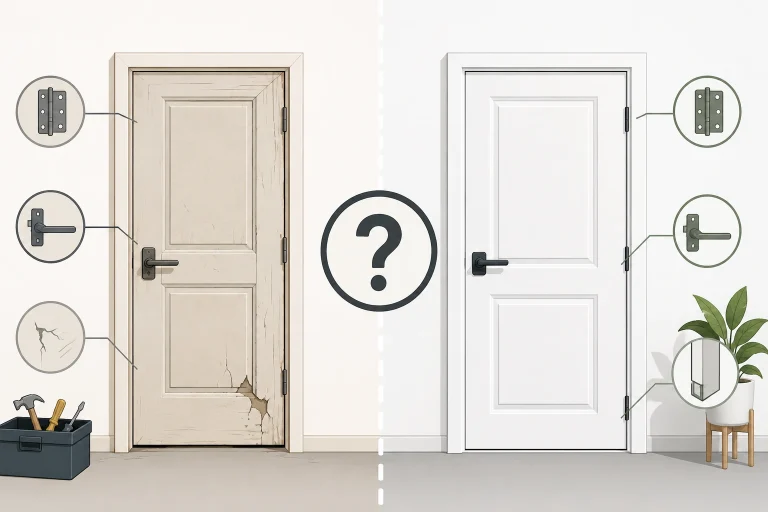
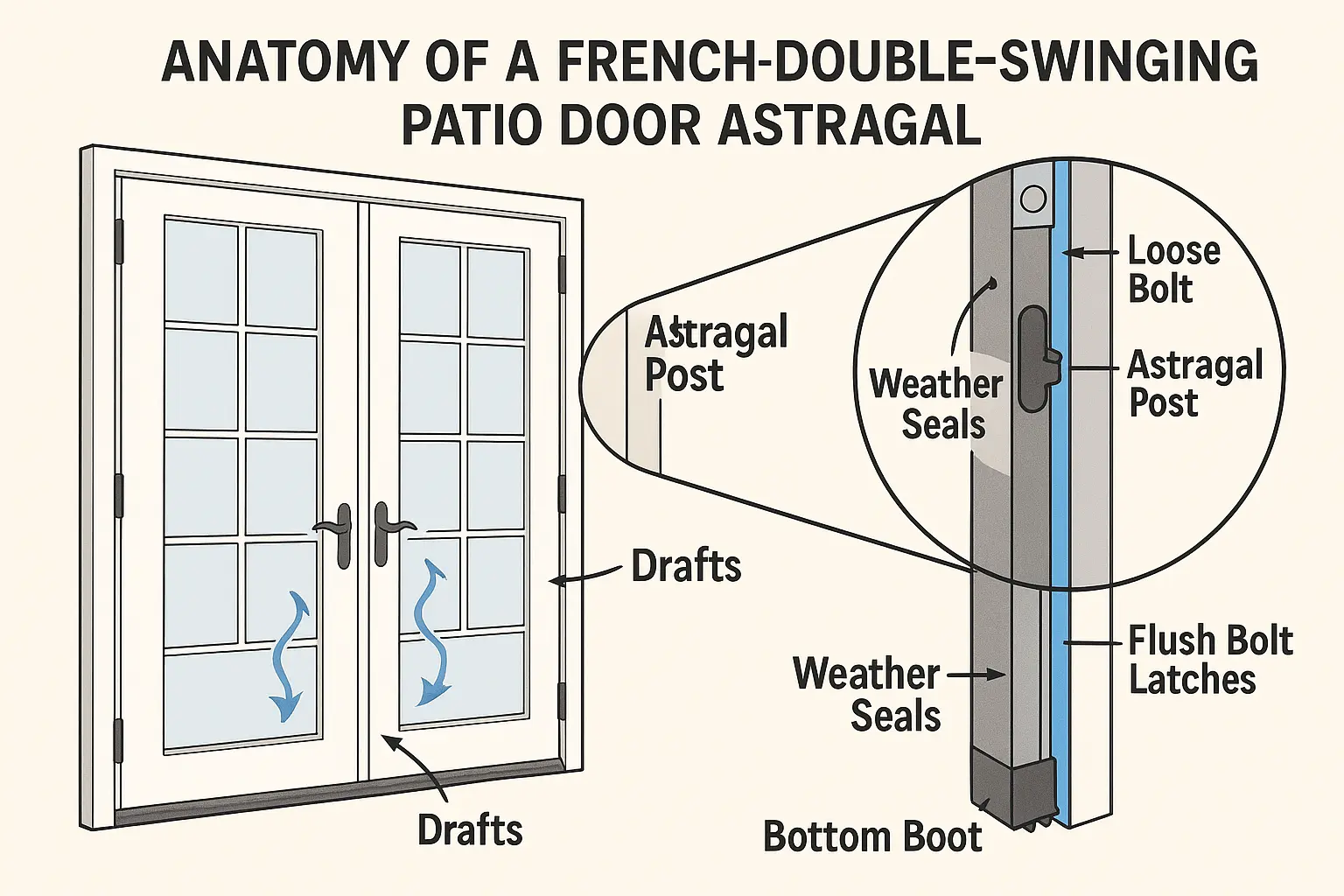
For homeowners with double-swinging French doors, the most critical structural component is the astragal—the vertical post attached to the inactive door leaf that seals the gap when both doors are closed. Over 90% of swinging door drafts and locking failures stem from a misaligned astragal or a deteriorated bottom sweep boot.

This visual anchor helps homeowners identify the key parts of the French door astragal and recognize failure signs that cause drafts or locking issues.

If you notice drafts, water intrusion, or latch misalignment, inspect the astragal flush bolts and bottom boots. While replacing a worn-out boot costs $15 to $50, persistent binding or structural shifts require a professional french door replacement or deep alignment service to restore the weather barrier.

Frequently Asked Questions


Can you replace the screen on a screen door without replacing the frame?

Yes, if the door frame itself is structurally sound, you can easily replace the screen on a screen door to restore insect protection without purchasing a whole new door assembly.

How do I know if my sliding glass door seal has failed?

Fogging or condensation trapped between the double-pane glass indicates that the insulating argon gas has escaped, neutralizing the door’s energy-efficient thermal properties.

Why is my double back door drafty at the center meeting point?

This is usually caused by a failing astragal boot or deteriorated weatherstripping at the intersection of the two doors, allowing outside air to bypass the central seal.