Door Maintenance for Energy Efficiency and Home Security


Published: Aug 25, 2026

When evaluating how to improve your home’s comfort and security, doors are often overlooked. Many homeowners focus on smart locks or programmable thermostats, ignoring the physical barrier connecting these systems. An underperforming entryway does more than let in a draft—it compromises your physical safety and drains your utility budget.

By viewing door maintenance as a dual-force shield, you can address thermal performance and physical security simultaneously. This guide reveals how proper care transforms your doors from passive barriers into active, energy-saving security assets.
The Physics of a Vulnerable Door


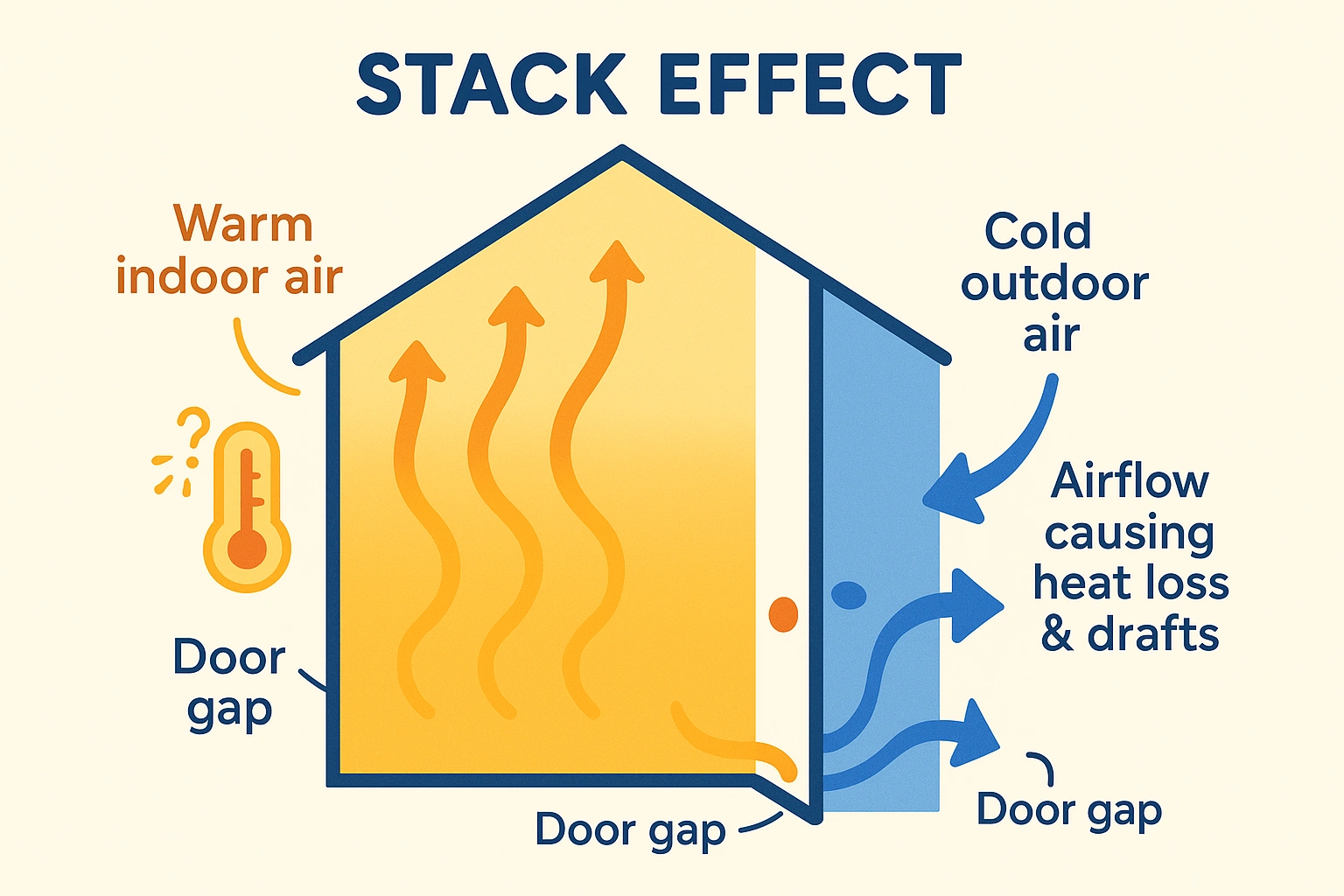
The 'Stack Effect' diagram reveals how a small door gap creates a microclimate allowing cold air inside, leading to heat loss and false thermostat triggers that waste energy.

Your home operates as an interconnected thermal system. According to the U.S. Department of Energy, air leaks around exterior doors can account for up to 20% of a home’s heat loss, with doors representing 11% of overall residential thermal loss. When combined, windows and doors are responsible for 25% to 30% of standard residential heating and cooling energy use.

This loss is driven by the “Stack Effect.” Warm air rises and escapes through upper levels, drawing cold air inside through lower-level gaps.

This escape route does more than waste conditioned air. Gaps wide enough to let air pass create structural leverage points, making doors highly vulnerable to forced entry.

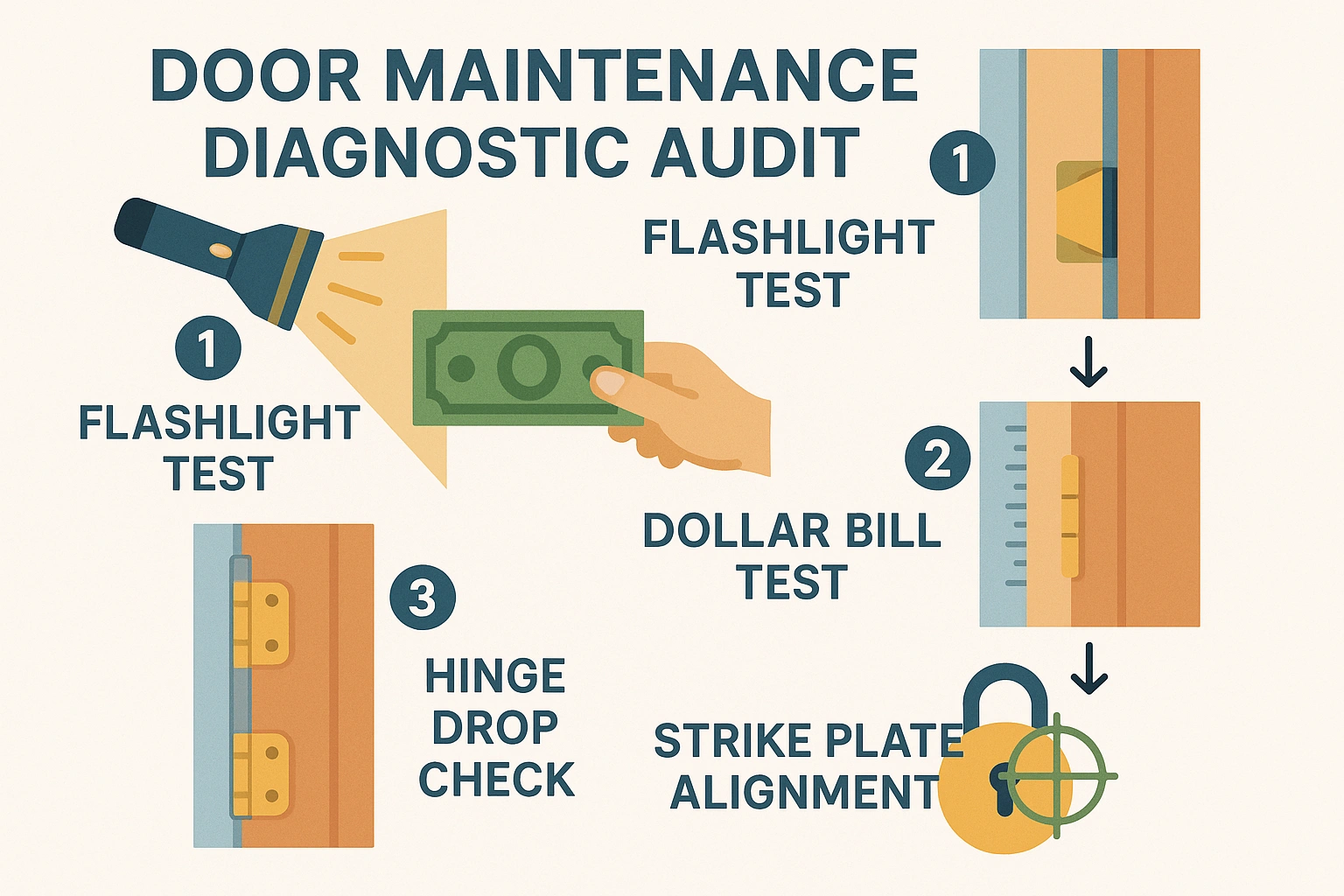
The Multi-Point Diagnostic Audit


A four-step door inspection workflow ensures your door seals tightly and locks securely, protecting your home from energy loss and security risks.

Before choosing materials, you must pinpoint where your entryways are failing. A disciplined, structural audit will reveal hidden weak spots.

If you find structural misalignment, sagging hinges, or cracked frames, a standard DIY patch won’t suffice. You may need a professional door repair service or a complete storm door replacement to restore the opening’s structural integrity.

Sealing Drafty Doors: A Guide to Weatherstripping & Caulking


Sealing a door requires matching the right material to the specific exposure level:

  • Heavy-Duty Neoprene & Silicone: Ideal for exterior thresholds; highly resistant to compression and extreme temperatures.
  • Foam Tape: Best for low-traffic interior frames, though it degrades faster.
  • Vinyl V-Strips: Durable options for wood door jambs.

When gaps exceed 0.5 inches, standard adhesive foam fails under wind pressure. Installing solid neoprene door shoes with integrated drip caps provides a permanent barrier. For specialized issues like entry frame rot or metal door degradation, scheduling an expert aluminum door repair protects your home from moisture and structural failures.

Improving Your Home's Energy Bill Through Door Maintenance


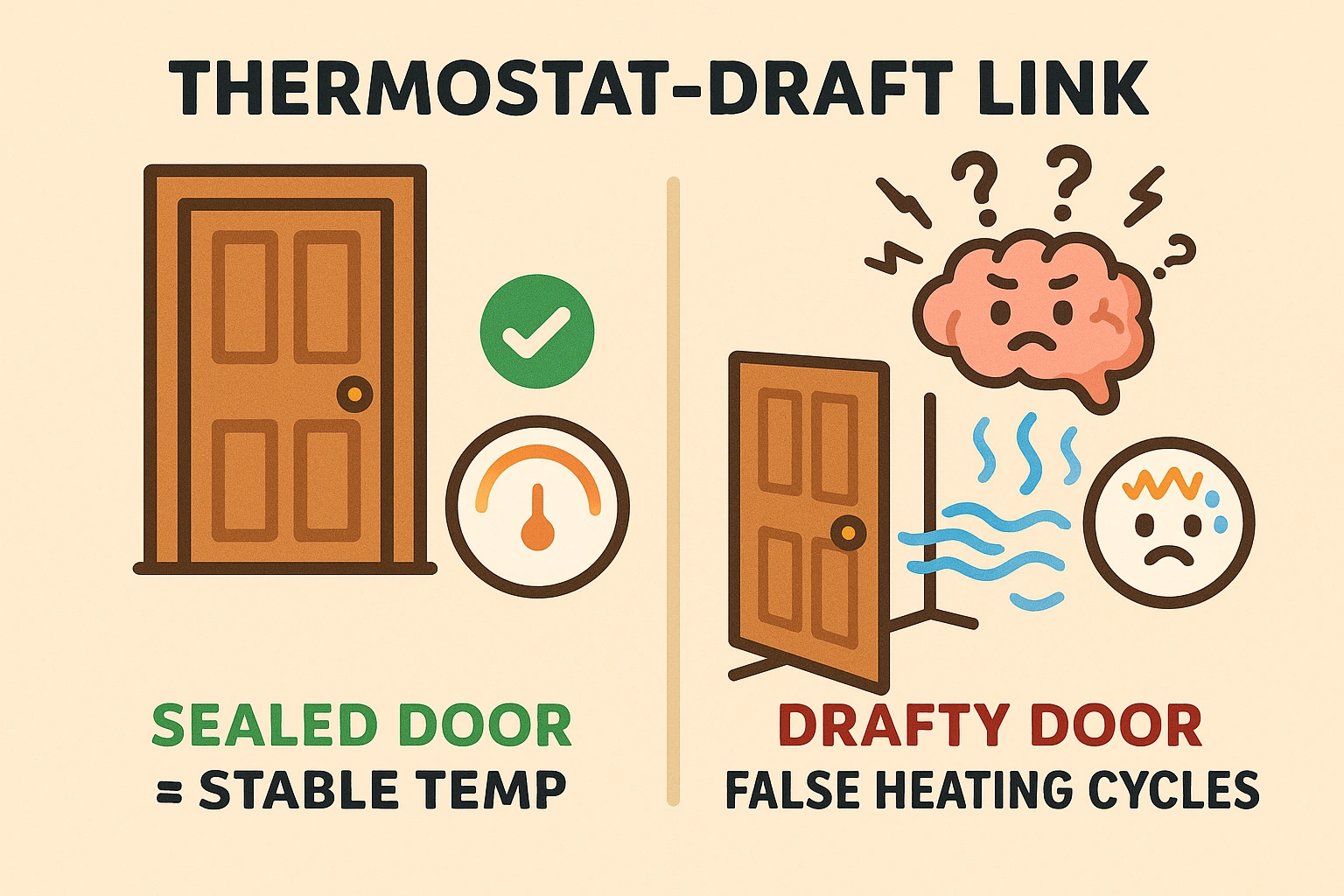
The Thermostat-Draft Link infographic visually anchors how door gaps induce false thermostat triggers, leading to unnecessary heating and higher energy costs.

Thermostat False-Triggering Phenomenon

A drafty front door does more than create localized discomfort. If your door leaks cold air near your main living space, it alters the ambient temperature around your thermostat.

This localized cold zone fools your thermostat into registering a false temperature drop, triggering an unnecessary heating cycle that overheats other areas of the house and drives up your utility bills.

Door Security Enhancement: Beyond Locks with Regular Inspections


Physical security and thermal performance are closely linked. According to the Department of Justice, front and back doors are primary entry points for burglars, with 33% of successful break-ins occurring because of unlocked doors or hardware bypassed due to weak strike plates and loose frames [6]. Furthermore, up to 28% of burglaries occur while residents are inside the home [6].

To secure these points, look beyond the deadbolt lock itself:

  • Hinge & Strike Plate Screws: Replace standard 1-inch screws with heavy-duty 3-inch wood screws. These anchor deep into the structural wall studs, preventing kick-ins.
  • Deadbolt Engagement: Ensure the deadbolt extends fully into the jamb strike plate. A partially extended deadbolt is easily bypassed with simple hand tools.
  • Interior Doors: Transition spaces should not be ignored. Working with professional interior door installers near me ensures secure, solid-core interior barriers that block unauthorized access and contain fire hazards.

Soundproofing & Garage Door Insulating


The Role of Door Maintenance in Soundproofing Spaces

Noise transfers through the same air gaps that leak energy. Installing automatic mortised drop sweeps—which lower mechanically when the door closes—and heavy silicone seals can reduce noise transfer by up to 10 decibels.

Insulating Your Garage Door for Temperature Control & Energy Savings

Roughly 9% of residential break-ins occur through the garage door [5]. A damaged bottom seal allows thieves to slide hooks or camera tools under the door to trigger the emergency release cord.

Upgrading to polyurethane insulation panel inserts improves R-value, while maintaining tight bottom seals prevents unauthorized entry. If your tracks are misaligned or the safety release is vulnerable, contact a reliable garage door service near me to secure and seal the system.

Taking the Next Step


Optimizing your doors secures your home and stabilizes your energy bills. While DIY weatherstripping works for minor gaps, restoring structural integrity, fixing misaligned frames, and reinforcing weak entry points require professional hands.

If you are looking for reliable door repair near me, our team of fully trained and licensed technicians at A1 Doors Services is ready to help. We provide same-day service and affordable solutions tailored to your home’s needs. Reach out today to schedule your comprehensive diagnostic audit.

Frequently Asked Questions


Can I seal a warped door myself?

Minor warping can sometimes be offset with thicker foam or vinyl V-strips. However, significantly warped doors will not seal correctly and compromise security, making replacement necessary.

How often should I inspect my door seals?

We recommend inspecting weatherstripping twice a year, before summer and winter, to ensure your seals are intact before seasonal weather extremes arrive.

Why does my door rattle when closed?

A rattling door indicates a misalignment between the latch and the strike plate, or worn-out weatherstripping. This gap lets in drafts and makes the door easier to bypass or kick in.