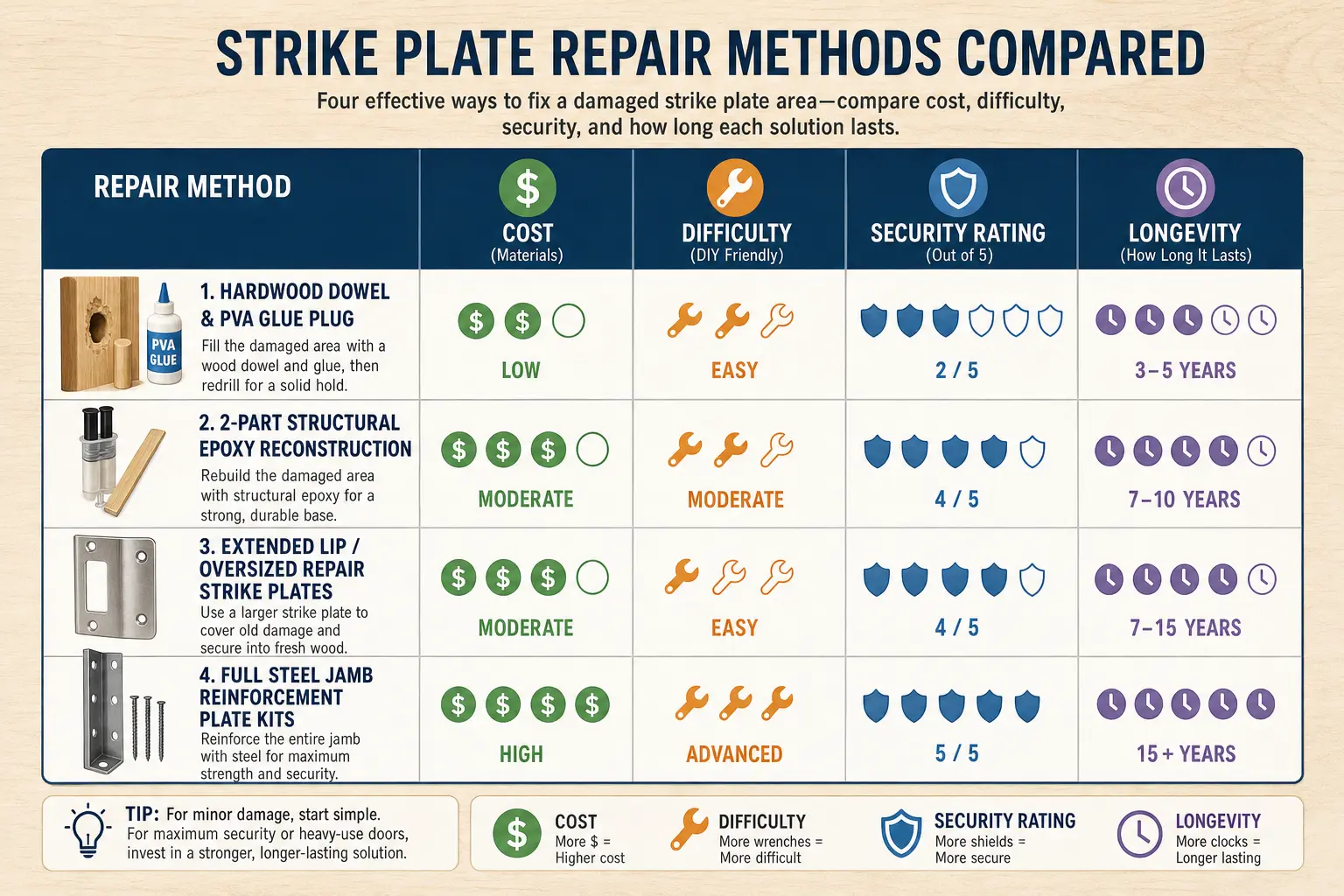
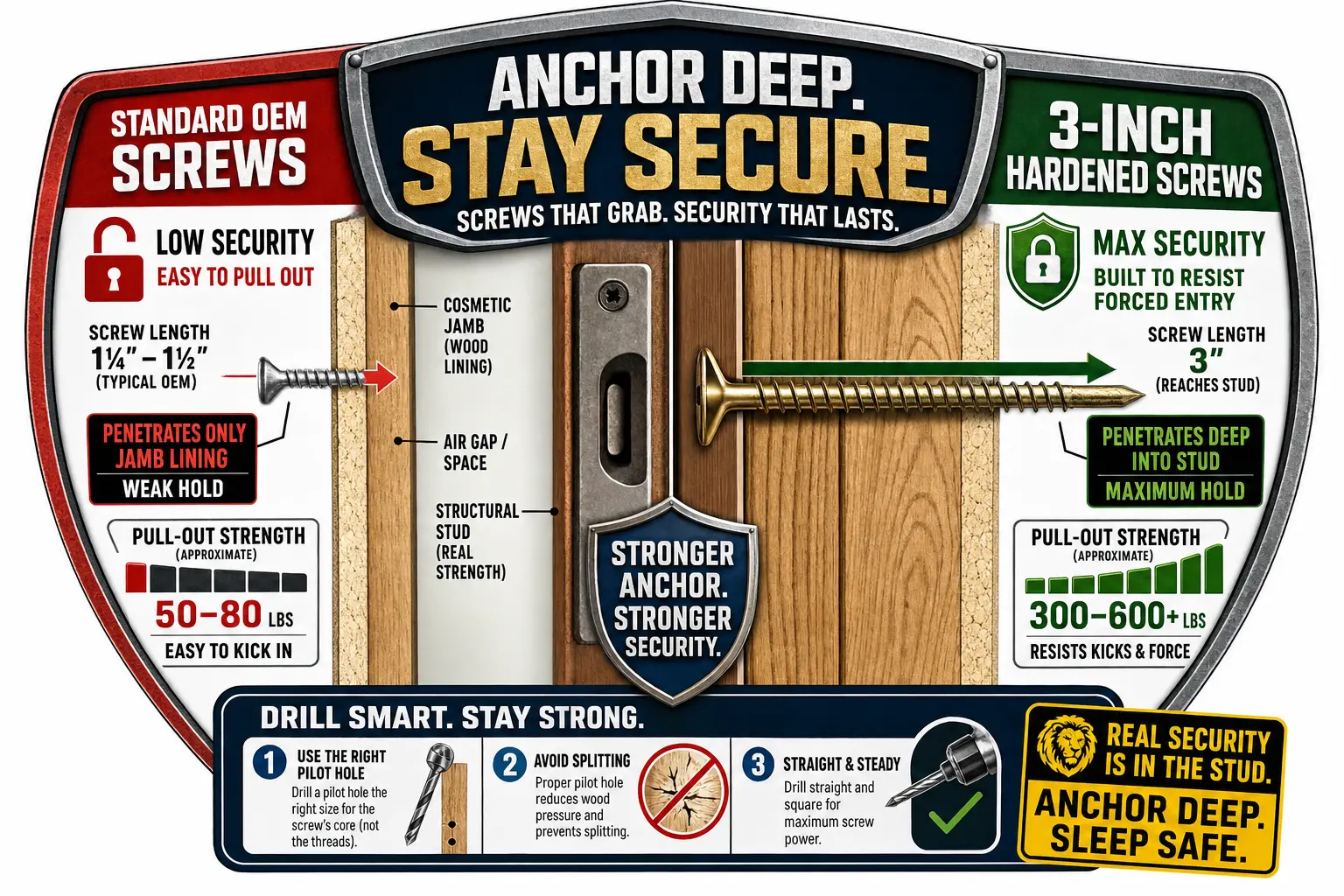
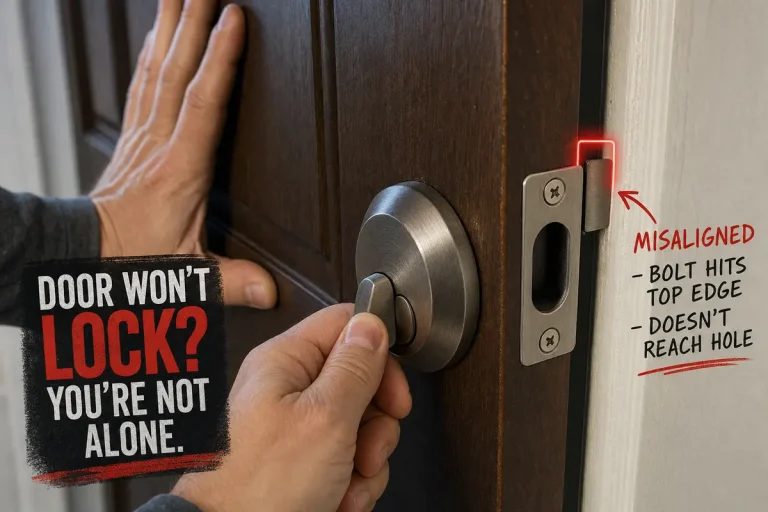
Fixing a failing strike plate and strengthening a door frame comes down to achieving friction-free bolt alignment while anchoring your hardware directly into the structural wall studs, rather than relying on short, superficial jamb screws. Over time, heavy daily use, seasonal wood shifting, and door slamming strip out fastener holes, widen mortise pockets, and crack soft pine jambs. While temporary hacks like stuffing holes with soft toothpicks compress within a year—cutting screw withdrawal strength by up to 65%—a permanent repair restores both smooth latching and forced-entry resistance through four core stages:
-
Diagnose alignment and wood integrity: Test how cleanly the latch and deadbolt enter the strike without pushing or lifting the door, use chalk or lipstick to pinpoint friction spots, and inspect the jamb for stripped holes, rot, or gaps against the wall framing.
-
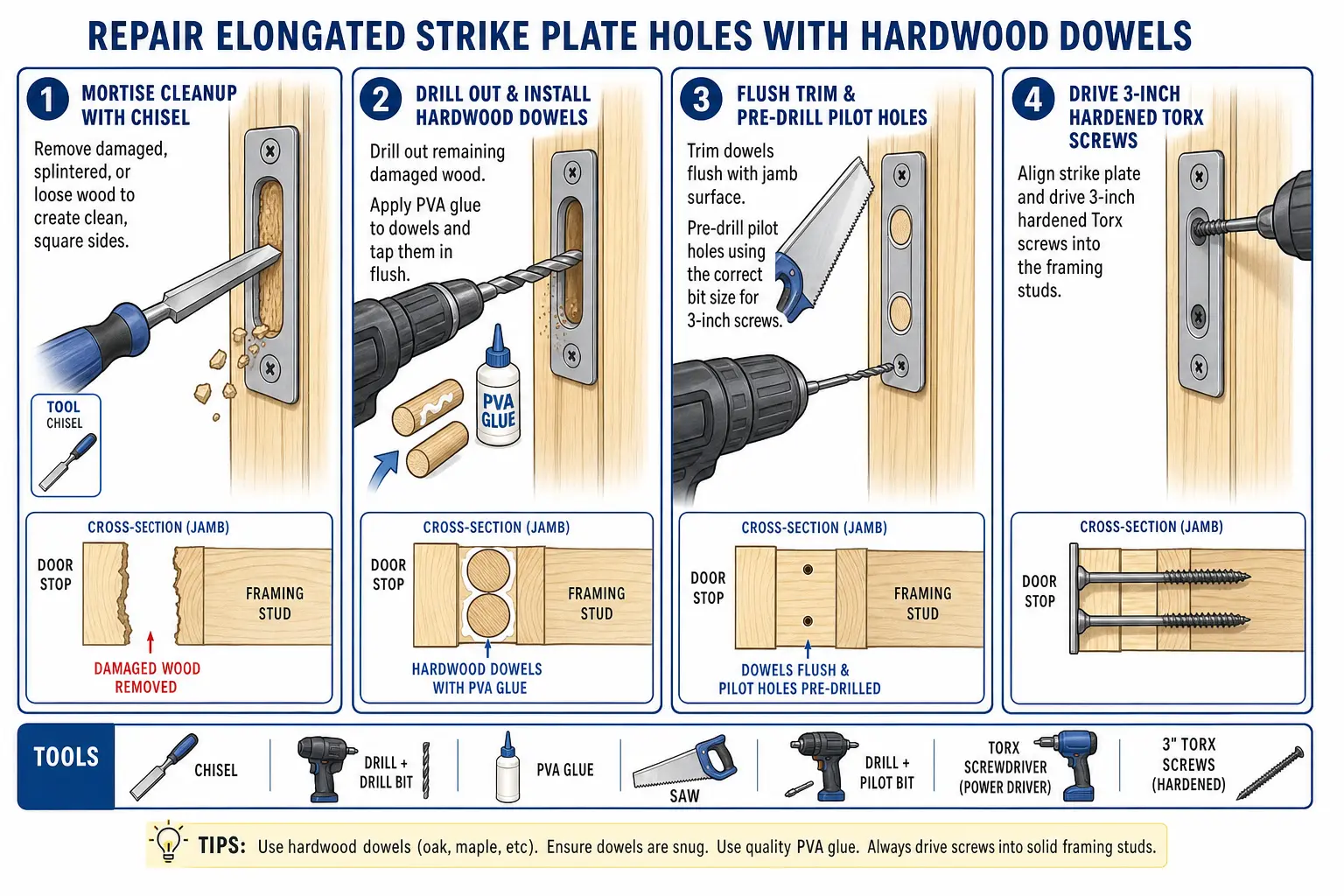
Rebuild damaged wood and true the mortise: Plug stripped screw holes permanently using glued hardwood dowels rather than soft fillers, shim behind the jamb to prevent inward bowing, and chisel or shim the mortise pocket so the plate sits completely flush.
-
Upgrade to structural-grade hardware: Swap out thin factory plates and short screws for heavy-duty box strikes, metal jamb reinforcement kits, and 2.5- to 3-inch fasteners driven straight through pre-drilled pilot holes into the solid framing studs.
-
Verify operation and clearance: Cycle the door and locks repeatedly to confirm zero binding, while ensuring deep fasteners avoid concealed wiring, plumbing, or fire-rating violations.