A door becomes hard to close in a heated house primarily due to indoor air pressure imbalances (the stack effect), cold-stiffened weatherstripping, and seasonal material shifts that prevent the latch from engaging cleanly. When winter heating creates a stark temperature gap between warm interior rooms and freezing outdoor air, rising warm air alters pressure across doorways while low temperatures harden perimeter seals—forcing you to push or slam the door just to make it catch.
Common Causes of Winter Door Resistance:
-
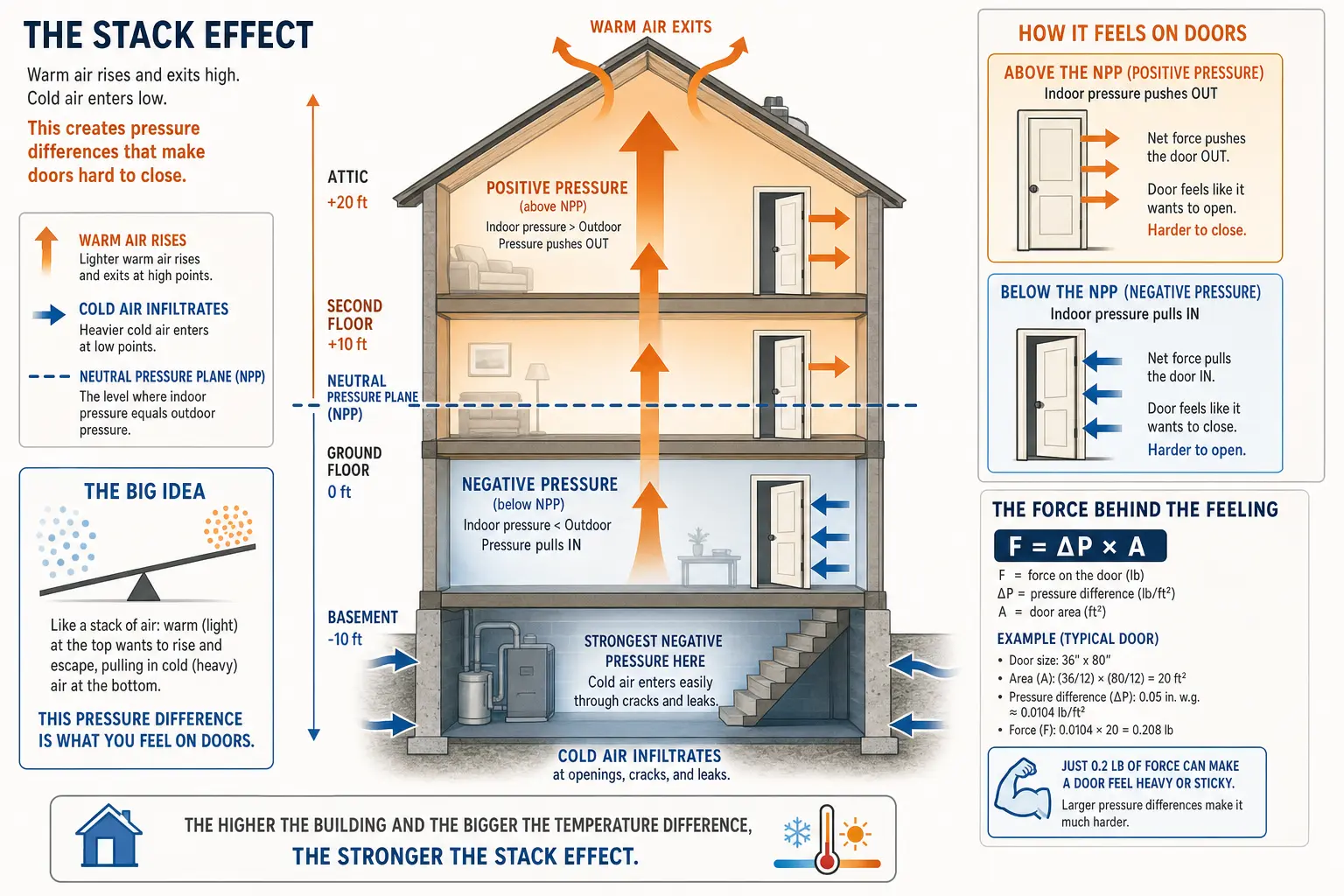
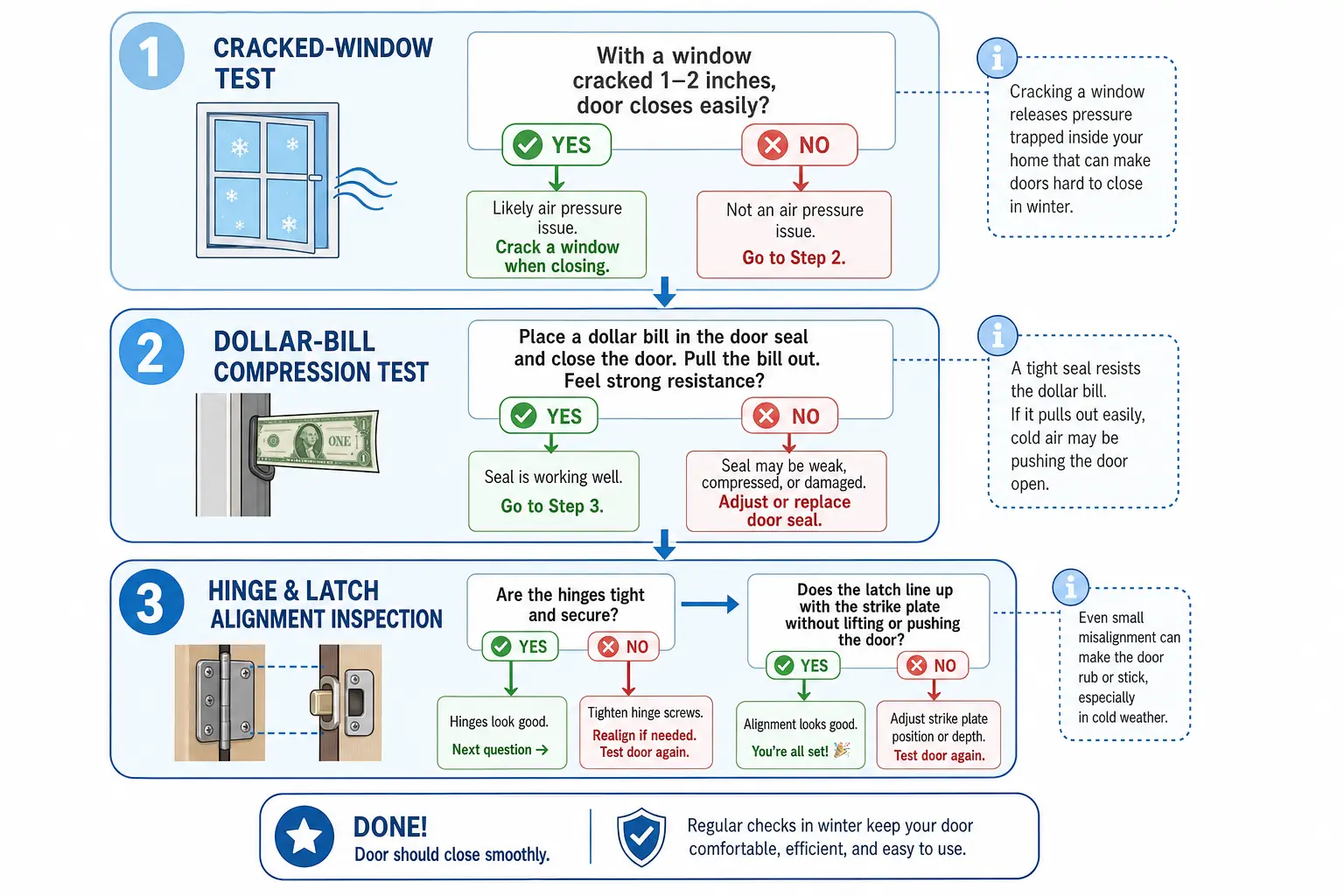
Stack effect & air pressure differentials: Rising warm air inside a heated home creates negative pressure on lower levels and positive pressure upstairs, physically pushing or pulling against the door slab as it swings shut.
-
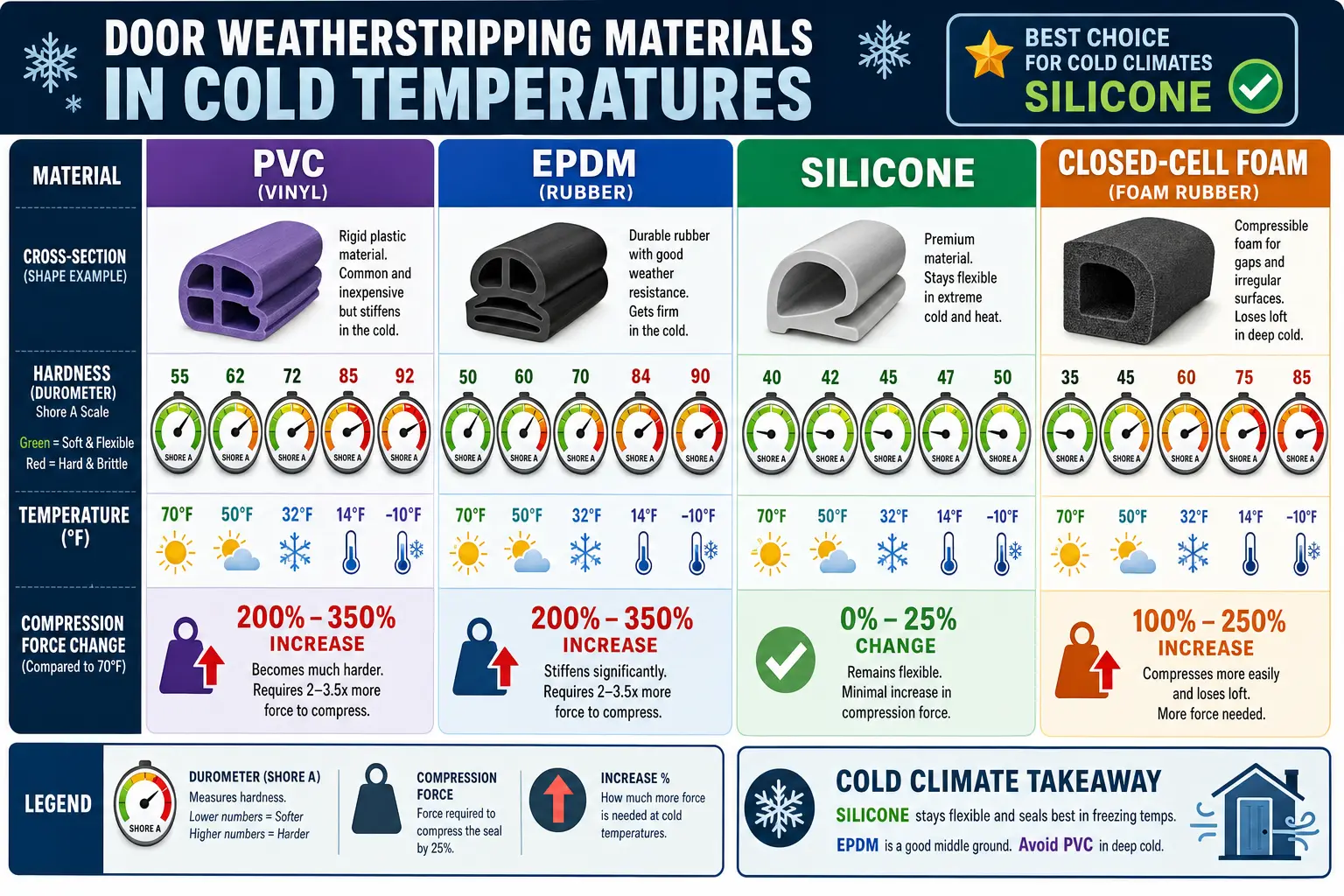
Weatherstripping compression & stiffening: Freezing temperatures cause rubber and vinyl perimeter seals to lose elasticity and stiffen, creating extra resistance against the jamb before the latch bolt reaches the strike plate.
-
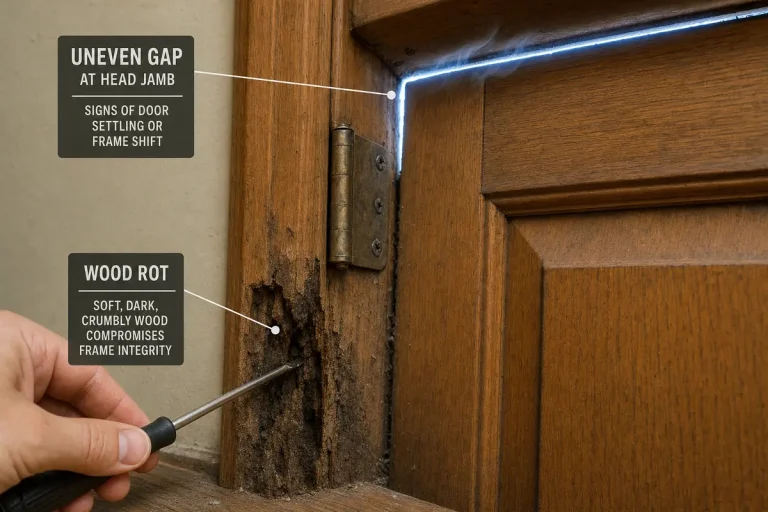
Thermal & moisture movement: Dry indoor heating paired with cold exterior air causes door slabs and jambs to subtly contract or bow, throwing off the precise alignment needed for smooth latching.
-
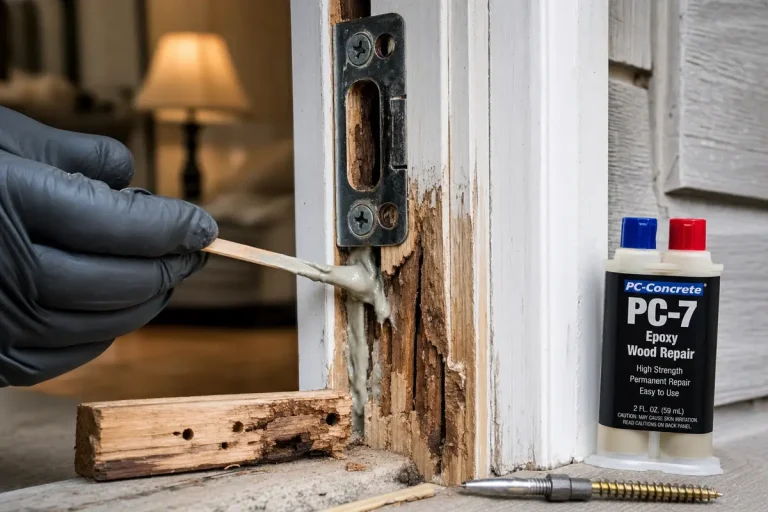
Hinge & strike plate misalignment: Minor seasonal framing shifts or worn hinge screws prevent the latch from lining up squarely with the strike plate opening.