(855) 676-0881

Deadbolt Replacement: Measuring Backset, Bore Size, and Door Thickness


Published: Nov 20, 2026

Ordering a replacement deadbolt seems simple until hardware arrives that fails to align by a fraction of an inch. Hardware distributors typically charge 15% to 25% restocking fees alongside return shipping costs ($8 to $15), turning a straightforward DIY project into an expensive headache. Beyond the financial loss, miscalculated dimensions leave exterior entryways insecure.

Evaluating your door’s specifications under ANSI/BHMA A156.36 standards before purchase guarantees seamless installation, optimal lock performance, and immediate home security.

The 60-Second Door Measurement Protocol


Follow this 4-step protocol to accurately measure your door for deadbolt replacement. Correct measurements reduce installation errors and prevent costly returns or damage.

Measuring a door slab takes under a minute when following a structured sequence. Always measure directly from the raw edge of the door slab, ignoring flexible weatherstripping or decorative trim.

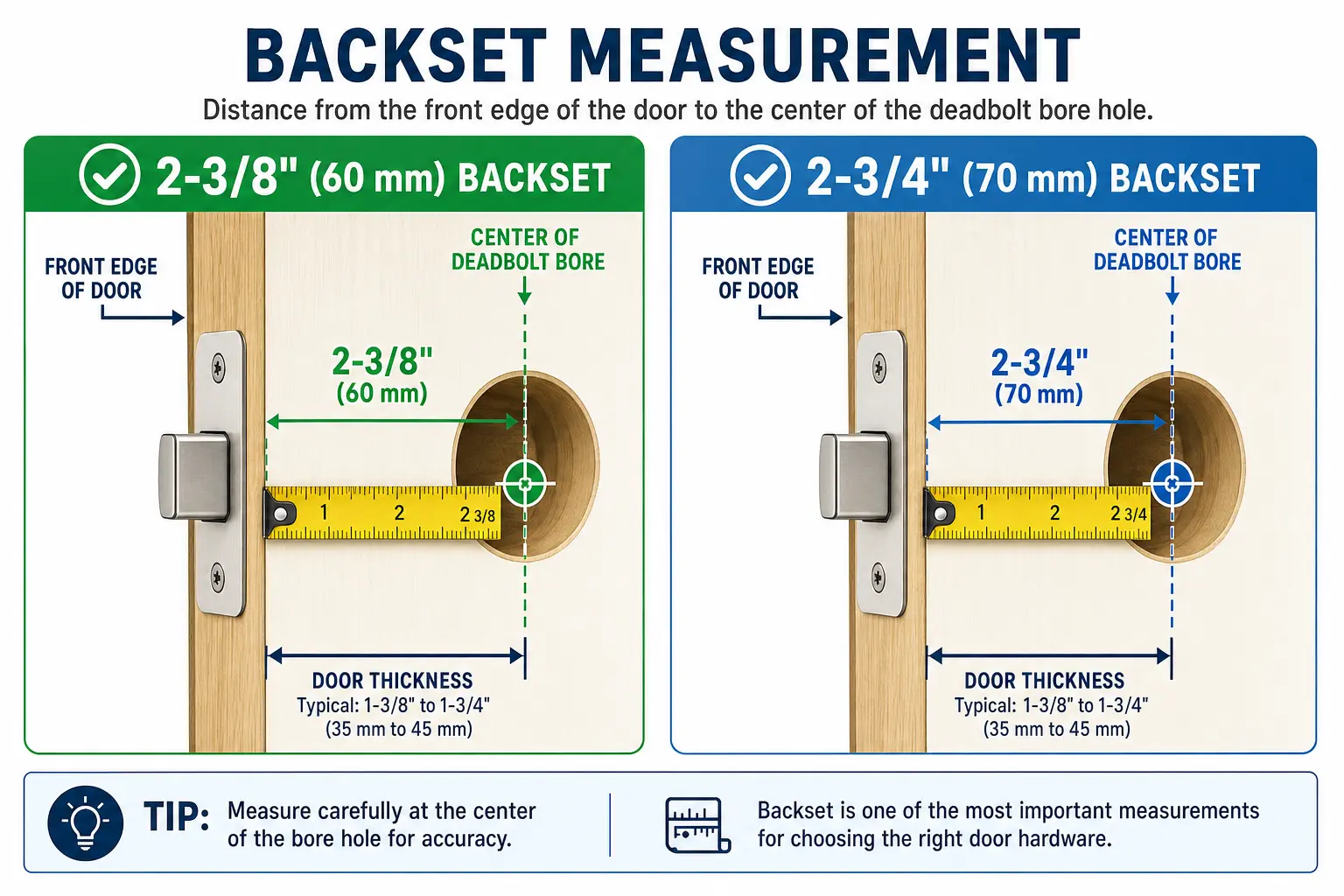
  1. Measure Backset: Calculate from the edge of the door slab to the exact physical center of the primary deadbolt bore hole.
  2. Determine Cross Bore Diameter: Measure the circular opening on the door face from top to bottom.
  3. Verify Door Thickness: Measure the solid slab profile between inner and outer finished faces.
  4. Check Center-to-Center Spacing: Measure from the center of the lower handle bore to the center of the deadbolt bore.

Need a Quick Fix?

Tell us what’s wrong with your door — we’ll get it sorted.

Core Dimensional Requirements for Replacement Hardware


Measuring Door Backset
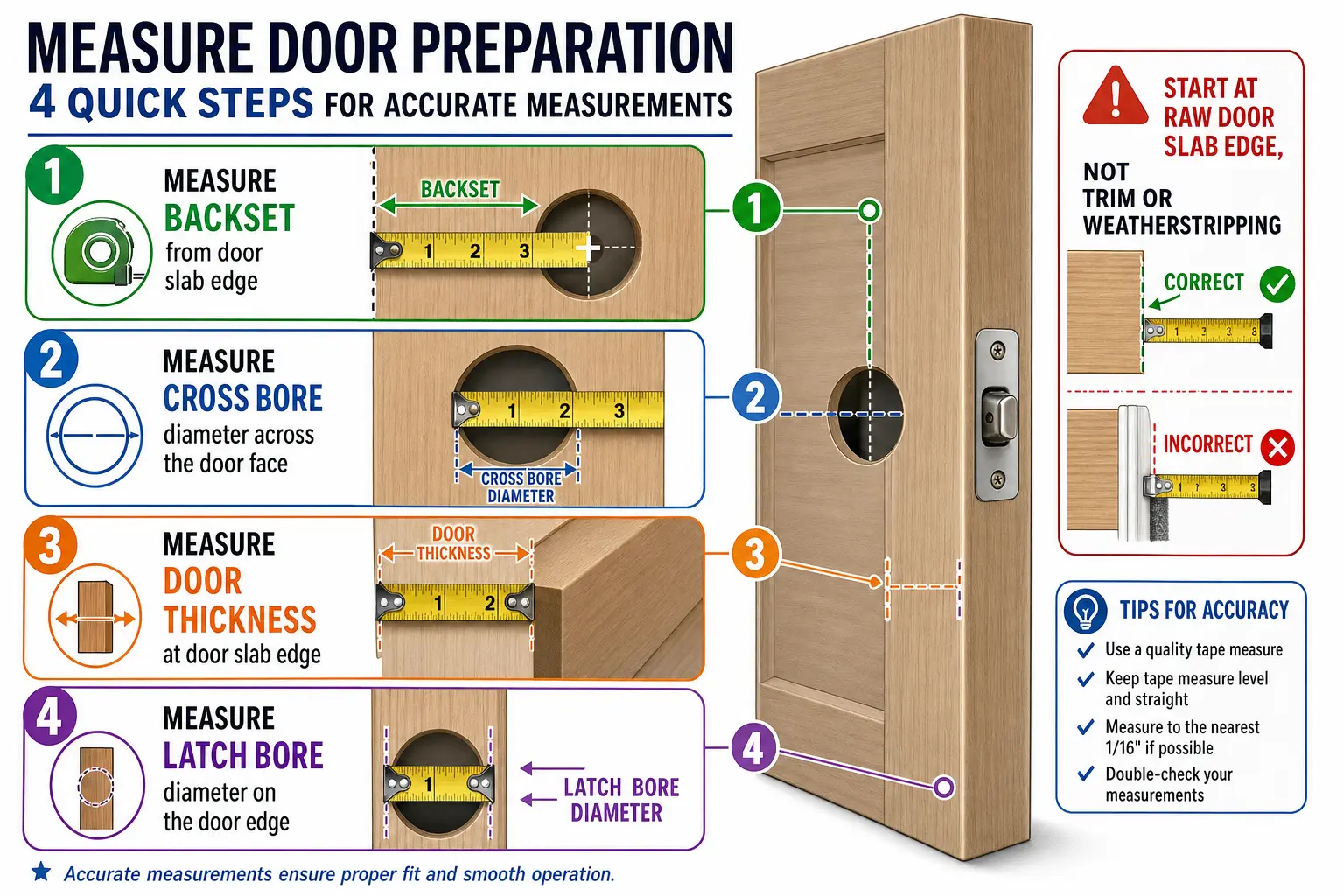
The backset is the horizontal distance from the door's edge to the center of the deadbolt hole. Common standards are 2-3/8" or 2-3/4". Accurate measurement here ensures your deadbolt fits perfectly without needing door modification.

The backset is the distance from the edge of the door to the center of the large circular cross-bore hole. In North America, residential doors strictly utilize two backset distances: 2-3/8 inches (60 mm) or 2-3/4 inches (70 mm). Commercial entry points standardly mandate 2-3/4 inches.

Many modern locks feature adjustable latches that twist to fit either dimension. However, fixed commercial deadbolts require exact sizing. If your measurement falls between standard sizes, re-verify your tape alignment against the raw wood edge, as decorative trim often distorts readings.

Cross Bore and Edge Hole Sizing

Standard residential deadbolts require a 2-1/8 inch (54 mm) cross bore hole. Homes built prior to 1970 often feature smaller 1-1/2 inch (38 mm) cross bores. Forcing a standard deadbolt into a vintage 1-1/2 inch hole results in severe physical binding or structural latch failure.

The edge bore (the small side hole where the bolt extends) standardly measures 1 inch (25 mm) in diameter. When assessing what hardware do i need for an internal door versus an exterior entry, ensure the latch faceplate mortise matches your slab prep—either standard 1″ x 2-1/4″ square-corner, 1/4″ radius round-corner, or drive-in collar.

Door Thickness and Thick-Door Extension Kits

Standard residential doors range from 1-3/8 inches to 1-3/4 inches thick. Custom architectural or solid-hardwood entry doors frequently range between 1-7/8 inches and 2-1/4 inches or more.

Standard tailpieces and mounting bolts cannot span thick doors. Major lock manufacturers supply dedicated extension kits to bridge this gap:

  • Schlage: B60 Series Thick Door Kit (#61-073) supports up to 2-1/4″ thickness.
  • Kwikset: 158 Series Thick Door Pack extends compatibility to 2-1/4″.
  • Baldwin: Custom tailpiece pins available for doors up to 2-1/2″.

Center-to-Center Spacing and Beveled Edges

Standard handleset and deadbolt preps require a minimum 5-1/2 inch center-to-center clearance between bore holes. Placing deadbolts closer creates clearance issues between interior escutcheons and lower lever handles.

If your door features a 1/8-inch bevel across 2 inches of edge thickness (designed for tight jamb clearance), measure your backset from the high side of the bevel facing the interior frame.

Smart Lock Escutcheon and Brand Compatibility Matrix


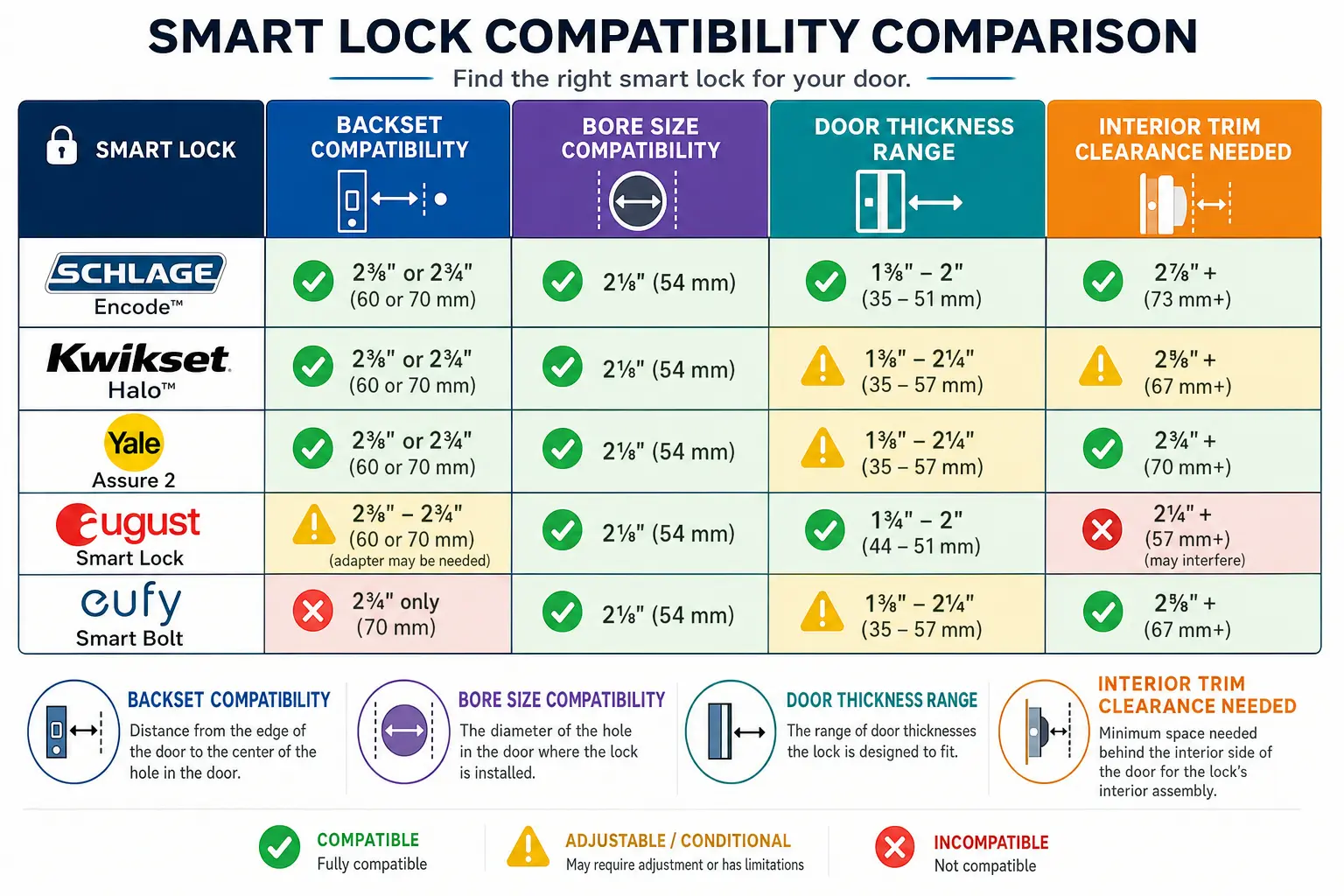
This smart lock compatibility matrix helps you quickly identify which models fit your door's dimensions and clearances, reducing guesswork and preventing installation errors.

Smart deadbolts incorporate batteries, motorized gears, and keypads that place unique physical demands on existing door preparations.

Smart Lock Model Required Backset Supported Cross Bore Standard Thickness Min. Hole Clearance
Schlage Encode 2-3/8″ or 2-3/4″ 2-1/8″ (1-1/2″ with adapter) 1-3/8″ to 1-3/4″ 5-1/2 inches
Kwikset Halo 2-3/8″ or 2-3/4″ 2-1/8″ or 1-1/2″ 1-3/8″ to 1-3/4″ 5-1/2 inches
Yale Assure 2 2-3/8″ or 2-3/4″ 2-1/8″ (1-1/2″ with adapter) 1-3/8″ to 2-1/4″ 4 inches
August Smart Lock Fits existing deadbolt Standard Tailpiece 1-3/4″ Standard N/A (Interior retrofit)

When upgrading specialized entryways, reviewing glass door lock types ensures narrow-stile metal frames receive compatible narrow-backset deadlocks. Proper fitment allows you to fully reinforce a door against forced entry.

Retrofitting Edge Cases: Vintage Bores, Thick Doors, and Jamb Alignment


If your door presents a vintage 1-1/2 inch cross bore, you have two options: use a hardware adapter ring compatible with select deadbolts, or enlarge the bore to 2-1/8 inches using a wooden hole-saw guide jig.

For steel-clad or fiberglass doors, avoid freehand enlargement to prevent surface delamination; professional jig clamping is mandatory.

Misaligned strike plates are another common obstacle. If a bolt binds against the strike jamb, forcing the key, the frame may require repair. Knowing how to fix a kicked in door frame resolves deep structural binding. If seasonal wood shifting leaves an entry door hard to open, realigning jamb strikes protects your new lock tailpiece from shearing under pressure. When vintage slabs suffer split edges, it is best to completely replace front door assemblies for long-term security.

Making the Right Choice for Your Entryway


Accurate measurements eliminate return fees, prevent door damage, and ensure your home stays secure. By verifying backset, cross bore, door thickness, and center spacing before purchasing, you can select replacement hardware or smart locks with total confidence. When custom door profiles or structural jamb issues complicate installation, consulting licensed local technicians ensures your door operates flawlessly for years to come.

Frequently Asked Questions


What should I do if my door has a vintage 1-1/2 inch bore hole?

You can either purchase a deadbolt supplied with removable keyhole adapter rings, or use a door prep guide jig paired with a 2-1/8 inch hole saw to cleanly enlarge the opening without damaging the door surface.

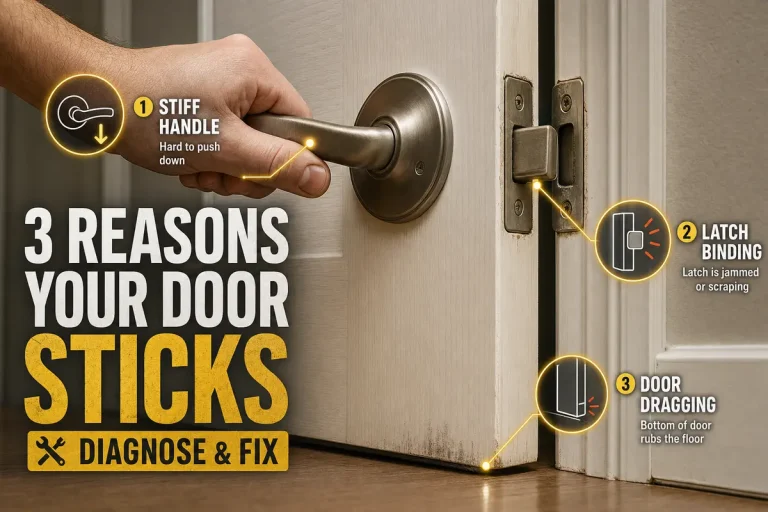
Why is my replacement deadbolt latch sticking or hard to turn after installation?

Latch binding usually stems from minor cross-bore misalignment, an over-tightened mounting plate, or a strike plate that is offset from the latch bolt. Verify your backset measurement and adjust the jamb strike opening to relieve friction.

How do I calculate backset on a door with a beveled edge?

Measure your backset from the high side of the bevel facing the inside of your home. Measuring from the recessed edge causes a 1/8-inch offset, causing the latch mechanics to bind inside the mortise pocket.