(855) 676-0881

Master Screen Door Diagnostic & Repair Guide: DIY Fixes vs. Professional Solutions


Published: Sep 29, 2026

A malfunctioning screen door is more than a minor daily annoyance. Whether it is a sliding patio screen that continuously jumps its track, a pneumatic closer that slams with bone-shaking force, or a torn mesh letting in pests, these issues compromise your home’s comfort and security.

When facing these failures, many homeowners struggle with a pivotal decision: is this a simple $5 DIY fix, or does it require professional intervention? While DIY rescreening materials range from $15 to $25, a professional screen door repair averages around $150, making it essential to accurately diagnose the root cause before spending time or money. This guide delivers a systematic, diagnostic-led framework to help you troubleshoot common failures and determine the most cost-effective path forward.
Solving Screen Door Closer Failures


The automatic door closer is the mechanical heart of your screen or storm door system. Most residential doors utilize either a pneumatic (air-pressure) or hydraulic (fluid-filled) piston. When these systems fail, the door will either slam violently or fail to close completely.

If you are experiencing closing issues, your first step should be evaluating your door closer services options or adjusting the tension valve.

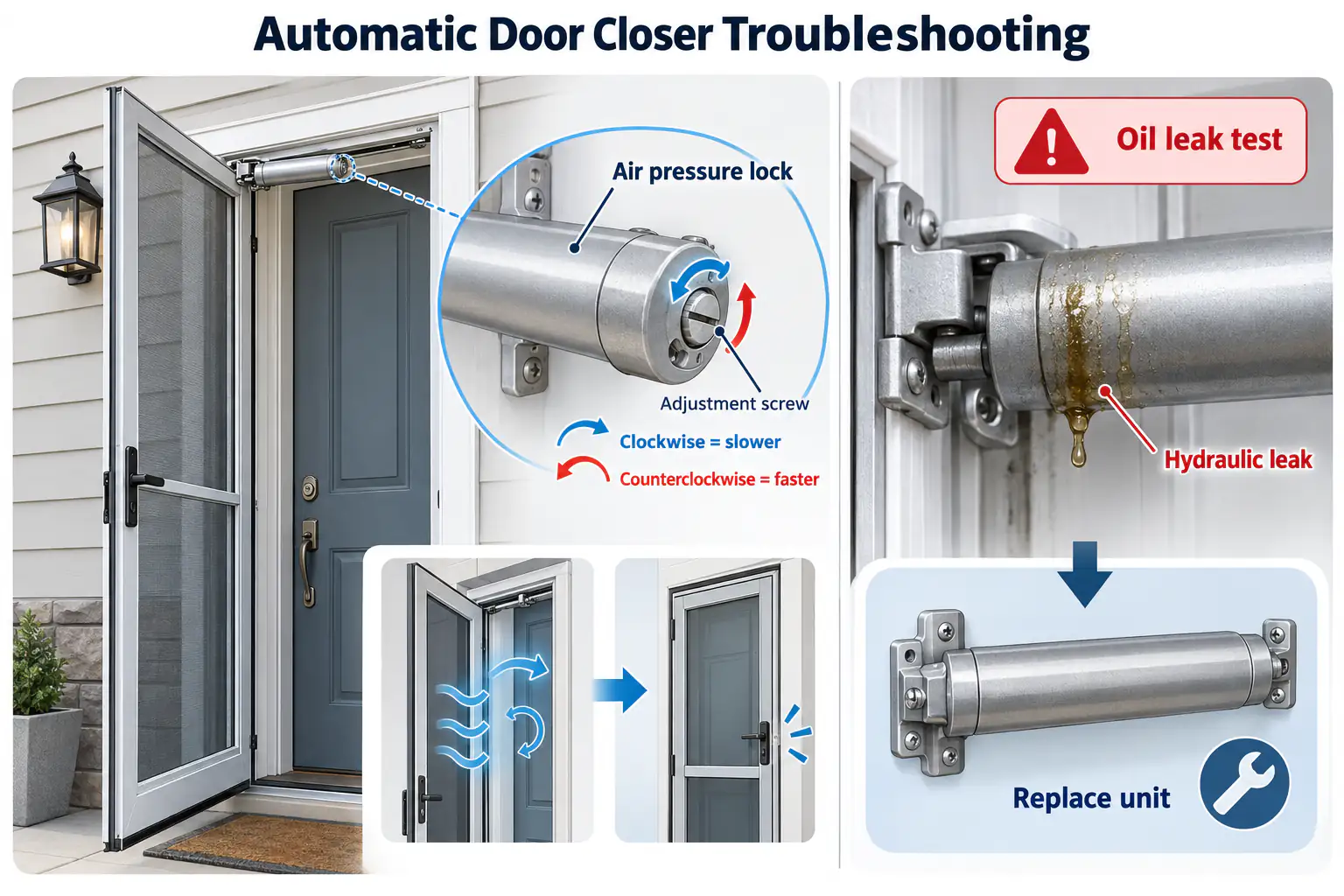
  • The Air Pressure Lock: Modern, tightly-insulated entry doors often create an airtight pocket of resistance between the primary door and the exterior door. To overcome this, locate the adjustment screw at the end of the cylinder. A quarter-turn clockwise will restrict air release and slow the door down, while a counterclockwise turn speeds it up to force the door through the air pocket and latch securely.
  • The Oil Leak Test: Inspect the cylinder body of hydraulic models. If you observe any oily residue or active leaks, the internal seals have blown. Hydraulic fluid loss cannot be repaired or refilled; the entire closer unit must be replaced.

Automatic Door Closer Troubleshooting

The Hollow Frame Screw Hack for Metal Doors


A major source of frustration for homeowners with aluminum storm doors is bracket wiggle. Over 80% of closer bracket failures on metal doors are caused by the mounting screws stripping out of the thin 1/16″ aluminum frame under wind-load stress.

Traditional DIY advice often suggests packing the stripped hole with wood filler or toothpicks—a method that is entirely useless for hollow metal frames. If you are struggling with a loose frame or need a robust storm door replacement strategy, use the Rivet Nut (Rivnut) Hack:

  1. Remove the loose bracket and drill the stripped screw holes out to the exact outer diameter of a threaded rivet nut.
  2. Insert the rivet nut into the hole and collapse it using a rivet tool. This creates a permanent, threaded brass or steel collar inside the hollow frame.
  3. Reattach your bracket using machine screws threaded directly into the newly installed rivet nuts. This prevents the bracket from pulling loose, even during high-wind events.

Smooth Sliding: Cleaning, Track Capping, or Replacement


If your sliding screen door grinds, binds, or jumps, the culprit is usually track friction or roller wear. A screen door that drags can eventually warp your frame or damage your primary sliding and patio door installation.

The “No WD-40” Lubrication Protocol

Never use heavy grease or standard WD-40 on sliding door tracks. While it provides immediate temporary relief, WD-40 is a wet lubricant that acts as a magnet for dirt, pet hair, and outdoor debris. Over time, this mixture forms an abrasive grinding paste that destroys plastic and brass rollers. Instead, thoroughly vacuum the track, scrub it with soapy water, and apply a thin layer of dry-silicone spray or paraffin wax.

Track Capping

When a metal track becomes nicked, pitted, or bent, rollers will constantly stall. Instead of executing an expensive full-frame teardown, you can install a stainless steel track cap. This is a micro-thin, hardened metal cover that snaps directly over your damaged track, providing an instantly smooth, slick surface for your existing rollers to glide over.

Deciding Your Next Step: DIY vs. Professional Evaluation


To protect your home and budget, use this structured decision framework to determine when to handle a repair yourself versus when your door needs replacement or professional service:

  • Torn Screen Mesh: If you are wondering, “can you replace the screen on a screen door” yourself, the answer is yes for standard fiberglass spline systems. If the tear is under 3 inches, a simple adhesive patch works. If the entire mesh is sagging, a DIY rescreening kit is highly feasible. However, if you have large pets or high-traffic areas, upgrading to heavy-duty pet screen or stainless steel mesh is best handled by professionals who can guarantee maximum tension.
  • Sagging or Out-of-Square Frames: If your screen door frame has bent, or if structural rot has compromised the jamb, simple hardware adjustments won’t suffice. You may need to factor in door jamb repair cost and call a technician to square the frame.
  • Latch and Lock Failures: If you are dealing with a faulty door latch that refuses to catch or lock, check the strike plate alignment. If the entire frame has shifted, professional realignment is required to restore proper security.

Frequently Asked Questions


How do I stop my screen door from slamming?

Locate the adjustment screw on the end of your pneumatic closer cylinder. To slow the closing speed, turn the screw clockwise in small, quarter-turn increments. If the door continues to slam regardless of how tight the screw is, the internal rubber plunger has degraded, and the closer must be replaced.

Can I repair a stripped screw hole in an aluminum screen door frame?

Yes. Because wood filler does not work on hollow aluminum frames, the most reliable method is installing a threaded rivet nut (Rivnut) or using a slightly oversized self-tapping metal screw to establish a new, secure bite into the metal.

Why does my sliding screen door drag even after cleaning the track?

If the track is clean but the door still drags, the rollers are likely worn, cracked, or out of adjustment. Most sliding screens have adjustment screws located at the bottom corners of the door frame. Turning these screws clockwise will raise the door, lifting it off the track to eliminate dragging. If the rollers are flat-spotted or cracked, they must be removed and replaced.