(855) 676-0881

Choosing Your Next Exterior Door: The CT Homeowner’s Guide to Materials, Efficiency, and Longevity


Published: Sep 24, 2026

Selecting a new exterior door in Connecticut is a major decision. Unlike milder climates, New England homes face dramatic seasonal shifts: freezing, salt-laden coastal winters paired with sweltering, humid summers. Choosing a door isn’t just about curb appeal; it’s an engineering choice that impacts your energy bills, physical security, and weekend maintenance schedules.

To help you cut through the marketing noise, this guide compares the five core exterior door materials, analyzing their performance under local climate conditions.
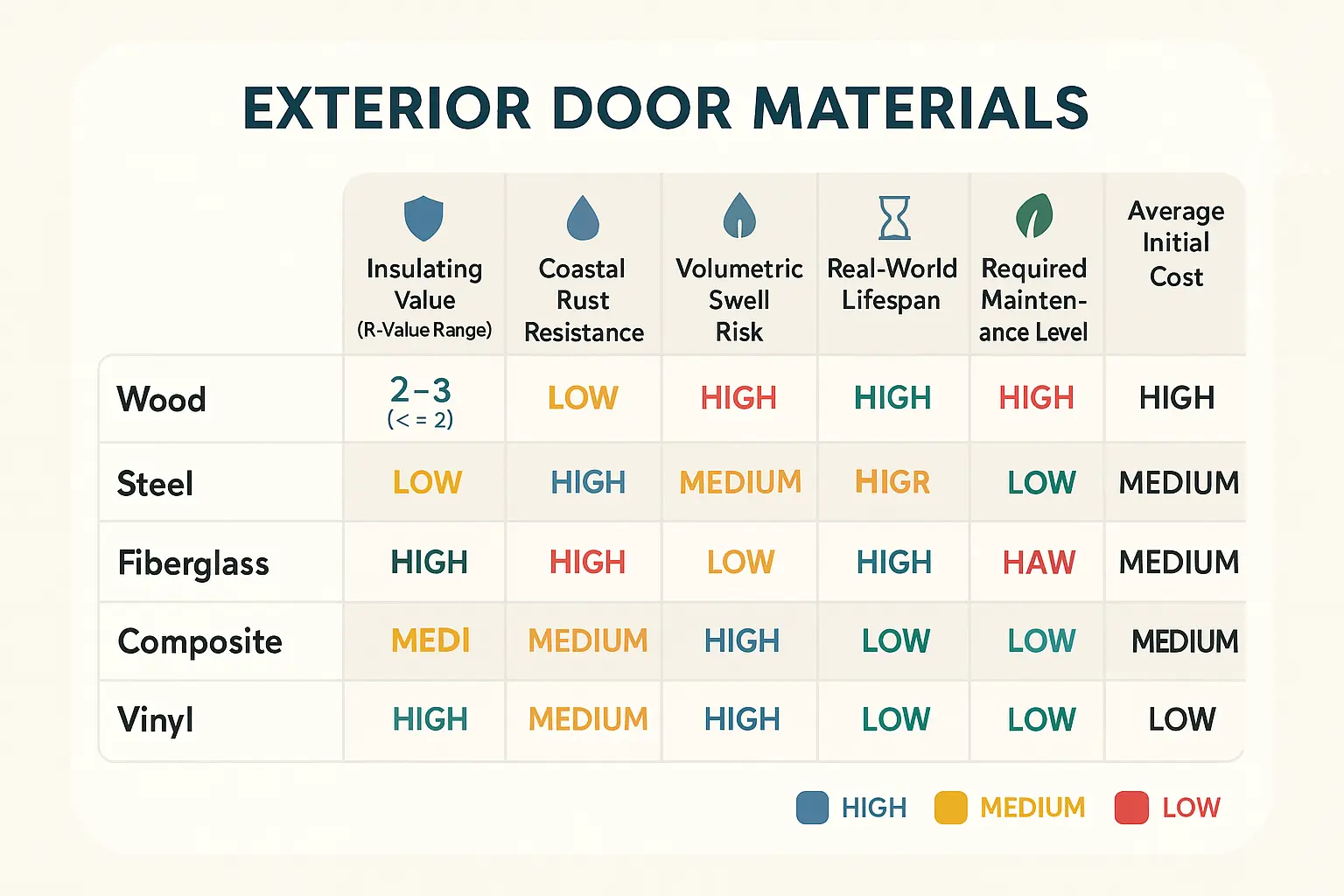
Executive Material Comparison Matrix


Before diving into the science, use this matrix to compare how each material handles thermal performance, cost, and maintenance.

This visual comparison matrix breaks down the strengths and weaknesses of common exterior door materials, helping Connecticut homeowners quickly evaluate which door best matches their durability, efficiency, and maintenance needs.

Material Insulating Value (R-Value Range) CT Coastal Rust Resistance Volumetric Swell Risk Real-World Lifespan Required Maintenance Level Average Initial Cost
Fiberglass R-6.0 to R-8.2 Outstanding None 30+ Years Ultra-Low Moderate to High
Steel R-5.0 to R-6.2 Low to Moderate None 15–20 Years Low Low to Moderate
Premium Wood R-1.5 to R-2.5 High (If sealed) Extreme 40+ Years High (Every 2–3 yrs) Very High
Composite R-5.0 to R-7.0 Outstanding None 25+ Years Ultra-Low High
Vinyl R-3.0 to R-4.5 High None 12–15 Years Low Low

The Connecticut Weather Crucible


In Connecticut, your front door must endure 80%+ relative humidity in August and sub-zero temperatures in January.

Unsealed natural wood doors, such as White Oak or Mahogany, expand between 5.1% to 7.4% volumetrically when humidity spikes. This causes swelling, sticking frames, and misaligned locks. Along the I-95 coastal corridor from Stamford to New London, salt-air mist accelerates the electrochemical oxidation of low-grade steel doors. If you have an entryway facing harsh southern exposure, you need to choose the best fiberglass front doors for sun exposure to avoid surface cracking or fading.

Energy Efficiency Decoder


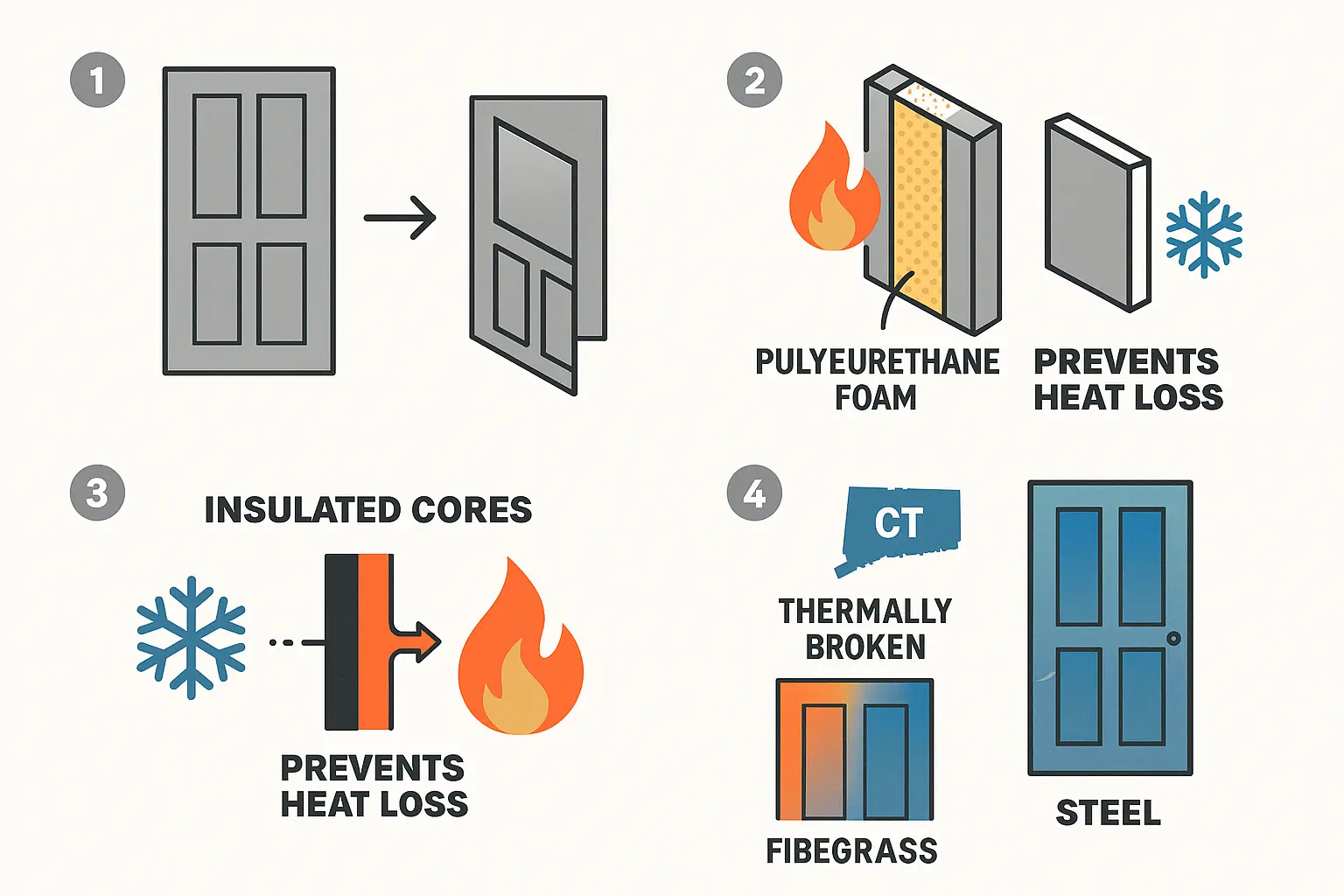
To maximize your home’s thermal envelope, look closely at how a door is constructed. Solid polyurethane foam-core fiberglass doors deliver an R-value of R-6 to R-8—nearly five times the insulating value of a standard solid wood door, which typically hovers between R-1.5 and R-2.

This energy efficiency infographic demystifies insulated core technologies and explains why polyurethane foam cores in fiberglass and steel doors provide superior thermal performance and reduce condensation issues in Connecticut's climate.

To claim the 25C Federal Energy Tax Credit, Connecticut homeowners must meet the strict EPA Northern Climate Zone requirements. Your new entry door must achieve a door u value of $le 0.25$ for doors with less than half-lite glass. Under this program, you can receive a 30% tax rebate capped at $250 per door.

Security & Structural Integrity


When comparing metal doors, look closely at the steel gauge. Standard builder-grade doors utilize thin 24-gauge steel. Premium residential steel doors use thicker 22-gauge steel, which provides over double the impact resistance. Some high-security applications even benefit from a 20 gauge steel entry door to prevent the skin from separating during a forced entry. Additionally, make sure your fiberglass or steel door features a solid inner lock block to securely support heavy deadbolts.

Dual Maintenance Playbooks


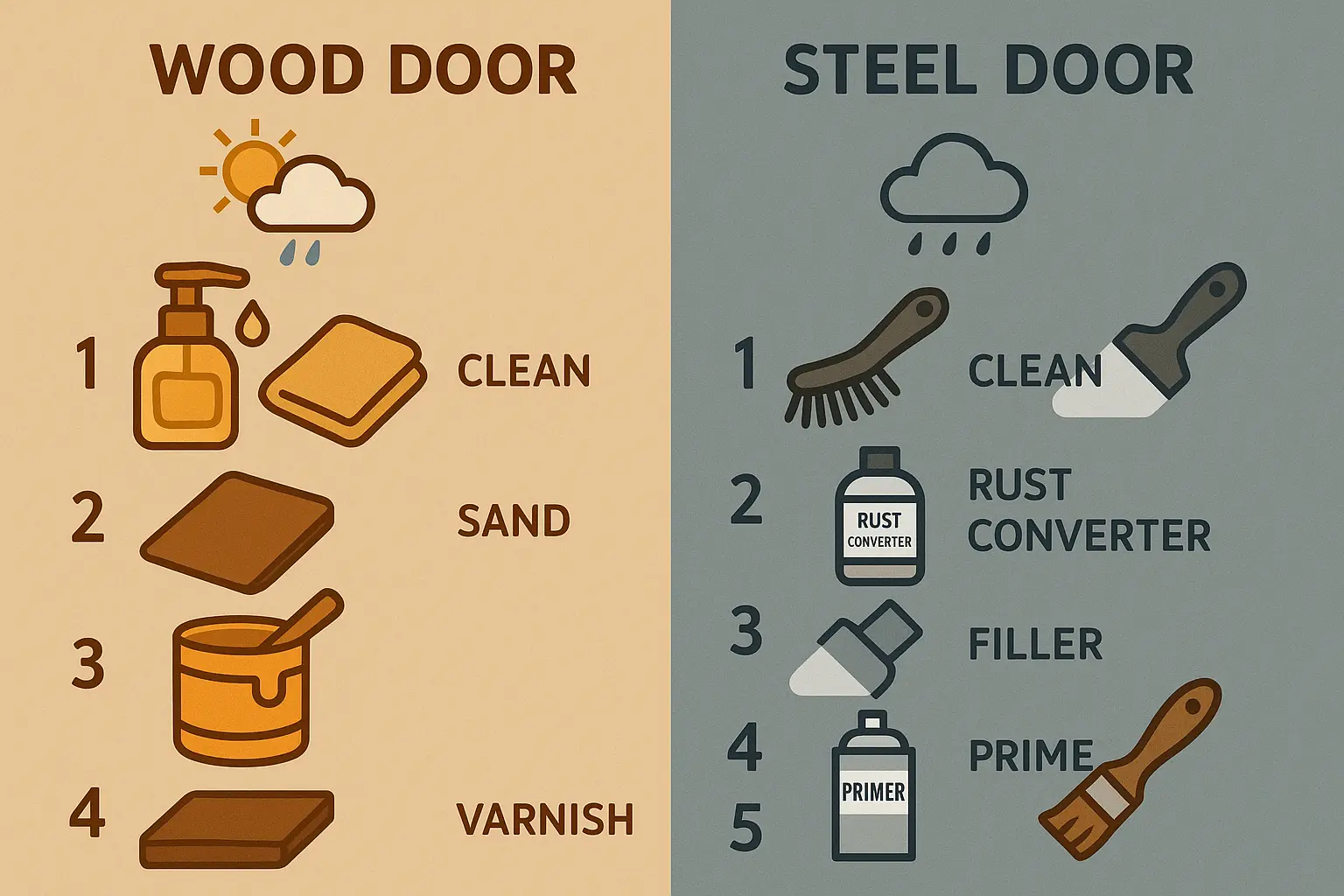
To preserve your investment, apply these material-specific protocols for door maintenance for weather control.

This dual maintenance visual guide anchors key preservation tasks for wood and steel doors in an easy-to-remember format, empowering property owners in Connecticut to extend door lifespan through proper seasonal care.

Wood Preservation Protocol

  1. Chemical Clean: Wash with 1 oz of mild dish soap in 1 gallon of warm water using a microfiber towel. Avoid ammonia or bleach.
  2. Sanding: Lightly hand-sand with 220-grit sandpaper along the grain to scuff the top coat without stripping the underlying stain.
  3. UV Coat: Apply a marine-grade spar varnish containing active UV blockers.

Steel Rust-Conversion Protocol

  1. Oxidation Prep: Wire-brush surface rust and apply a phosphoric acid-based rust converter to stabilize the metal.
  2. Sanding and Prep: Smooth out pitted areas using a high-durability polyester resin filler, then sand flush with 220-grit paper.
  3. Coat: Apply a zinc-chromate primer, followed by two coats of premium exterior-grade acrylic latex paint.

System-Level Integration: The Frame and Jamb


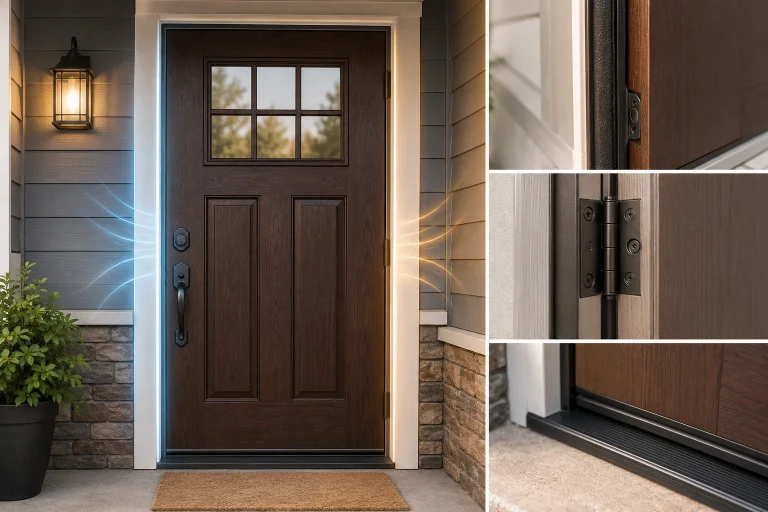
Even an R-8 fiberglass door will fail to insulate your home if it is hung in a standard pine frame. Standard wood jambs absorb groundwater through capillary action, causing rot at the bottom six inches of the frame.

Investing in rot-proof composite jambs eliminates this issue entirely. If your frame is already showing soft spots, address it quickly to avoid high door jamb repair cost. Pair your composite frame with heavy-duty TPE compression bulb weatherstripping, which maintains its flexibility down to $-40^circtext{F}$.

Make Your Decision with Confidence


Navigating door materials requires balancing performance, security, and long-term upkeep. At A1 Doors Services, our licensed technicians bring over 15 years of local hands-on experience to help you select, install, and protect the perfect entry system for your home. Reach out to our family-owned team today for a personal consultation and same-day service.

Frequently Asked Questions


Which exterior door material is best for Connecticut's coastal areas?

Fiberglass is the ideal choice for coastal environments. It resists salt-air corrosion, does not absorb moisture, and requires virtually no painting or sealing to maintain its structural integrity over a 30-year lifespan.

Why does my steel door develop condensation on the inside during winter?

This occurs due to thermal bridging. If a steel door lacks a built-in thermal break, cold outdoor temperatures conduct directly through the metal skin, causing indoor household humidity to freeze or condense on the warmer interior side.

Is a composite frame really worth the extra initial cost?

Yes. Standard pine frames often rot at the base within 5 to 10 years due to snow buildup and rain splashes. Composite frames are entirely waterproof and will last as long as your premium door slab without decaying.