(855) 676-0881

Unlocking the Mystery of Faulty Latch Mechanisms and Internal Lockset Failures


Published: Sep 21, 2026

A door that swings perfectly but refuses to click into place is one of the most deceptive security risks a property owner faces. While many immediately blame settling frames, the root cause frequently lies deeper—hidden inside the metallic housing of the lockset itself. Internal mechanical failures can silently compromise security, leaving entryways vulnerable even when they appear closed.

Understanding why these components fail requires looking past the surface. When internal springs lose tension or cast metal parts shear under fatigue, external adjustments won’t solve the problem.
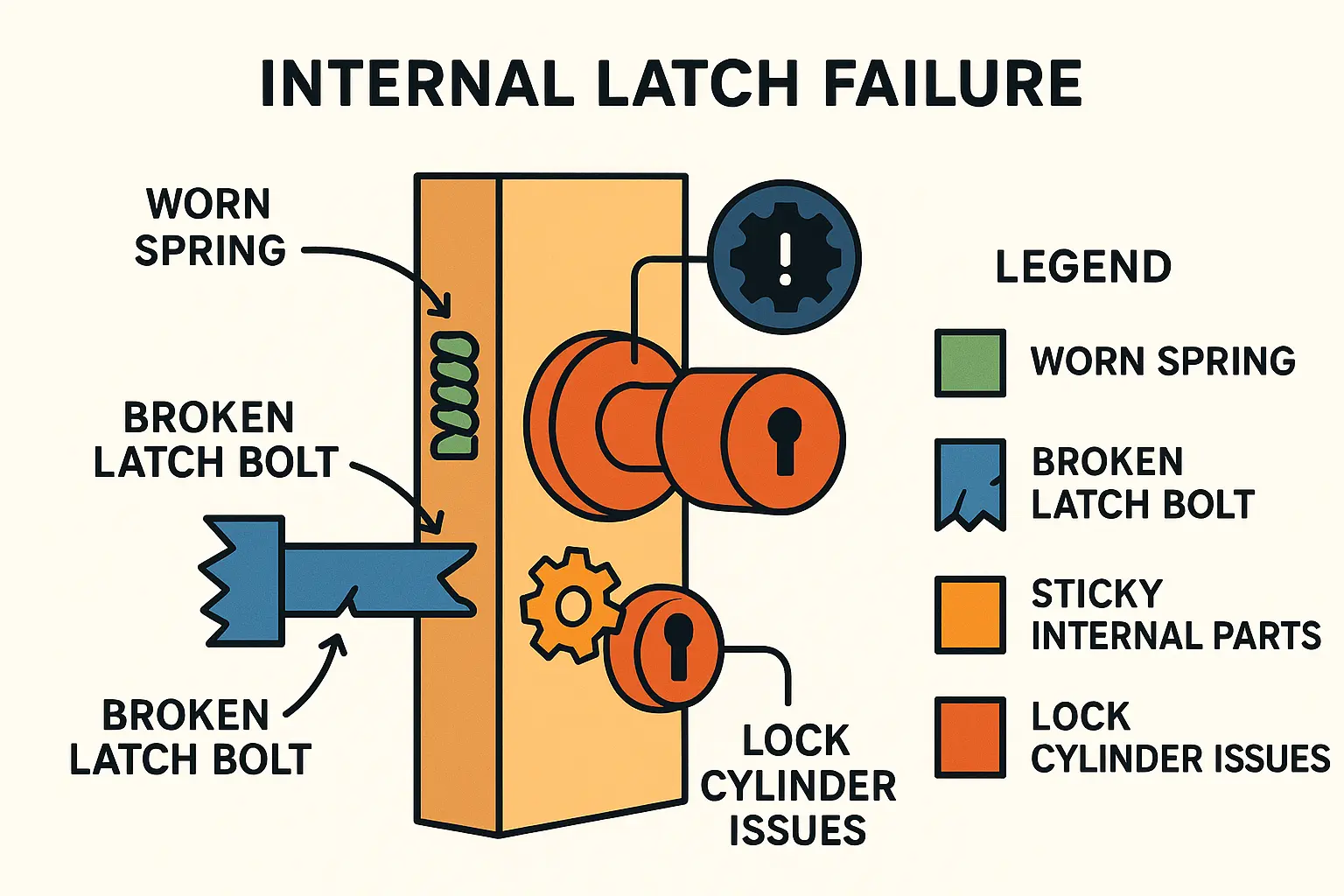
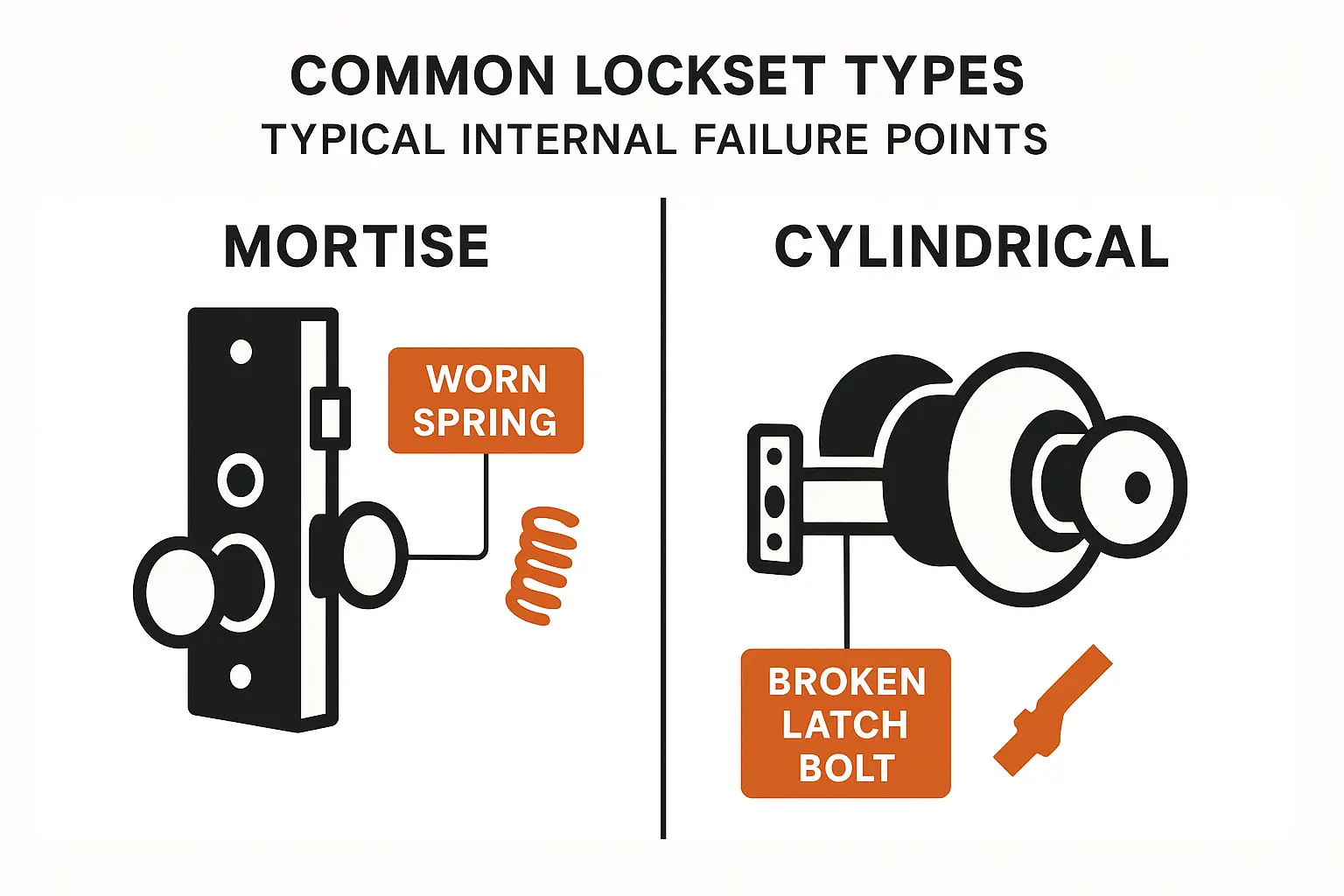
This diagram demystifies the inner workings of latch mechanisms, highlighting how common internal faults disrupt proper door latching.

Anatomical Breakdowns of Internal Latch Failures


Inside a standard lockset, a series of precisely engineered components work in unison. The core culprit in latching failures is often a worn spring mechanism. Over thousands of cycles, the internal compression or torsion springs lose their elasticity. This spring fatigue prevents the latch bolt from fully extending into the strike plate, allowing the door to drift open with a light draft.

Other common culprits include:

  • Broken Latch Bolts: Heavy-handed operation or slamming can fracture the cast metal tailpiece of the bolt inside the casing.
  • Sticky Internal Components: Factory grease attracts dust and airborne debris over time, turning a slick lubricant into a sticky, abrasive paste that stalls the retractor mechanism.
  • Cylinder Binding: Misaligned pins or worn keyways can prevent the cylinder cam from rotating fully, which restricts the physical travel of the latch.

For commercial properties, ignoring these signs can lead to severe security breaches. Utilizing a professional commercial door repair specialist ensures that high-traffic entrances remain secure and code-compliant.

Mortise vs. Cylindrical Locksets: Different Failures


To diagnose the issue accurately, you must identify the lock architecture.

Cylindrical locksets are common in both residential and light commercial settings. They rely on a central chassis that translates rotational knob motion into linear latch movement. The primary failure point here is the retractor guide. Under heavy use, these thin metal guides bend or wear down, resulting in a floppy handle that fails to retract or extend the bolt properly.

Mortise locks, by contrast, are heavy-duty, self-contained box units pocketed deep into the door stile. Because of their complex internal levers and dual-action springs, they are incredibly durable but highly sensitive to internal misalignment. If a spring breaks inside a mortise lock, it can bind the entire hub assembly. For emergency exit routes, these issues often overlap with panic bar installation and repair needs, where life safety depends on flawless mechanical execution.

Troubleshooting and Diagnosing Mechanical Latch Failures


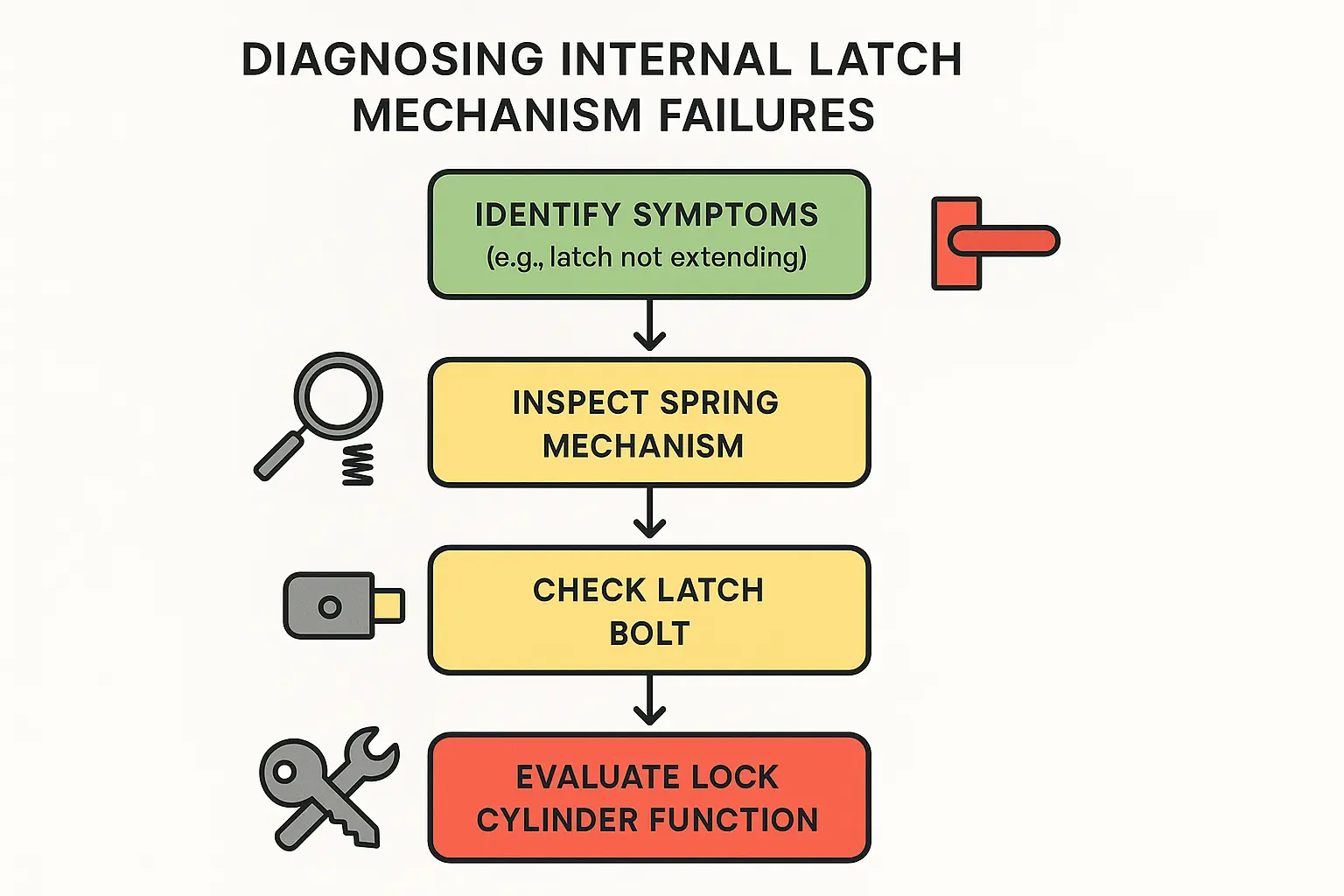
Isolating an internal failure requires a systematic approach. By separating the operation of the lockset from the door frame, you can pinpoint exactly where the mechanical breakdown occurs.

A clear diagnostic flowchart to guide repair professionals and homeowners through troubleshooting internal latch-related problems systematically.

Begin by opening the door and depressing the latch bolt manually with your finger. If it doesn’t spring back quickly, the internal spring is broken or heavily gummed up. Next, turn the handle. If there is significant “slop” or play before the latch begins to move, the spindle or hub is worn.

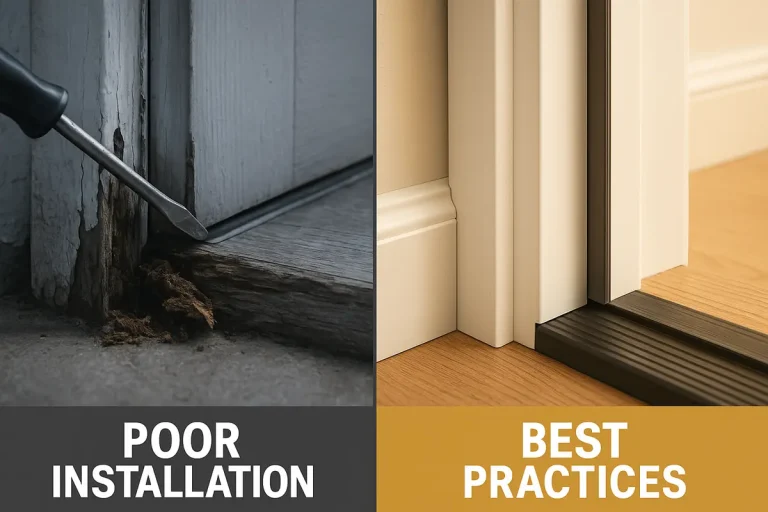
Sometimes, external forces accelerate internal wear. For instance, a sagging door frame places constant lateral pressure on the latch bolt, forcing the internal components to work under extreme friction. Assessing door jamb repair cost early on can prevent your locksets from wearing out prematurely due to physical structural stress.

Repair vs. Replacement: Making the Strategic Decision


When faced with a failing lock, you must weigh the cost-effectiveness of repairing internal components versus replacing the entire unit.

This comparison infographic provides a quick memory anchor to understand how different lock types fail internally, aiding accurate diagnosis and repair decisions.

Minor issues, such as sticky latch bolts or superficial binding, can often be resolved with a quick teardown, clean, and application of a dry graphite lubricant. However, if you find cracked castings, worn-out hubs, or sheared springs, replacing the hardware is the safest and most reliable path forward.

In commercial environments, integrated hardware systems like a dedicated door closer service can help minimize impact damage to internal latches by controlling how hard the door slams closed. For homeowners looking for basic maintenance tips, reviewing resources on how to fix a manual garage door can build foundational troubleshooting skills.

Secure Your Property with Professional Hardware Solutions


Leaving a faulty latch unresolved compromises your property’s security and energy efficiency. At A1 Doors Services, our family-owned team brings over 15 years of experience to every project. Our licensed, fully trained technicians provide prompt, same-day service across Connecticut to diagnose, repair, or replace compromised locksets with precision. Whether you are dealing with a failing commercial entryway or a stubborn residential latch, contact us today to restore total peace of mind.

Frequently Asked Questions


Why does my door latch stay stuck inside the door when I turn the handle?

This is typically caused by a broken or fatigued retractor spring inside the lock chassis. When the spring breaks, it can no longer push the latch bolt back out into its extended position. Additionally, old, hardened grease or dirt can physically bind the mechanism, requiring a thorough cleaning or full lockset replacement.

Can I use WD-40 to fix a sticky lock latch?

While WD-40 might offer temporary relief, it is not recommended for long-term lock maintenance. It is an oil-based lubricant that attracts dust, dirt, and grime, which eventually creates a sticky residue inside the lockset that accelerates wear. Instead, use a dedicated dry graphite or Teflon-based spray.

When should I choose a mortise lock over a cylindrical lock?

Mortise locks offer superior strength, durability, and a longer life cycle, making them ideal for heavy commercial use or high-security residential entrances. Cylindrical locks are easier to install and more cost-effective, but they wear out faster under high-frequency operation.