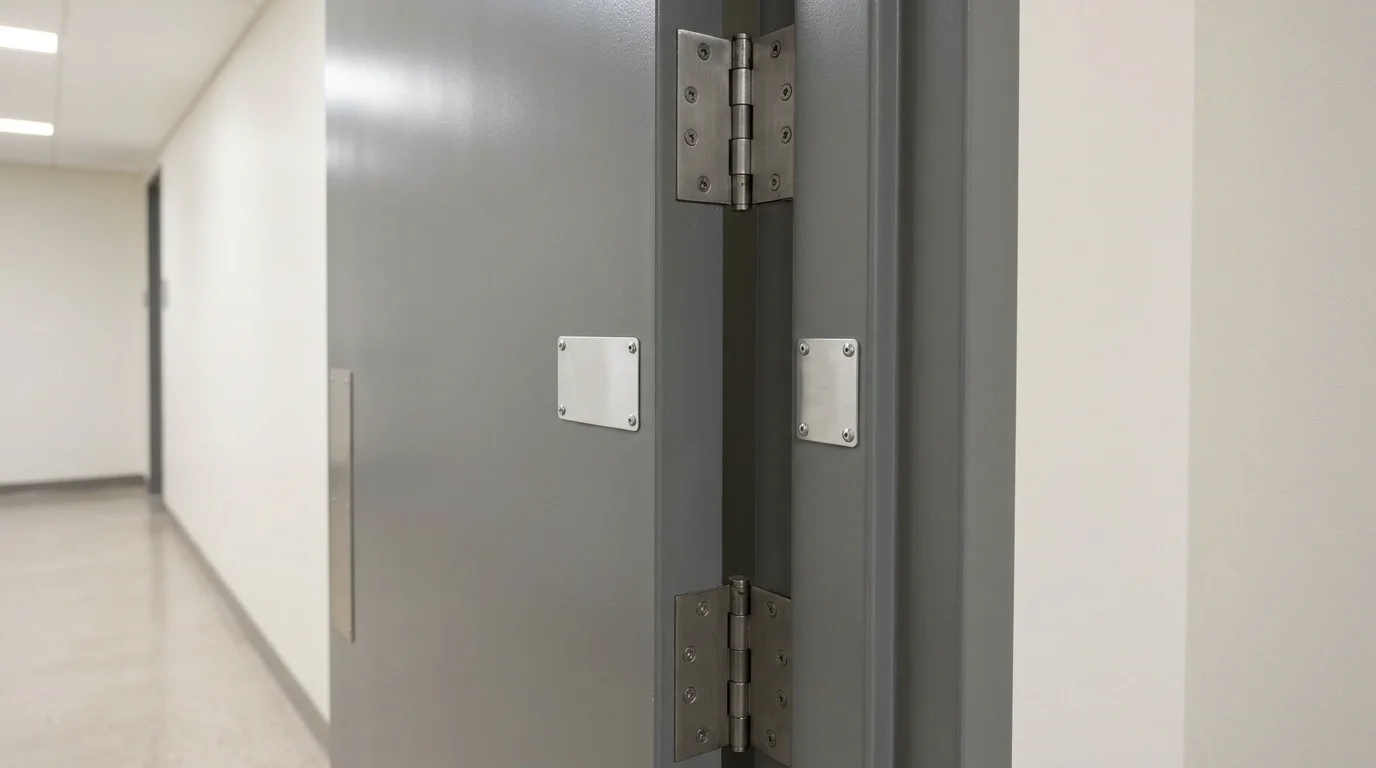
This is one of the most common fire door problems. It usually happens during a building repaint, when a painter rolls right over the door edge and frame without masking the label.
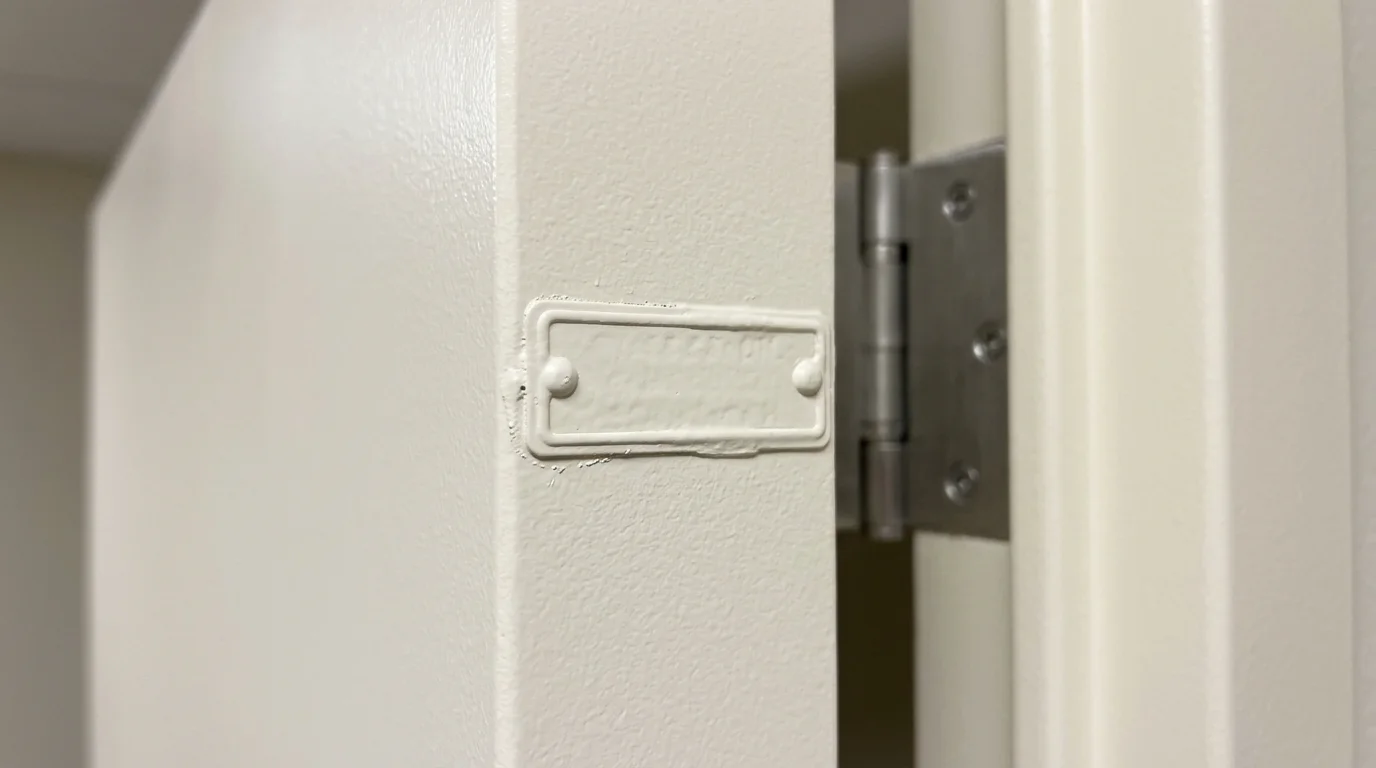
Step 1: Check whether the label can still be read
Sometimes a thin coat of paint still lets you read the embossed letters on a metal label, or you can see the details at an angle with a flashlight. If every piece of information is still legible, the inspector may accept it. If not, move on to the next step.
Step 2: Ask about carefully removing the paint
On some metal and embossed labels, paint can be removed carefully without damaging the label. Adhesive foil and plastic labels are much more fragile and are easily destroyed by scraping or solvents. Before anyone tries, check with your fire door inspector or the authority having jurisdiction (AHJ), because a damaged label creates a bigger problem than a painted one.
Never remove a label, move a label from one door to another, or put on a replacement sticker that didn’t come through the listing agency. That’s treated as a code violation, not a fix.
Step 3: Field labeling
If the label can’t be recovered, the door doesn’t automatically need to be replaced. In many cases, the opening can be field labeled. A qualified inspector working with the listing agency examines the door and frame on site, confirms how it was built and that it meets the rating, and attaches a new “field labeled” or “field inspected” label. The AHJ has the final say, so it’s best to confirm the plan with them first.
Step 4: Replace the door if it can’t be verified
If the door can’t be identified, has been modified (for example, with unapproved holes, hardware or glass), or is damaged, replacing it with a new labeled fire door assembly is usually the fastest way to pass inspection.