Small, shallow dents
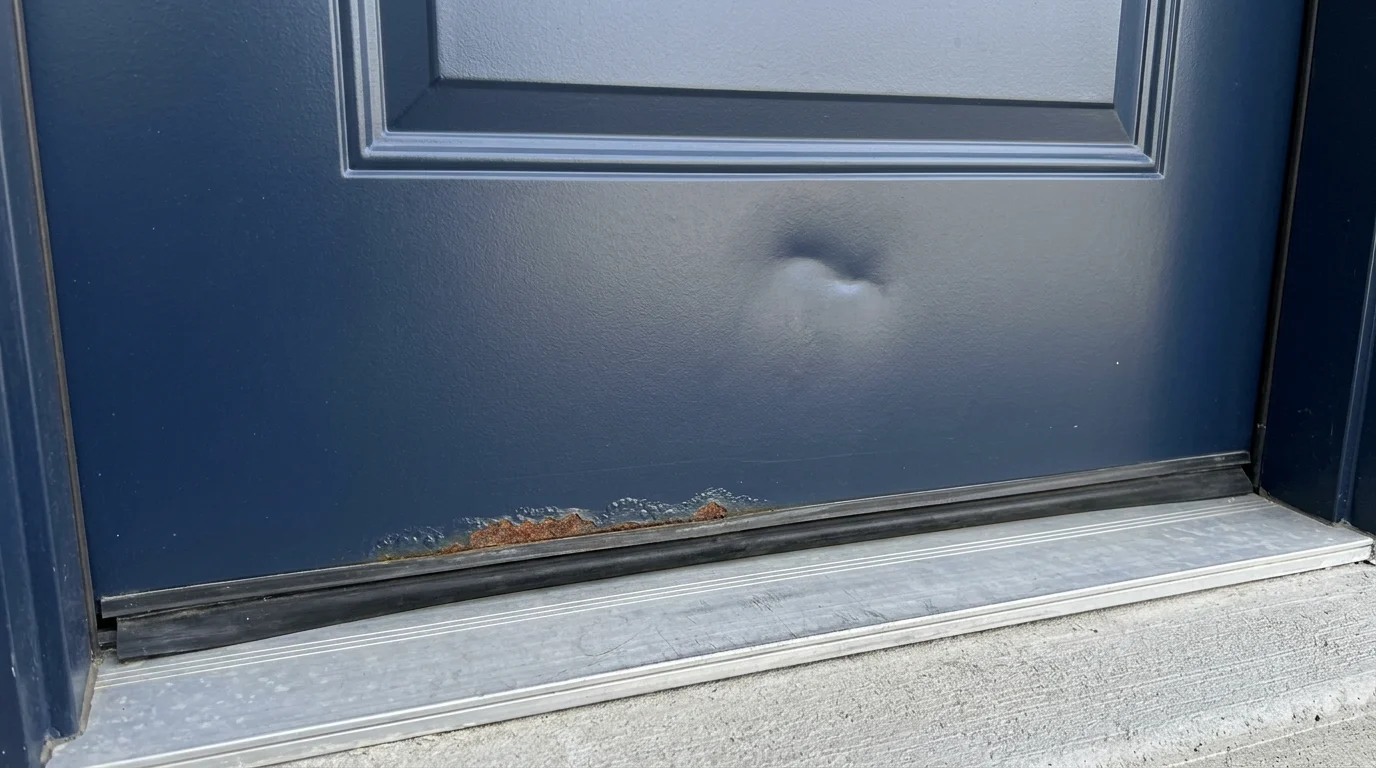
For dents that are shallow, have no sharp crease and are smaller than your palm, a proper filler repair holds up well for years. A lasting repair includes:
- Sanding the dent and a small area around it down to clean metal so the filler can grip
- Applying a two-part filler designed for metal (not lightweight spackle, which shrinks and cracks outdoors)
- Shaping and sanding the filler flush with the door’s surface
- Priming with a metal primer
- Painting with an exterior-grade paint that matches the door
Skipping the primer, or using interior products, is the main reason dent repairs crack or show through after one hot summer or one cold winter.
Larger dents and creases
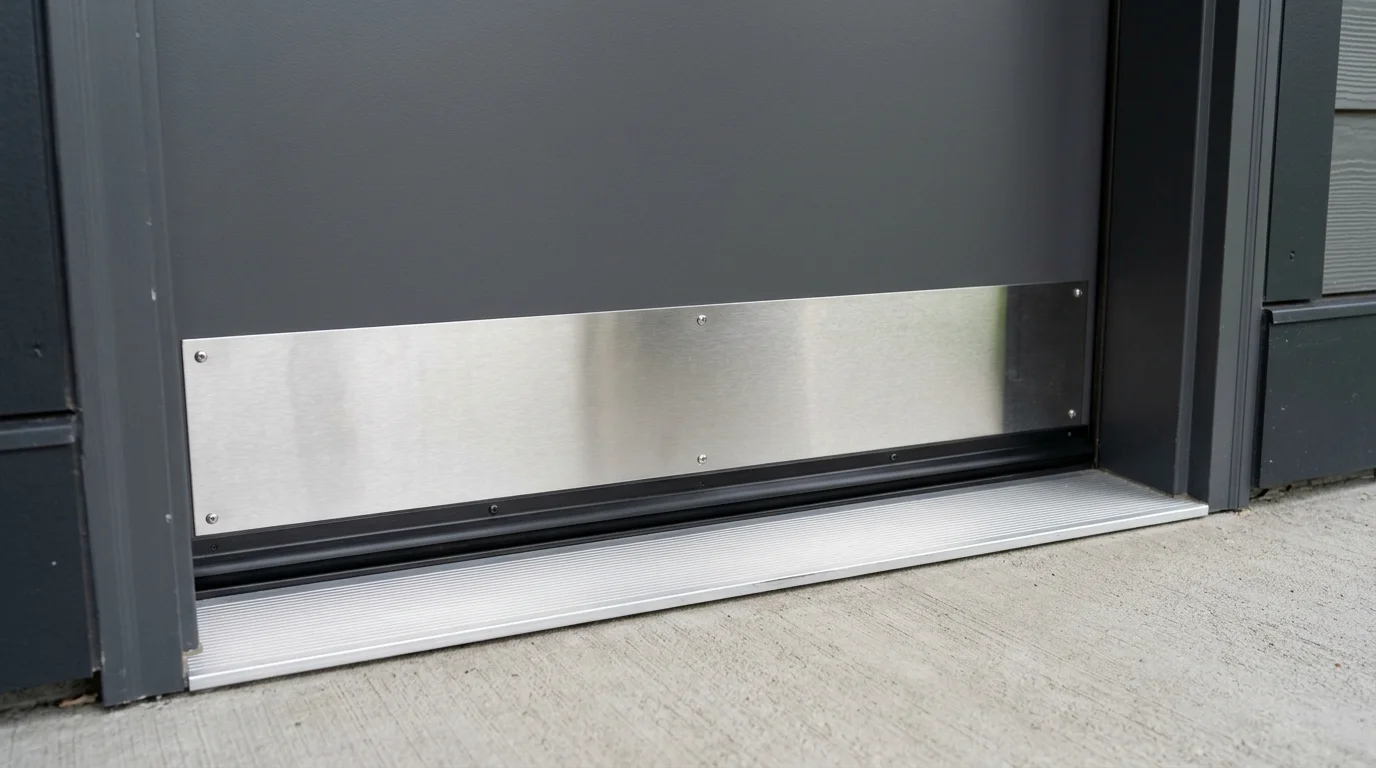
Deep dents, sharp creases or several dents across one panel are harder to hide. Filler can be used, but large repairs tend to show when light hits the door at an angle. On paneled doors, filler can also be hard to shape around the raised panel lines. For lower-door damage, a metal kick plate can be a clean, practical cover that also protects against future scuffs.
When the skin is torn or separated
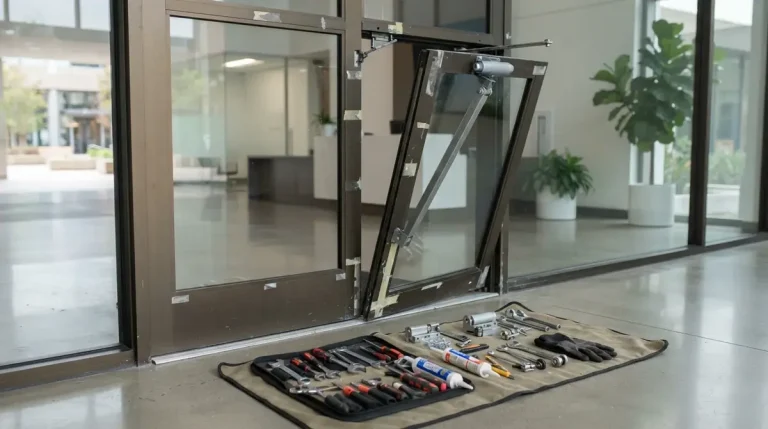
If the steel is split, punctured, or pulling away from the foam core (it sounds hollow or flexes when you press it), filler won’t last. At that point, replacing the door slab is usually the right call.