(855) 676-0881

Comprehensive Glass Door Repair & Glass Replacement Guide


Published: Oct 16, 2026

When a residential patio door drags across its sill or a commercial glass entry shatters, property owners face a critical financial and technical evaluation: can a simple component repair restore full functionality, or is complete door replacement necessary? In Connecticut, navigating local building codes, harsh freeze-thaw weather cycles, and distinct cost structures requires clear diagnostic criteria.

Over 65% of sliding glass door operational failures—such as sticking or jumping—stem from flattened tandem rollers or dirt-clogged aluminum tracks rather than structural frame warping. Addressing these mechanical issues early prevents costly structural overhauls and restores seamless operation.
Evaluating Glass Door Issues: The CT Repair vs. Replace Framework


Determining whether to repair hardware, replace an Insulated Glass Unit (IGU), or install an entirely new door assembly depends on structural frame condition, thermal performance, and mechanical integrity. Replacing only the broken or fogged double-pane glass panel saves homeowners 60% to 70% compared to full frame replacement, while preserving existing interior trim and flashing.

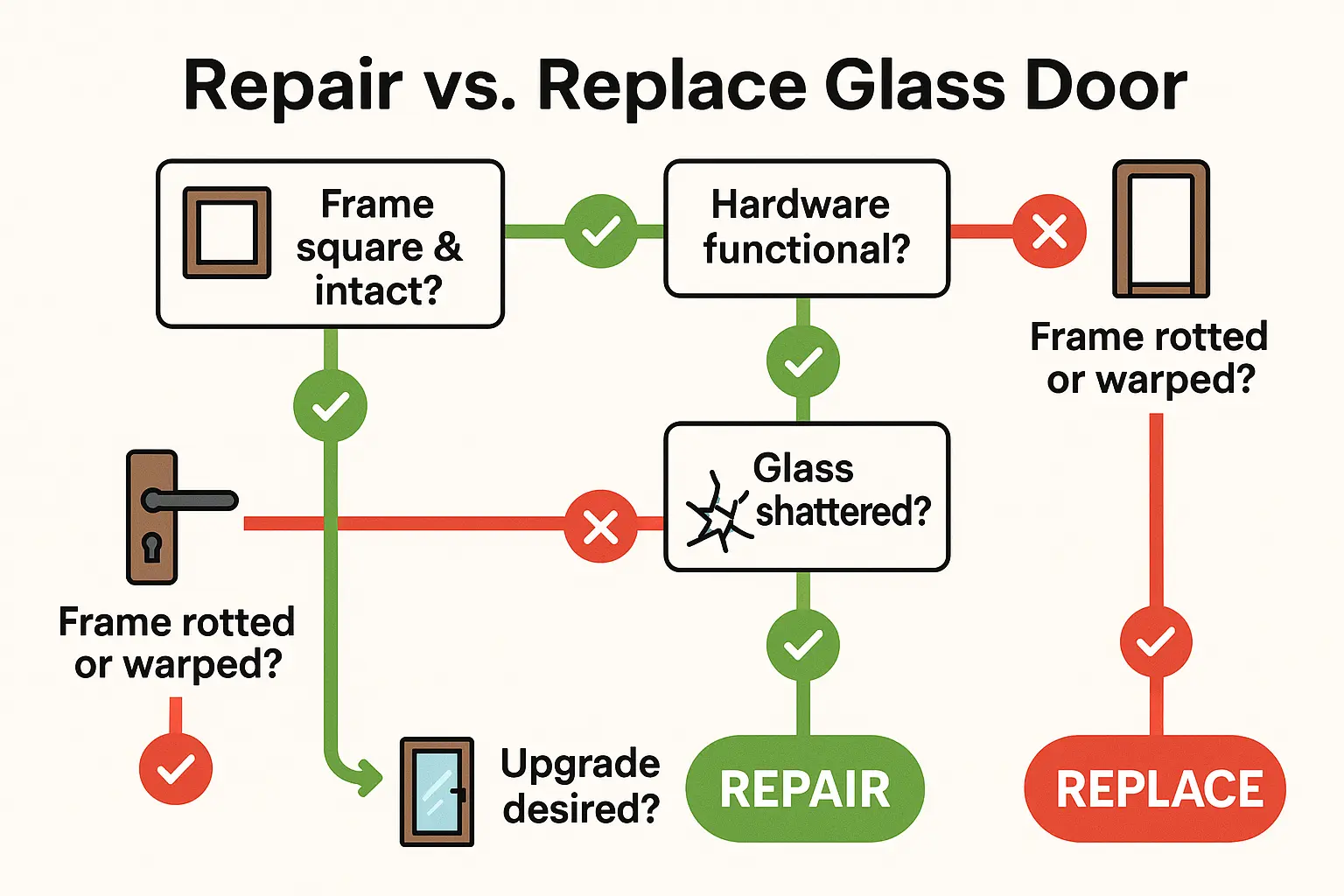
This flowchart helps homeowners and businesses quickly decide whether to repair or fully replace a glass door based on frame integrity, hardware function, and glass damage, streamlining complex decisions into an accessible visual guide.

Choose glass or mechanical repair when:

  • The exterior frame remains square, unrotted, and structurally sound.
  • Double-pane glass has lost its argon gas seal, resulting in condensation between panes.
  • Rollers are worn, but the threshold track remains uncrushed.

Choose full unit replacement when:

  • Frame subflooring exhibits severe water rot or structural sagging.
  • Aluminum or vinyl framing is permanently bowed or warped.
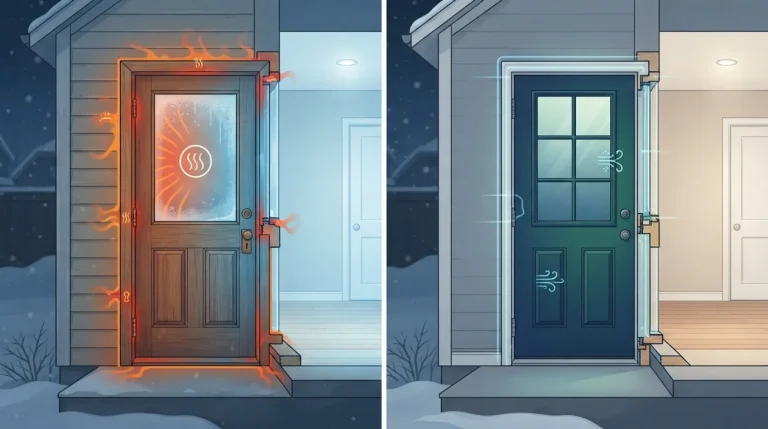
  • Upgrading to energy-efficient Low-E double-pane units is required for modern energy efficiency.

Emergency Glass Door Repair & 24/7 Board-Up Services


Shattered glass presents immediate security risks and leaves properties vulnerable to seasonal CT storms. Commercial properties experience an average foot-traffic loss of $1,200 per day during glass outages, making rapid response essential.

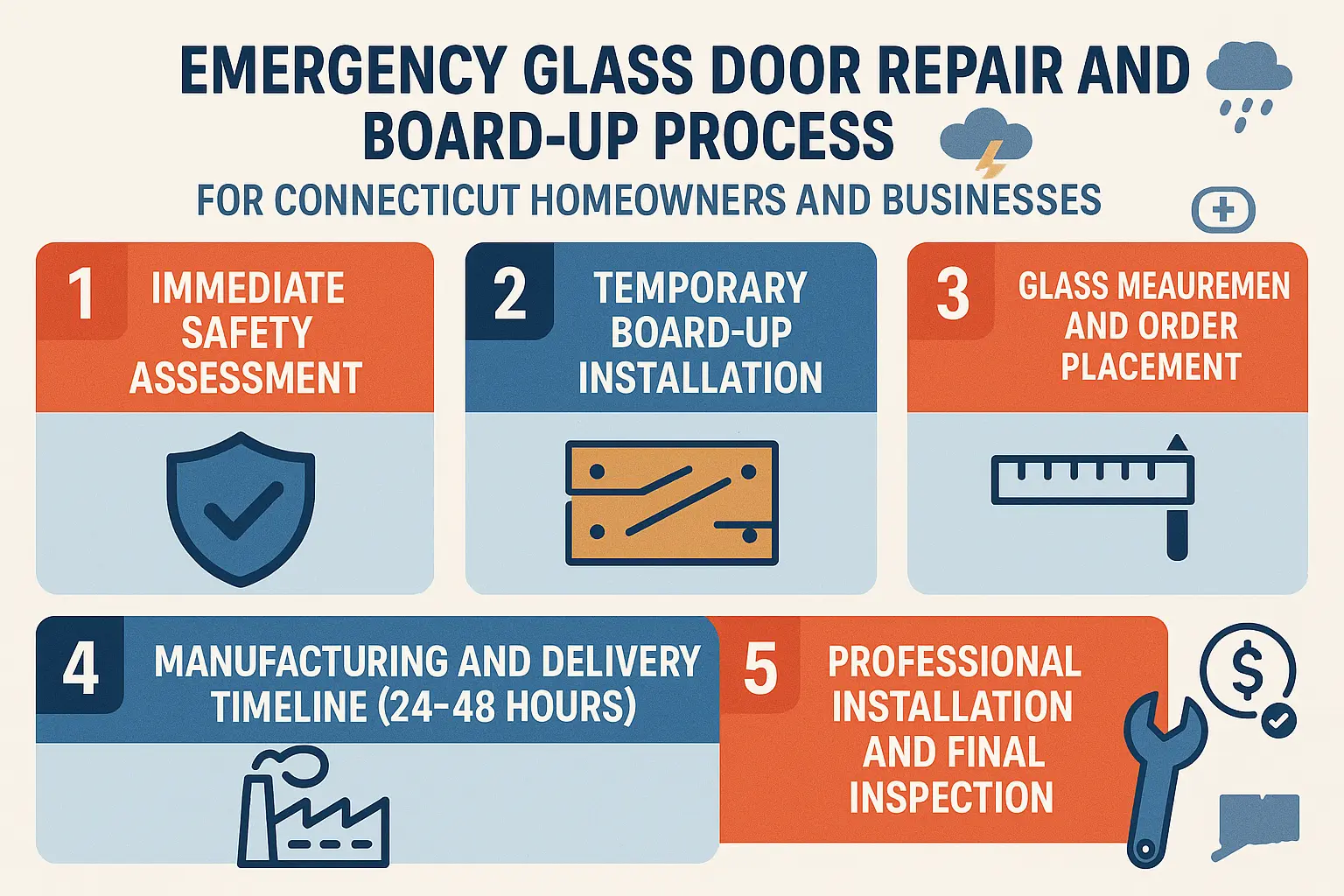
This infographic guides users through the critical emergency glass door repair process, highlighting the rapid-response timeline and safety measures essential for CT properties after glass breakage.

Professional response protocols begin with securing the site, removing hazardous shards, and installing structural board-ups to protect against weather intrusion. For high-urgency commercial needs, utilizing emergency commercial door repair ensures compliance with insurance requirements while fast-tracking custom glass fabrication.

Sliding Glass Door Track & Roller Repair Mechanics


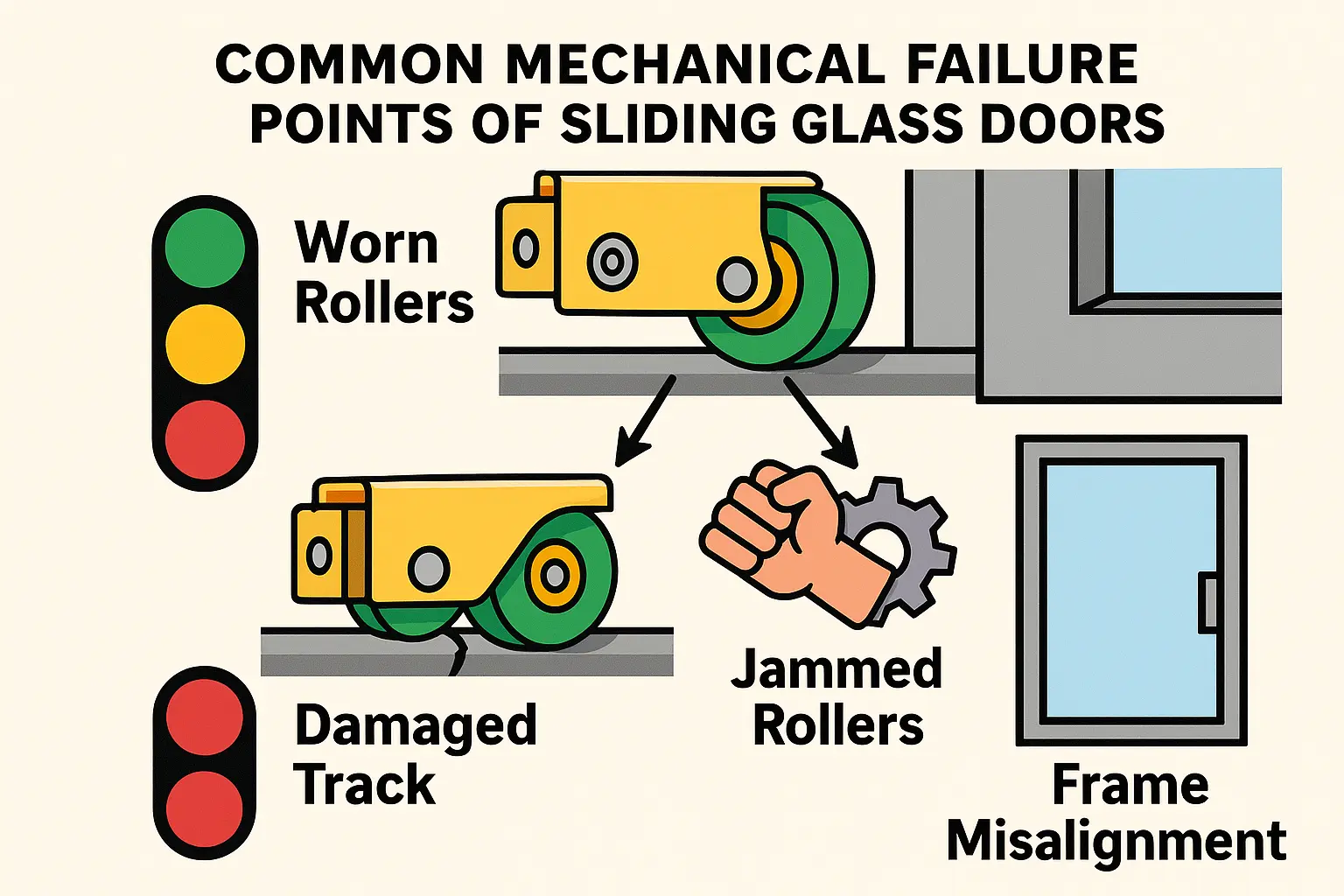
When sliding doors drag or jump, inspect the bottom mechanical assembly before considering replacement. Dirt accumulation and heavy coastal humidity accelerate roller bearing decay.

This diagram anchors key mechanical problem areas for sliding glass doors in memory, helping technicians and homeowners quickly identify causes of door sticking or failure.

Executing a precise sliding glass door track repair involves installing stainless steel track caps over pitted aluminum rails, replacing flattened nylon rollers with heavy-duty tandem steel ball-bearing units, and adjusting height calibration screws to realign latch alignment.

Commercial Storefront Glass Replacement & Building Code Compliance


Commercial entrances must meet strict safety guidelines under Connecticut state building codes, including ANSI Z97.1 and CPSC 16 CFR 1201 standards for safety glazing. High-traffic retail entryways require tempered or laminated impact glass to withstand severe mechanical strain and prevent injury.

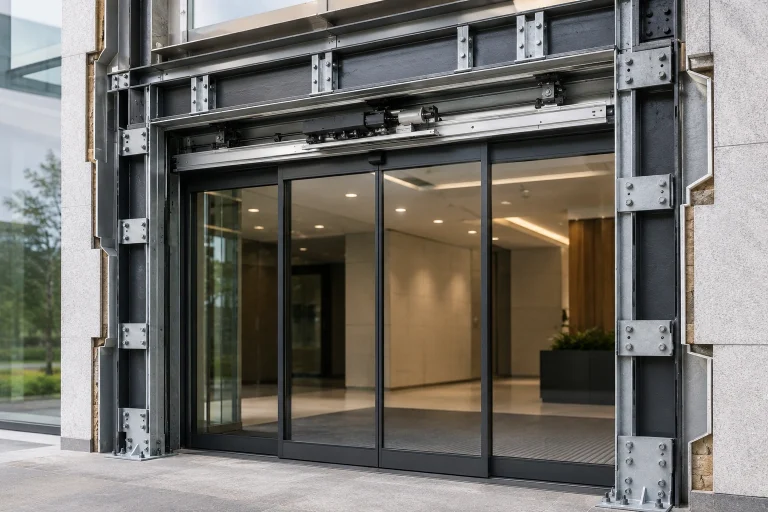
When managing public facilities, addressing dragging doors through timely commercial glass door adjustment prevents frame alignment damage. For comprehensive retail facility upkeep, specialized commercial storefront door repair and automatic door repair guarantee ADA compliance and smooth traffic flow.

Frequently Asked Questions


Can you replace just the glass in a sliding door without removing the entire frame?

Yes. If the structural frame and tracks are in good condition, professional technicians can remove the door sash, replace the sealed insulated glass unit (IGU), and reinstall the door without disturbing your home’s wall framing, exterior siding, or interior trim.

How do I know if my sliding glass door needs new rollers or a full track replacement?

If the door feels heavy, vibrates, or jumps when sliding, the rollers are likely flat-spotted or rusted. If the bottom rail shows physical dents, severe pitting, or grooves, installing a stainless steel track cap over the damaged rail alongside new tandem rollers will restore smooth operation.

What safety standards apply to replacement glass in Connecticut commercial doors?

Connecticut state building codes require all glass in commercial doors, sidelights, and high-traffic entryways to feature safety glazing compliant with ANSI Z97.1 and CPSC 16 CFR 1201 standards. Typically, fully tempered or laminated safety glass is installed to meet both code and liability requirements.