(855) 676-0881

How to Conduct the AAADM Daily Safety Check for Automatic Doors


Published: Oct 8, 2026

As a facility manager, safety compliance officer, or business owner, maintaining a safe environment is one of your most critical responsibilities. Automatic doors are complex mechanical and electronic systems that experience high traffic and constant wear. Ensuring these entryways operate correctly is not just about convenience—it is a vital part of protecting your visitors and safeguarding your organization.

The American Association of Automatic Door Manufacturers (AAADM) mandates a daily safety check to verify that these entryways function safely. Taking 60 seconds each morning to run through a standardized checklist can prevent costly injuries, ensure compliance, and protect your facility.
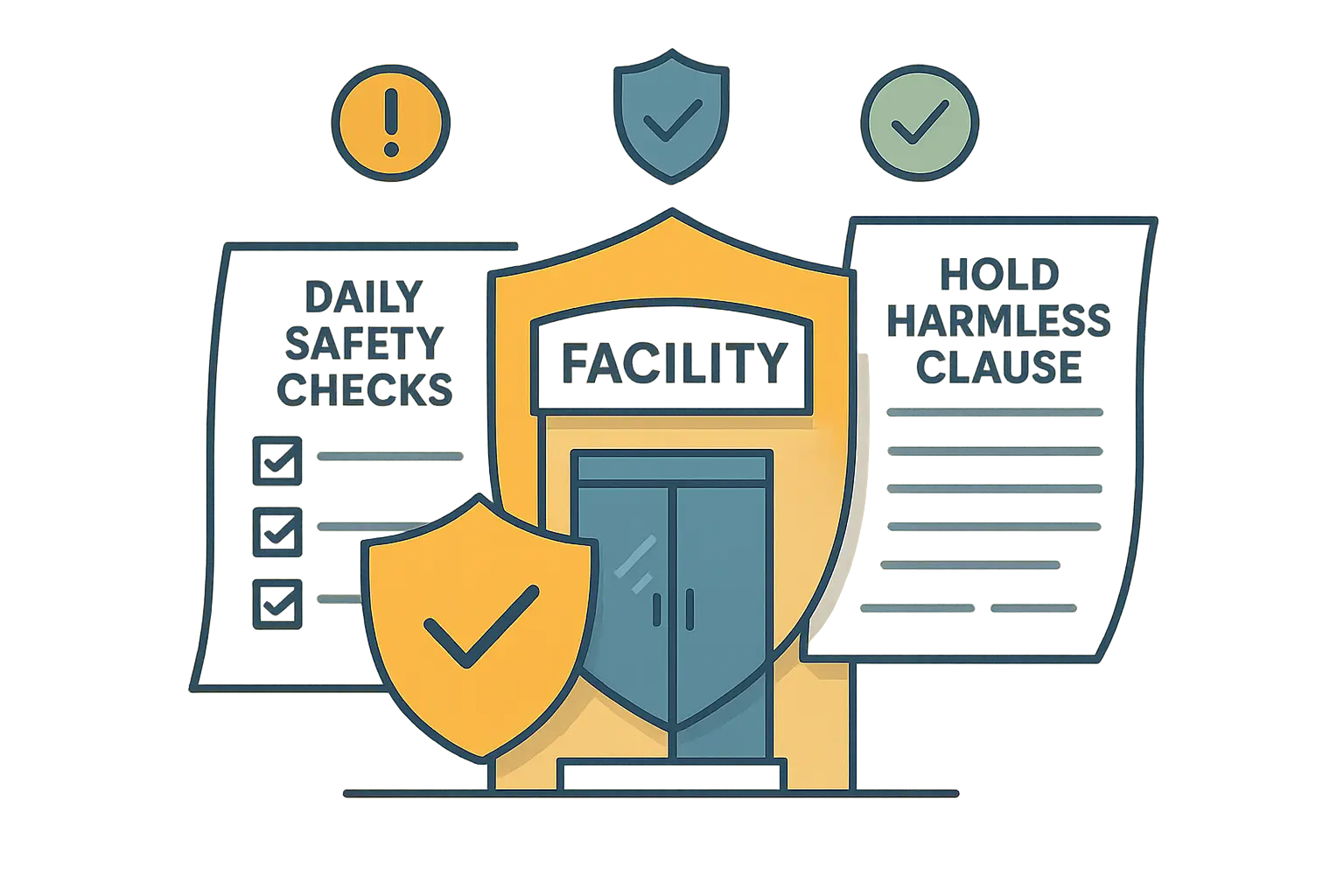
The Facility Manager’s Legal Shield


If an automatic door malfunctions and injures a visitor, your business faces immediate premises liability exposure. Many facility managers mistakenly believe their service contracts insulate them from liability. In reality, most commercial contracts contain “Hold Harmless” clauses that protect the service company between professional visits.

Because service technicians are not on-site daily, the ongoing safety of the door remains the legal responsibility of the property owner. A documented history of daily safety checks serves as your primary legal shield, proving you exercised due diligence to keep occupants safe. Integrating this quick routine into your morning opening procedures is the easiest way to ensure continuous automated door safety compliance and protect your organization.

This visual explains how daily automatic door safety checks serve as a legal shield, protecting facility owners from liability by documenting diligence and mitigating risk.

Daily Checks vs. Professional AAADM Inspections


Understanding the division of labor between daily staff checks and certified inspections helps keep your building compliant without incurring unnecessary service costs:

  • Daily Safety Check: Done by your on-site staff. It takes under a minute, requires no tools, and focuses on visible and audible behaviors to verify that sensors and motors are responding correctly.
  • Professional Inspection: Performed at least annually by an AAADM-certified technician. They use specialized tools like force gauges and timing devices to ensure adherence to strict industry benchmarks.

High-energy commercial doors must comply with ANSI/BHMA A156.10, which dictates specific sensor coverage and closing speeds. Low-energy, ADA-compliant doors must meet ANSI/BHMA A156.19 standards. Scheduling routine automatic door maintenance with a certified technician ensures these highly technical parameters are fully met.

Step-by-Step Daily Walk-Tests


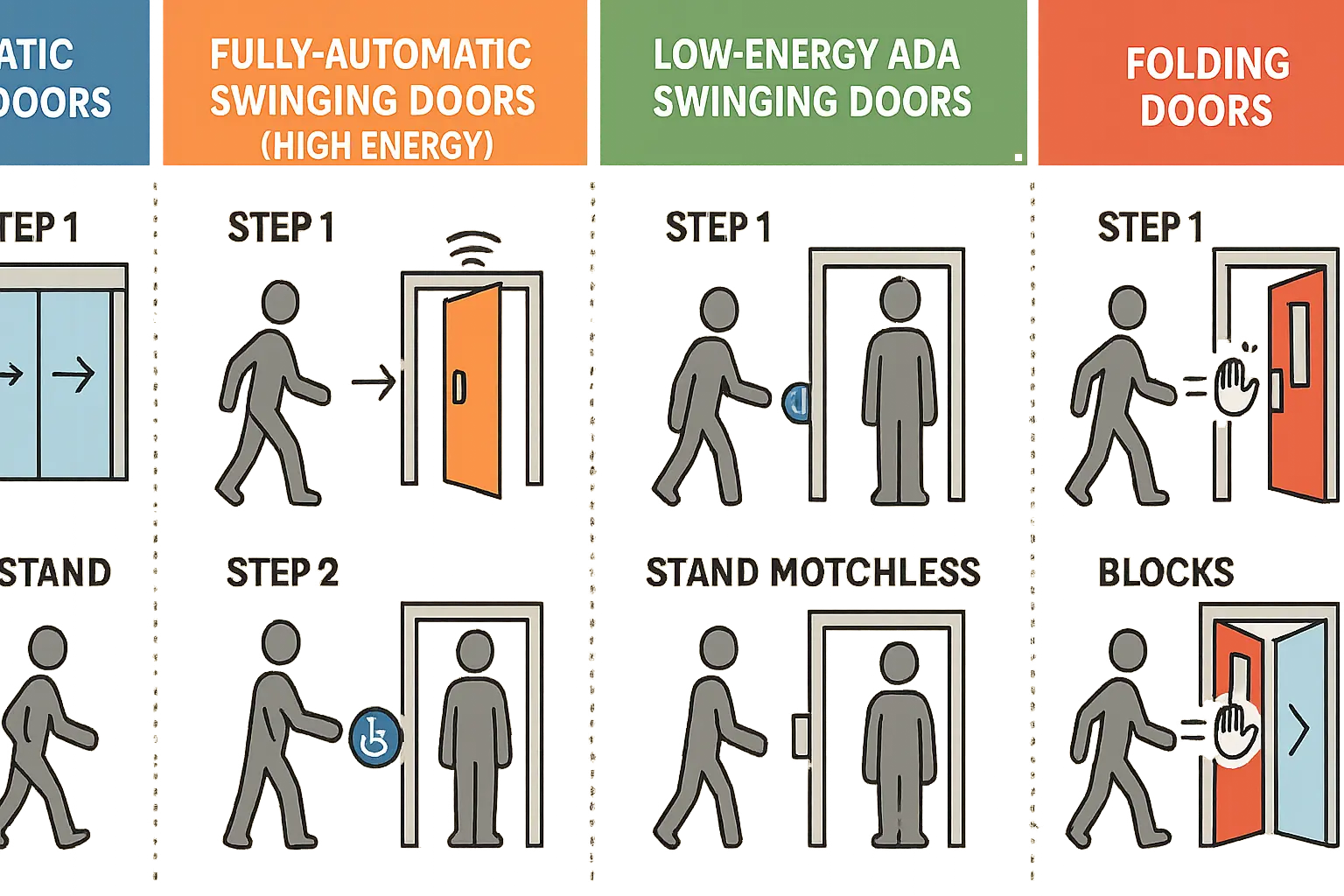
To conduct a proper daily check, walk through these specific steps based on the type of automatic doors installed at your facility.

This image breaks down the daily safety check routine into clear, door-type specific steps, helping users confidently conduct compliant tests on automatic doors.

Automatic Sliding Doors (ANSI A156.10)

  1. Sensor Range: Walk directly toward the door at a normal pace. The door should begin opening smoothly when you are at least 4 to 5 feet away from the glass.
  2. Threshold Safety: Step into the doorway and stand completely still for 10 seconds. The door must remain fully open.
  3. Safety Beams: If your door uses photoelectric safety beams, block the sensor path with your hand. The door should remain open and not attempt to close.
  4. Time Delay: Step away from the door. It should hold open for at least 1.5 seconds before starting to close. If the door closes too fast or slams, you should contact a professional automatic sliding door repair specialist to adjust the controller.

Fully Automatic Swinging Doors (ANSI A156.10)

  1. Approach Actuation: Approach the door from the swing-away side. It should begin opening before you reach the threshold.
  2. Safety Side: Approach the door from the swing side. The door should not swing open if you or another object are standing in its direct opening path.
  3. Guide Rails: Check that the physical guide rails are securely anchored to the floor and walls to prevent pedestrians from accidentally stepping into the path of the swinging door.

Low-Energy / ADA Swinging Doors (ANSI A156.19)

  1. Activation: Press the physical push plate or trigger the wave sensor. The door should open smoothly, taking at least 3 seconds to reach its fully open position to avoid striking anyone.
  2. Hold-Open Time: The door must remain open for at least 5 seconds. This ensures individuals with physical limitations or mobility aids can cross the threshold safely. If the door shuts prematurely, call an experienced ada door operator service technician to safely reprogram the control box.

Folding Doors (ANSI A156.10)

  1. Path Check: Walk toward the door to activate the folding panels. Ensure they fold and slide smoothly along their tracks without binding or stuttering.
  2. Safety Threshold: Stand motionless in the path of the folding leaves. The door must not begin closing while you occupy the space.

Emergency Failure SOP: What to Do When a Door Fails


If an automatic door fails any part of your daily safety walk-test, you must act quickly to eliminate the safety risk and protect your business from liability.

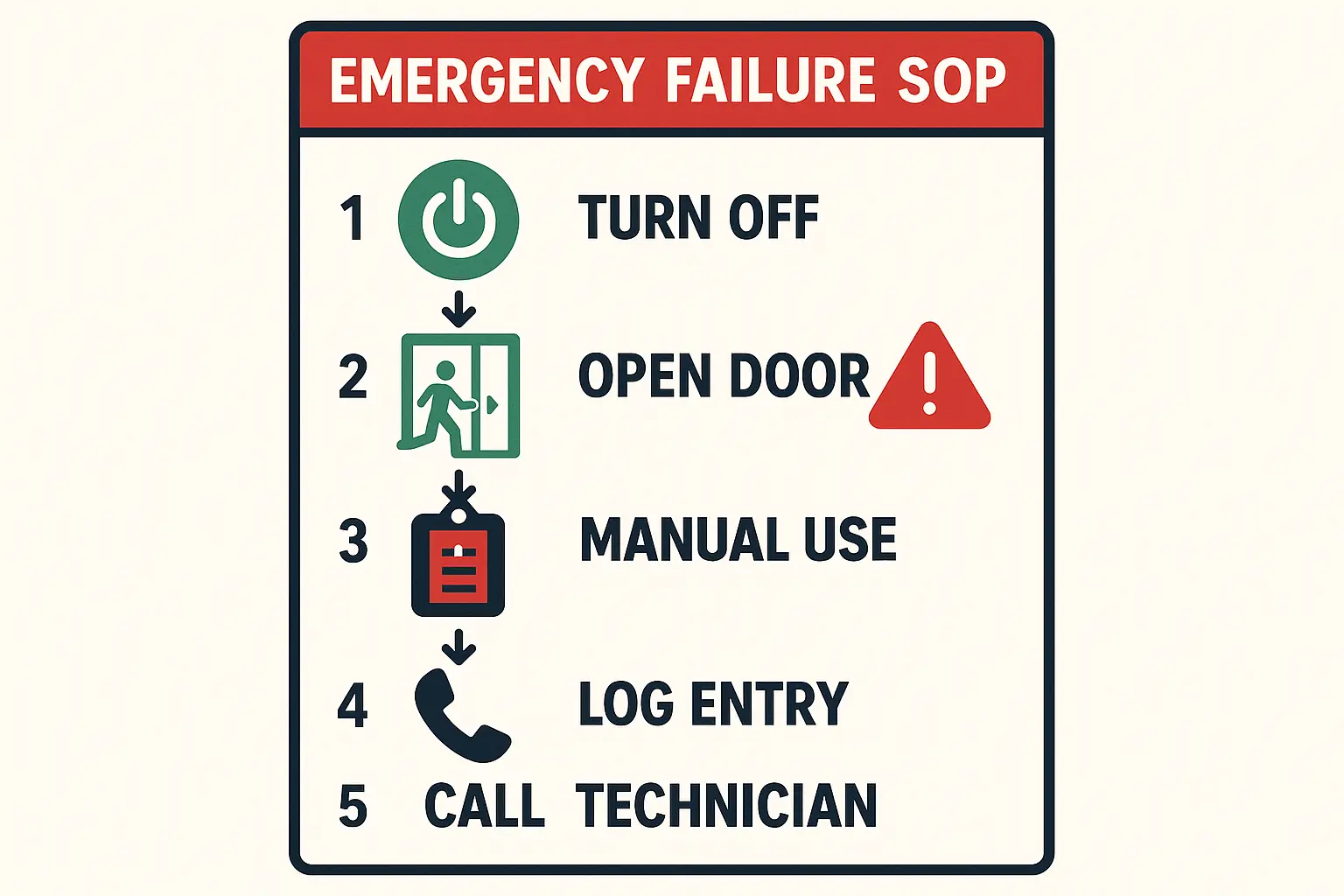
Use this clear flowchart as a quick-reference guide on safely handling automatic door failures during business hours to reduce risk and maintain compliance.

  1. Turn Off Power: Locate the main power switch (usually found on the door header or the vertical frame jamb) and turn the automatic operator off. This sets the door to manual mode.
  2. Verify Free Egress: Physically push the door panels open by hand to ensure they move freely and do not block exit routes.
  3. Secure and Sign: Place highly visible “Manual Door Only” or “Use Other Entrance” signs on both sides of the door.
  4. Log the Failure: Document the failure details, date, time, and your initials in your daily log book.
  5. Call for Certified Service: Immediately contact an AAADM-certified repair provider. For urgent situations, work with a reliable 24 hour automatic door service provider to restore safety and convenience to your entrance quickly.

Free Downloadable AAADM Daily Safety Log Sheet


Keeping a physical record of your daily tests is your best defense against premises liability claims. Download our clean, single-page AAADM Daily Safety Log Sheet PDF. Print it out, keep it on a clipboard at your front desk or maintenance station, and have your team initial it each morning to keep your facility safe and compliant.

Frequently Asked Questions


Who is allowed to perform the daily automatic door safety check?

Any trained facility manager, custodian, or opening staff member can perform the daily safety check. It does not require certification to perform, but the person conducting the walk-test must understand the basic step-by-step ANSI requirements for your door type.

Does a daily walk-test replace an annual AAADM inspection?

No. The daily safety check is an operational walk-test to catch obvious failures. An annual inspection must be performed by an AAADM-certified technician using specialized tools to verify precise closing force, sensor field depths, and compliance with ANSI standards.

What is the minimum hold-open time for an ADA automatic door?

Under ANSI A156.19 standards, low-energy automatic doors activated by a push plate or wave sensor must remain fully open for a minimum of 5 seconds to allow individuals with limited mobility to pass through safely.