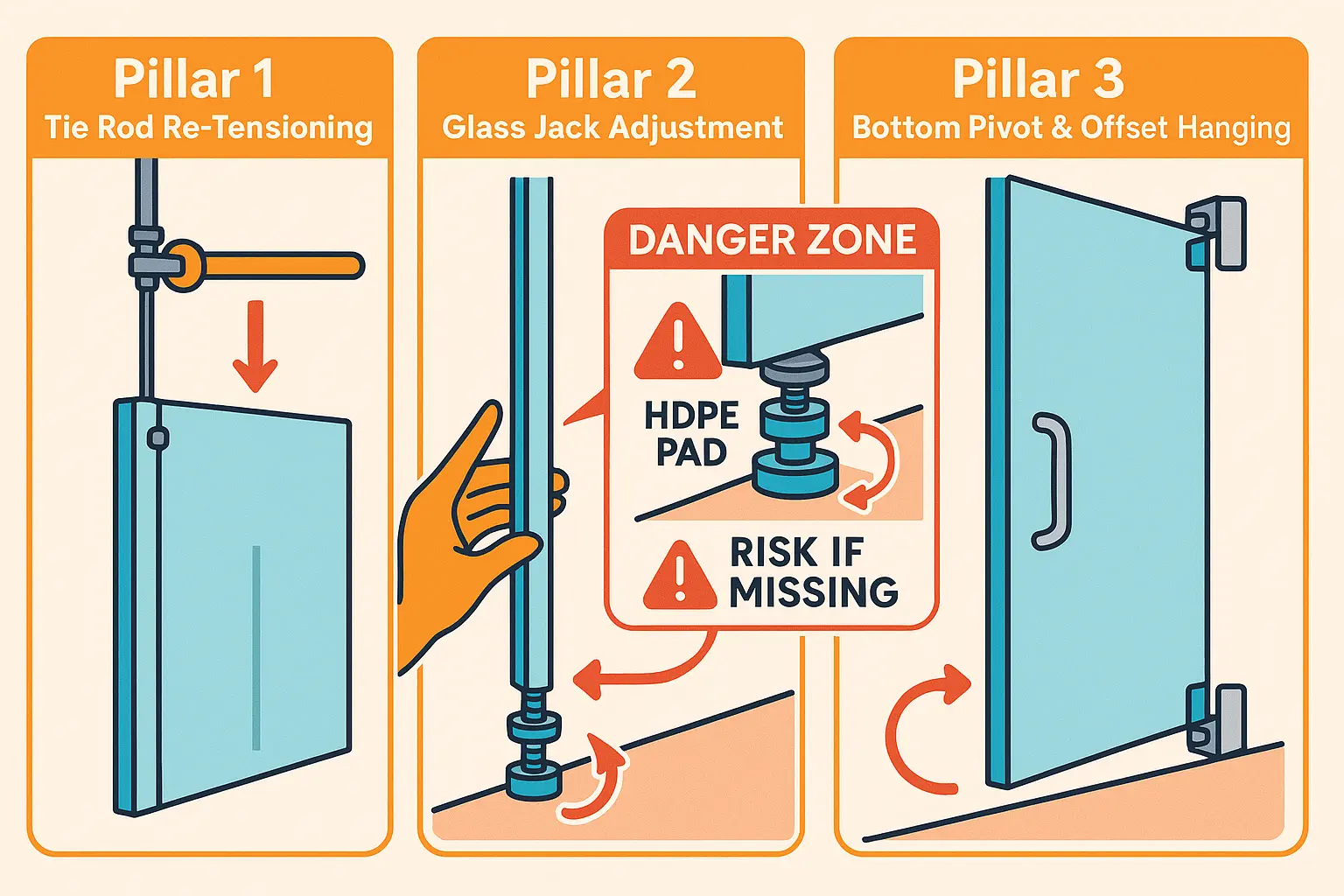
Resolving a sagging storefront door involves adjusting three structural points in a precise sequence.
Pillar 1: Re-Tensioning the Tie Rods
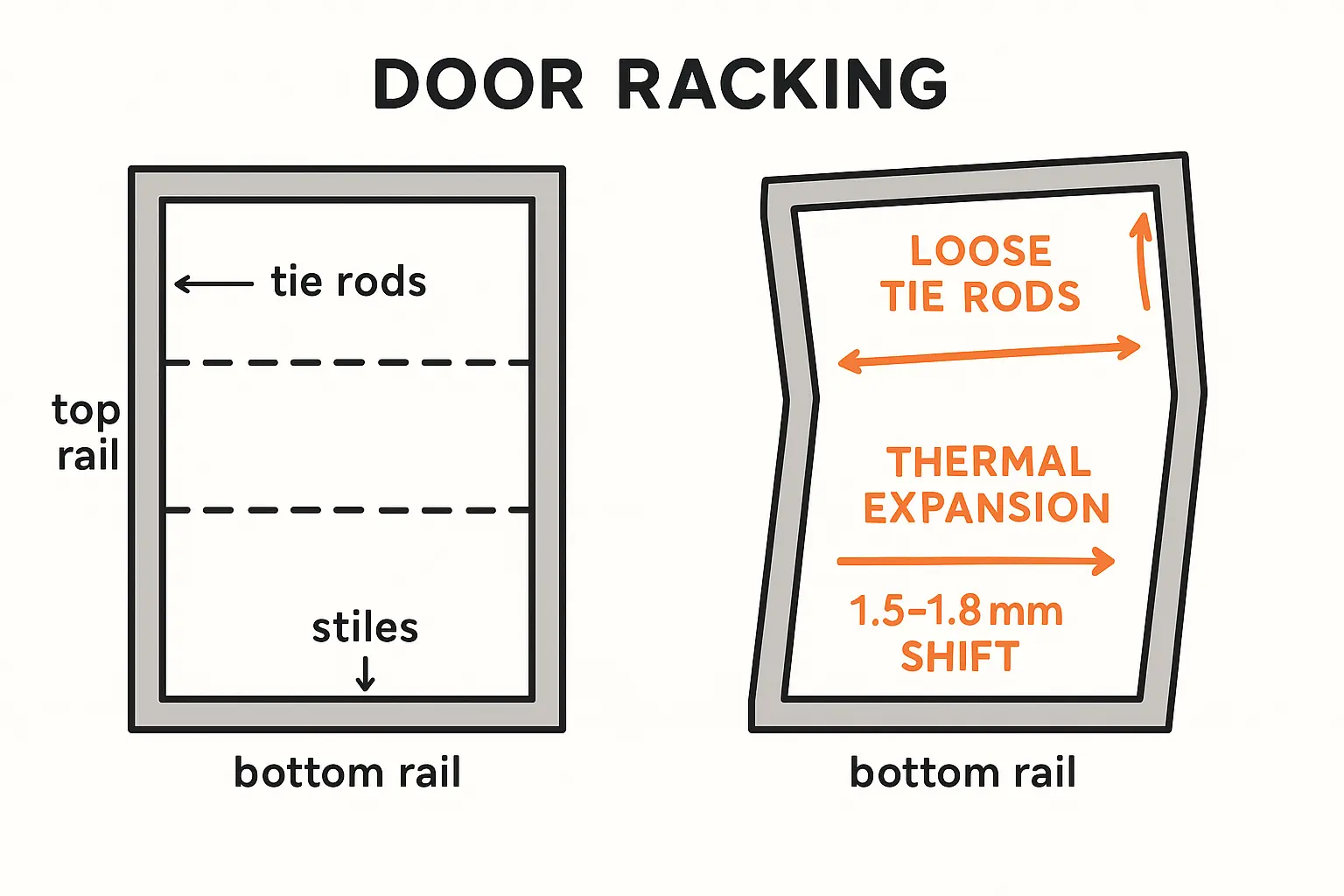
Storefront doors are held together as a rigid unit by high-tensile steel tie rods running horizontally through the top and bottom rails. When these rods back off or loosen over time, the door’s structural integrity fails. To fix this, remove the door’s glass stops and carefully tighten the internal tie-rod hex nuts to pull the vertical stiles and rails back into a tight, perfect 90-degree alignment.
Pillar 2: Adjusting the Glass Jack (The Danger Zone)
The “glass jack” is an internal screw assembly located inside the top rail designed to “toe-and-heel” the glass, lifting the locking edge. However, this is a major safety hazard for untrained staff.
CRITICAL SAFETY WARNING: Inside the rail, a high-density polyethylene (HDPE) cushion block must sit between the metal adjustment bolt and the glass edge. If this pad is missing or worn, tightening the metal bolt directly against tempered glass will cause a sudden, violent glass blowout. Never force this adjustment.
Pillar 3: Bottom Pivot and Offset Hanging Tuning
Most aluminum doors hang on offset pivots rather than traditional hinges. To lift a sagging door, loosen the hex set screw on the bottom pivot. Use an Allen wrench to rotate the pivot pin clockwise, which raises the door height, then re-tighten the set screw. For fine-tuning closing speeds and latching alignment, performing a precise commercial door adjustment is critical.