(855) 676-0881

The Hotelier’s Architectural Guide to Automatic Entrance Systems


Published: Sep 8, 2026

In April 2018, Guernsey’s auctioned off 52 original wooden doors salvaged from the renovation of the historic Chelsea Hotel. Janis Joplin’s room door fetched $85,000, while the door to Room 100, where Sid Vicious lived, sold for $125,000. This legendary auction proved that hotel doors are far more than structural barriers—they are the ultimate thresholds of the guest experience, carrying immense emotional and practical weight.

For modern architects, hotel developers, and facility managers, selecting the right automatic doors is a critical decision. It directly influences guest satisfaction, interior aesthetics, code compliance, and thermal efficiency.
The Physics of the First Impression (Main Entrances)


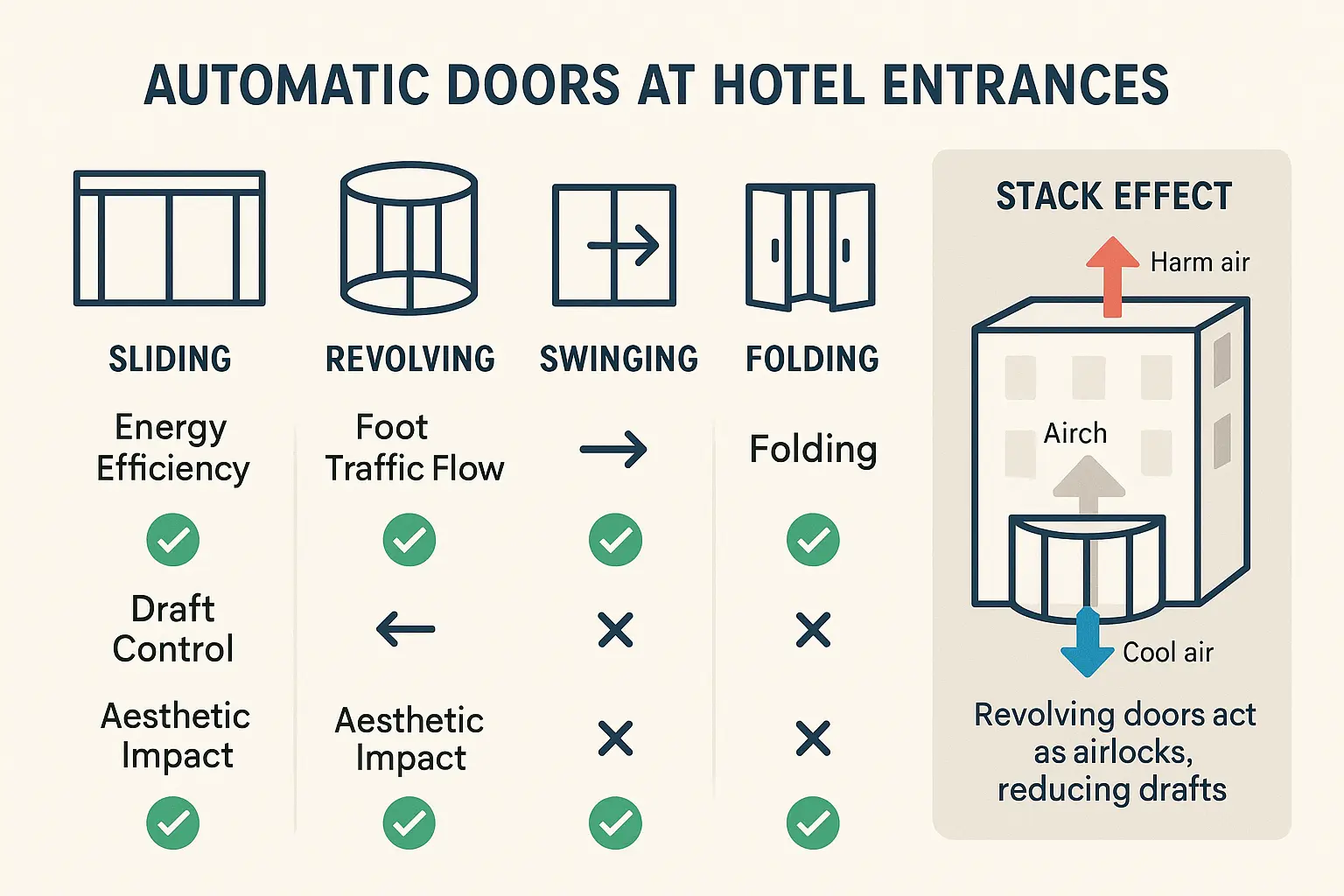
The lobby entry point is a constant battlefield against the “stack effect.” In multi-story buildings, temperature differences between indoor and outdoor air create pressure vaults, turning single sliding doors into draft tunnels.

While sliding doors offer clean, modern aesthetics, they can struggle with microclimate control in high-traffic lobbies. Conversely, automatic revolving doors act as constant airlocks. A landmark study by the Massachusetts Institute of Technology (MIT) proved that revolving doors reduce air infiltration by 80% compared to swinging or sliding configurations, making them up to 8 times more energy-efficient.

According to the MIT research, every single pass through a revolving door instead of a swinging door saves approximately 36.54 watt-hours of HVAC energy. For a high-traffic hotel lobby with 2,000 daily entries, this translates to 26,674 kWh saved annually—significantly lowering utility costs and carbon emissions. Data from GEZE supports this, showing revolving doors reduce overall climate exchange between indoor and outdoor zones by 40%, stabilizing lobby temperatures.

A visual comparison of common automatic door types in hotels, illustrating how revolving doors reduce lobby drafts and improve energy efficiency by acting as airlocks, mitigating the stack effect.

Hotel Interior Zoning Guide


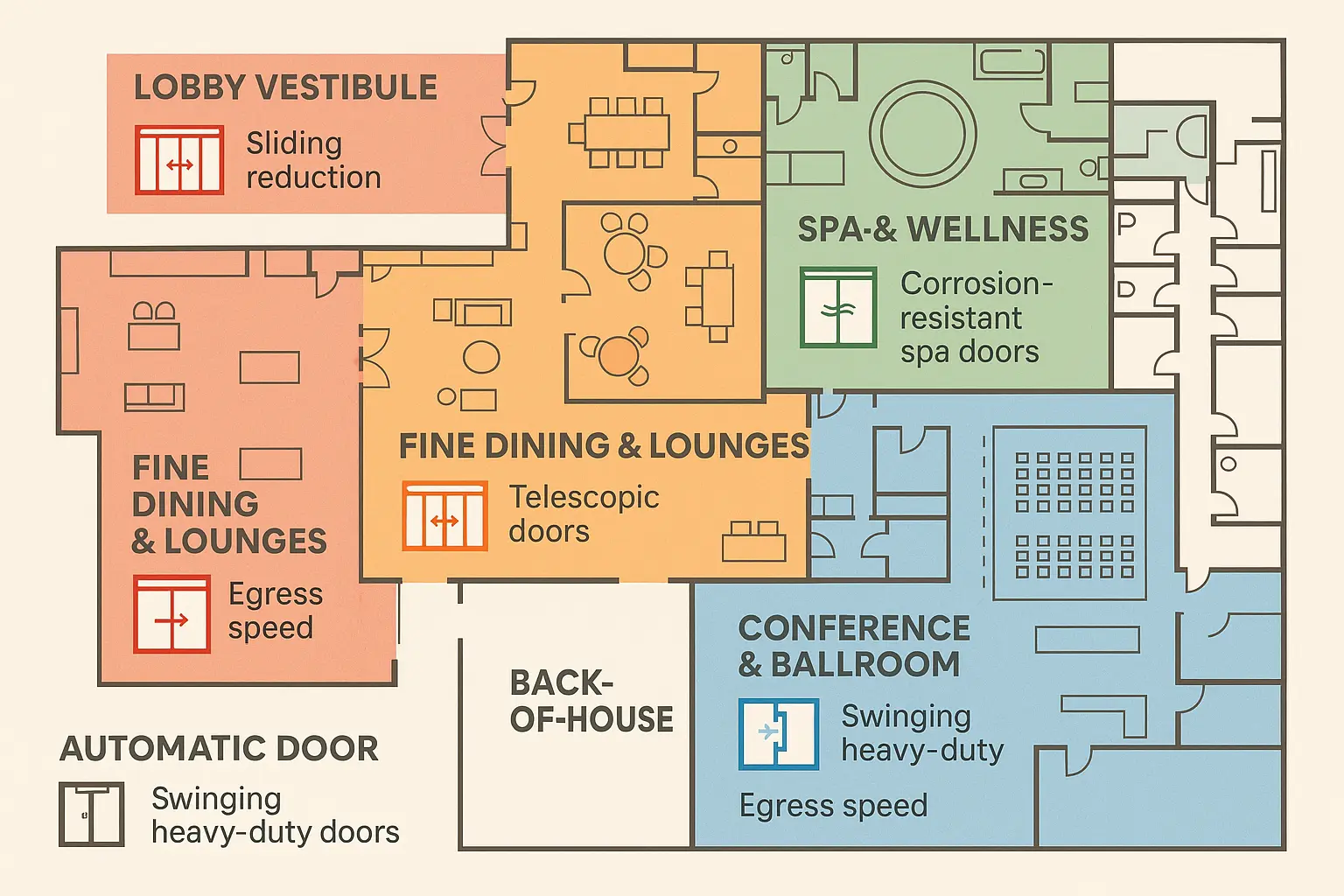
Seamless movement within a hotel requires tailored automatic solutions for distinct functional areas.

  • Zone A: Lobby Vestibules & Airlocks: If revolving doors do not fit your design narrative, a double-sliding vestibule system is the next best choice. Operating in sequence, these doors act as a physical airlock to mitigate drafts.
  • Zone B: Fine Dining & Lounges: Acoustic isolation is essential here. Low-profile, quiet, all-glass automated sliders allow service staff to pass through effortlessly while containing kitchen noise and cooking aromas.
  • Zone C: Spa & Wellness Centers: High humidity and chlorine demand specialized corrosion-resistant aluminum frames and automatic privacy glass that tints instantly upon sensor activation.
  • Zone D: Ballrooms & Conference Centers: To accommodate rapid crowd egress during events, high-capacity telescopic sliding doors maximize clear opening width within limited wall spaces.
  • Back-of-House (BOH): Kitchen corridors, laundry facilities, and loading docks require durable automated swinging doors. These systems feature impact-resistant panels and rapid-open mechanisms to support busy staff. Choosing the right commercial door type from an experienced door services catalog ensures your back-of-house operations remain highly efficient.

A zone-by-zone hotel layout illustrating recommended automatic door mechanisms tailored to each property's functional needs and environmental conditions.

Technical Specifications, ADA Compliance & Safety Codes


To guarantee safety and prevent legal liabilities, all commercial automatic entrances must strictly adhere to industry standards.

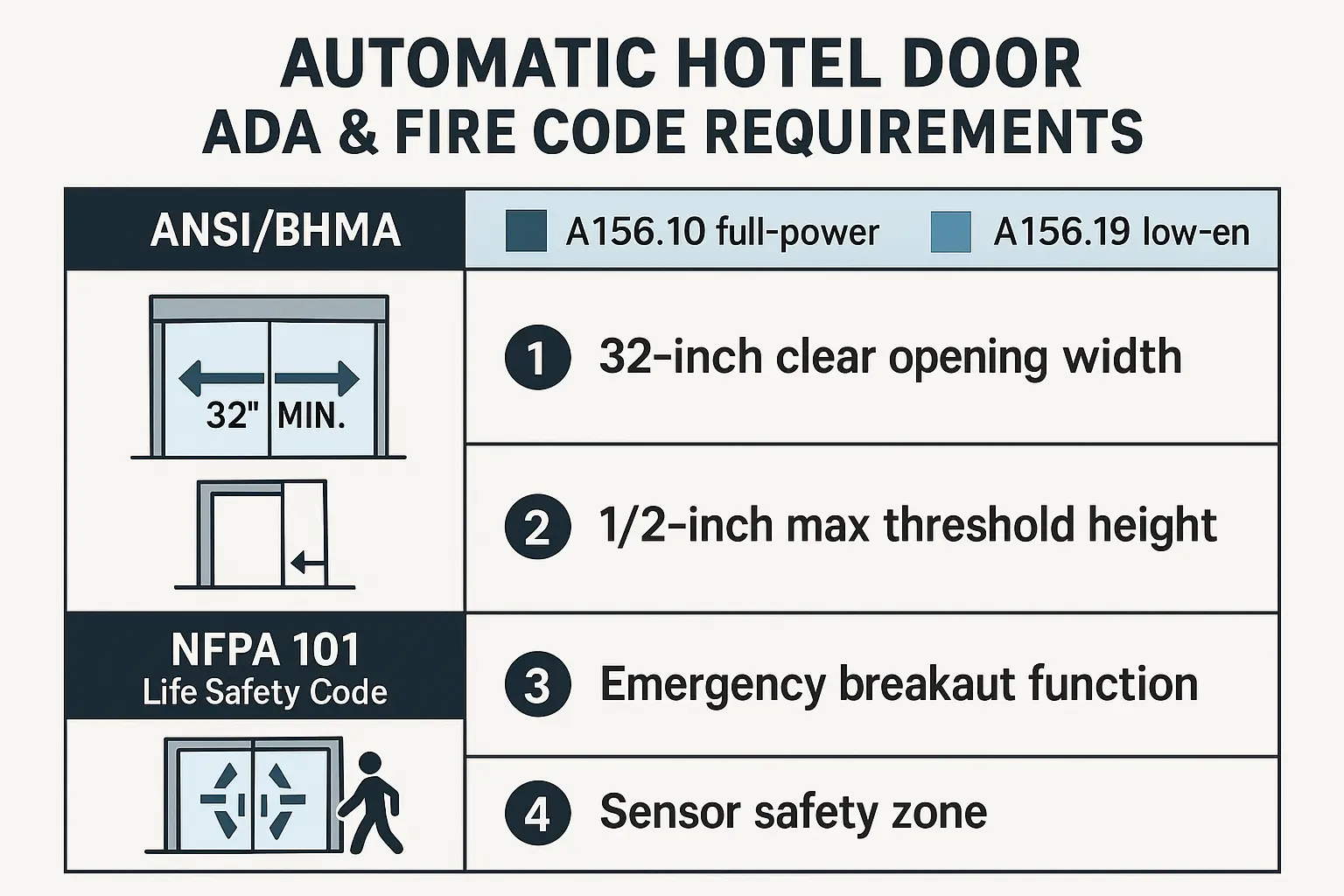
  • ADA Guidelines: Pedestrian routes must provide a minimum clear-opening width of 32 inches, with threshold heights not exceeding 1/2 inch to accommodate wheelchairs.
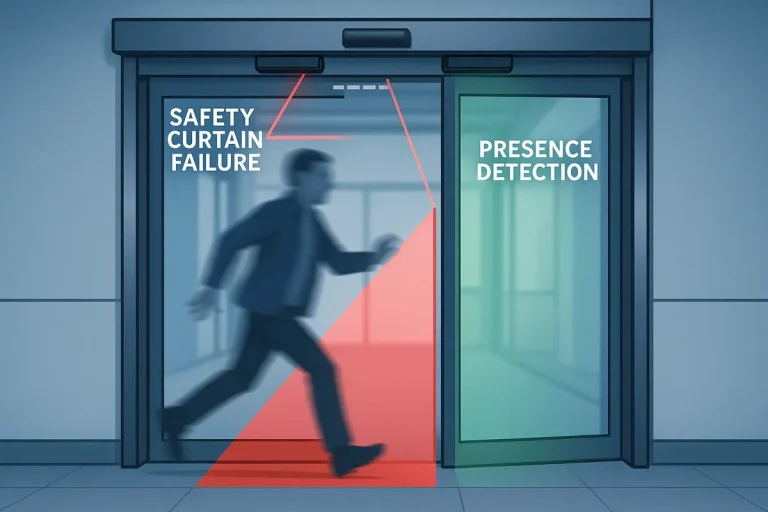
  • ANSI/BHMA Standards: It is critical to differentiate between ANSI A156.10 (standards for full-power automatic pedestrian doors requiring presence-sensing safety mats or sensors) and ANSI A156.19 (standards for low-energy power-assist operators activated by push-plates or wave sensors).
  • Fire & Egress Codes: Under NFPA 101, automatic sliding doors located along emergency exit routes must include a “breakout” function. Under manual pressure, the panels must swing outward in the direction of egress. Scheduling routine inspections with certified specialists in commercial door repair guarantees safety and compliance.

A handy cheat sheet summarizing essential ADA, ANSI, and fire safety standards for automatic hotel doors, designed to aid design compliance and operational safety.

Property Management and Access Control Integration


Modern hospitality relies heavily on smart tech integration. Late-night security is achieved by linking automatic entrance systems with Bluetooth Low Energy (BLE) and RFID locks. This allows checked-in guests to securely open exterior lobby doors using their digital keycard via Apple Wallet or a hotel app.

Additionally, these entrances interface directly with your Property Management System (PMS), automatically switching to “one-way egress only” during late hours while sending real-time operational status updates directly to the front desk.

A Brief Clarification on Search Queries


Are you looking for walkthroughs for the popular Roblox game DOORS (Chapter 1 – The Hotel), or trying to bid on historic Chelsea Hotel memorabilia? While we appreciate gaming, art, and history, this guide is exclusively focused on the engineering, architectural installation, and maintenance of physical commercial door systems. At a1 doors, our goal is to deliver durable, real-world entrance solutions that keep your property secure, comfortable, and efficient.

Frequently Asked Questions


What is the primary difference between ANSI A156.10 and ANSI A156.19?

ANSI A156.10 regulates high-power automatic doors that open automatically via motion sensors and require safety sensors to detect obstacles. ANSI A156.19 applies to low-energy doors that require a manual action to activate, such as pressing a push-plate or using a touchless wave sensor.

How do automatic revolving doors save energy compared to sliding doors?

Revolving doors maintain a continuous seal between the interior and exterior environments, neutralizing the stack effect. They reduce indoor-outdoor air exchange by 40% and save an average of 36.54 watt-hours per pass, significantly reducing heating and cooling costs.

What are the egress requirements for hotel automatic sliding doors under NFPA 101?

Under NFPA 101, automatic sliding doors on emergency exit pathways must feature a breakout mechanism. This mechanism allows the sliding panels to swing outward manually like a traditional door when pushed, ensuring a safe exit path during emergencies or power failures.