Hardware Selection & Precision Installation Guide for Narrow-Stile Storefront Panic Bars
Published: Nov 16, 2026
Open every day · 7 AM – 7 PM
Need a Quick Fix?
Tell us what’s wrong with your door — we’ll call you back and get it sorted.
Request Help
or call (855) 676-0881
The Narrow-Stile Paradox and Egress Hardware Evaluation
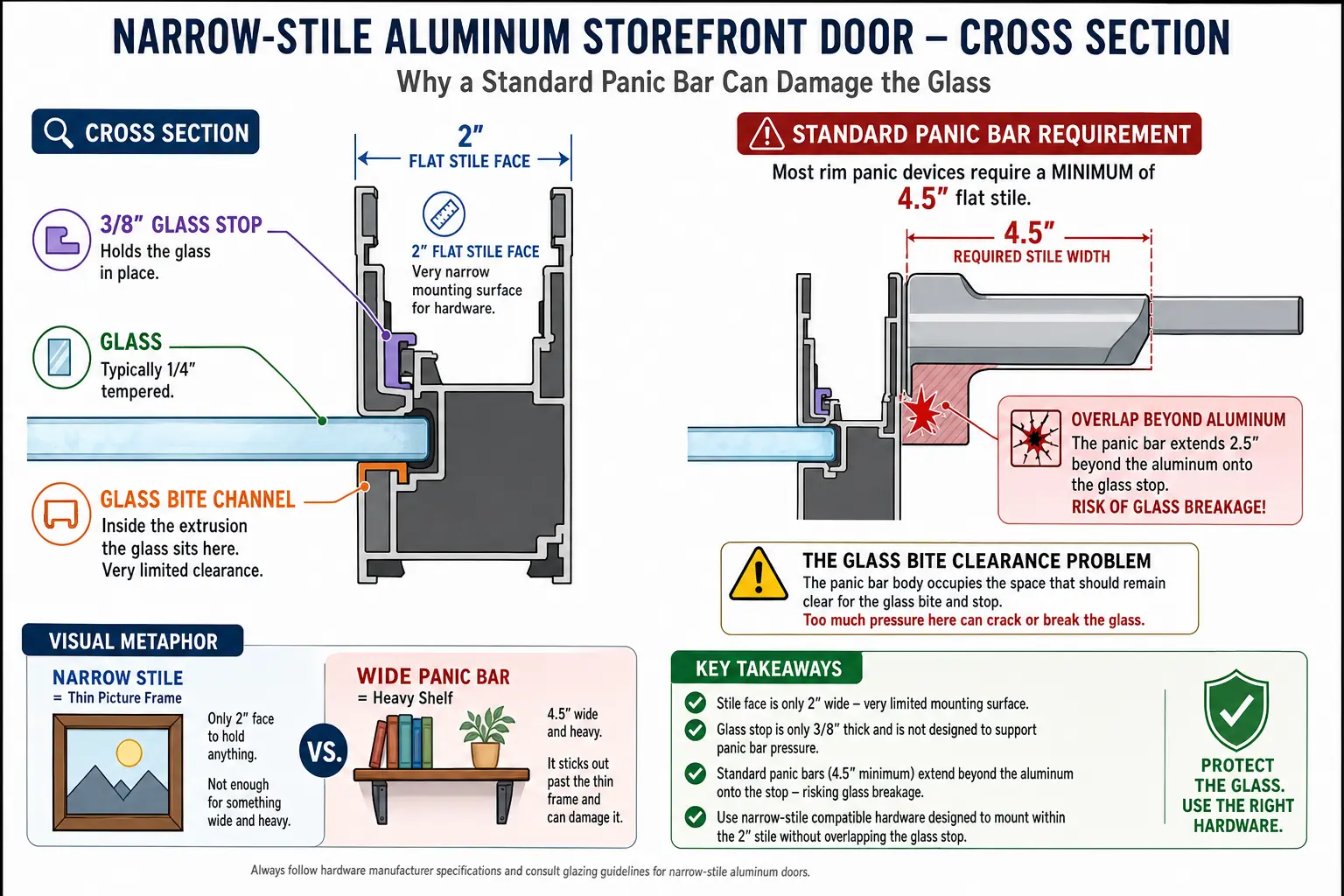
Commercial facility managers and installation contractors upgrading storefront entrances frequently face a critical hardware challenge known as the “Narrow-Stile Paradox.” Standard commercial exit devices are engineered for wide-stile hollow metal or wood doors requiring a minimum flat mounting surface of 4.5 inches. In contrast, standard aluminum storefront doors feature narrow stiles offering only 2.0 to 2.5 inches of flat aluminum face before meeting the glass stop.
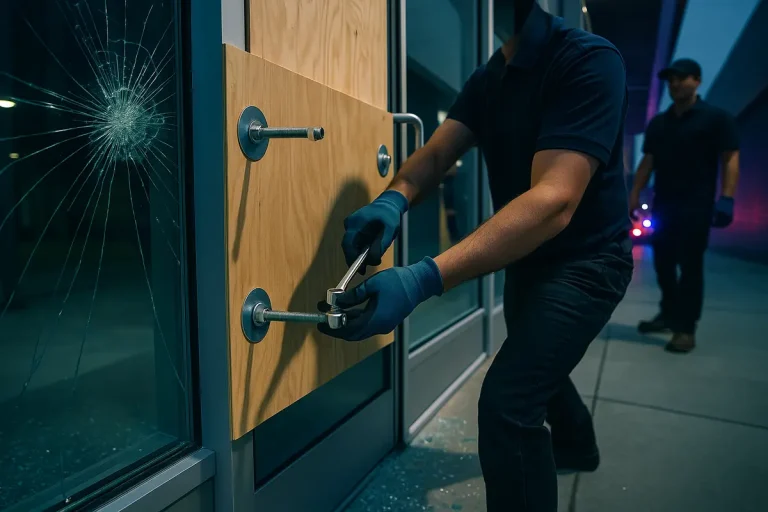
Attempting to mount standard-width panic hardware onto a narrow aluminum profile leads to severe structural and aesthetic failures. Hardware chassis overhang vision glass, while mounting screws driven too close to the frame bevel risk penetrating the internal glass bite channel, shattering internal tempered glass panels. Achieving code-compliant egress and long-term durability requires evaluating hardware chassis footprint, glass-bite clearances, and extrusion wall fastening constraints.
Architectural Device Evaluation: Rim Exit vs. Concealed Vertical Rod (CVR)
Selecting between Rim surface-mounted exit devices and Concealed Vertical Rod (CVR) systems depends on entrance traffic, aesthetic requirements, and maintenance access.
- Rim Surface Exit Devices (e.g., Adams Rite 8800, Storefront Pro AL10): These devices surface-mount to the interior stile and latch into a frame-mounted strike on the jamb. Rim devices offer straightforward maintenance and lower installation labor, making them ideal for retrofit projects. While compact units like the Cal-Royal 5000 Series require a 3.75″ minimum stile, dedicated narrow-stile rim devices fit precise 2.0″ mounting surfaces.
- Concealed Vertical Rod Devices (CVR): CVR systems hide vertical latching rods inside the hollow aluminum stile, securing the door leaf at both the top frame header and bottom threshold. CVR devices maintain clean glass sightlines and eliminate the need for a removable center mullion on double-door entrances. However, they demand precise internal rod routing and alignment during initial installation.
When converting legacy mortise locks or deadlatches, utilizing specialized escutcheon mounting pads ensures full cutout coverage during commercial storefront door repair without requiring full door leaf replacement.
Building Code & Regulatory Compliance Blueprint
Ensuring life safety compliance involves coordinating physical door dimensions with national building standards:
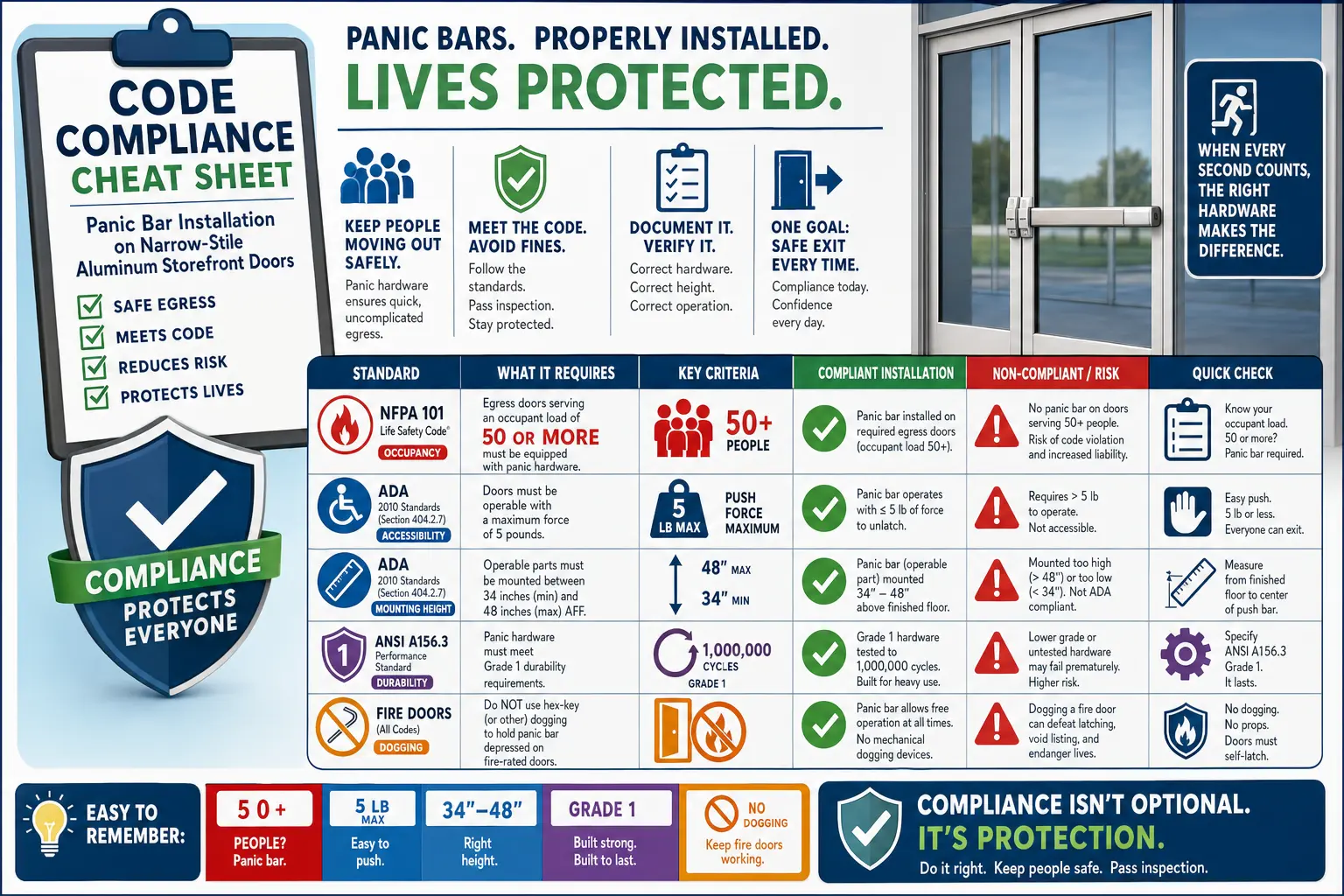
- NFPA 101 & IBC Section 1010.1.9.3: Mandates panic hardware on doors serving Assembly occupancies with occupant loads of 50 or more. The actuating pushpad must span at least 50% of the door leaf width and be mounted between 34 inches and 48 inches above the finished floor (AFF).
- ADAAG Section 404.2.9 Accessibility: Touchbar opening force must not exceed 5.0 lbf (22.2 N). Facilities requiring hands-free egress should integrate panic hardware with certified ada automatic door opener installation systems.
- Fire-Rating & Dogging Regulations: Under NFPA 80, mechanical hex-key dogging (holding the latch retracted for open push/pull traffic) is strictly prohibited on fire-rated doors. Reviewing commercial door panic bar code requirements before hardware selection prevents inspection failures. Ongoing compliance can be verified through an annual nfpa 80 fire door inspection.
Step-by-Step Precision Installation Protocol
Installing heavy commercial panic bars on thin aluminum extrusions requires precise execution to preserve door integrity and structural fastening.
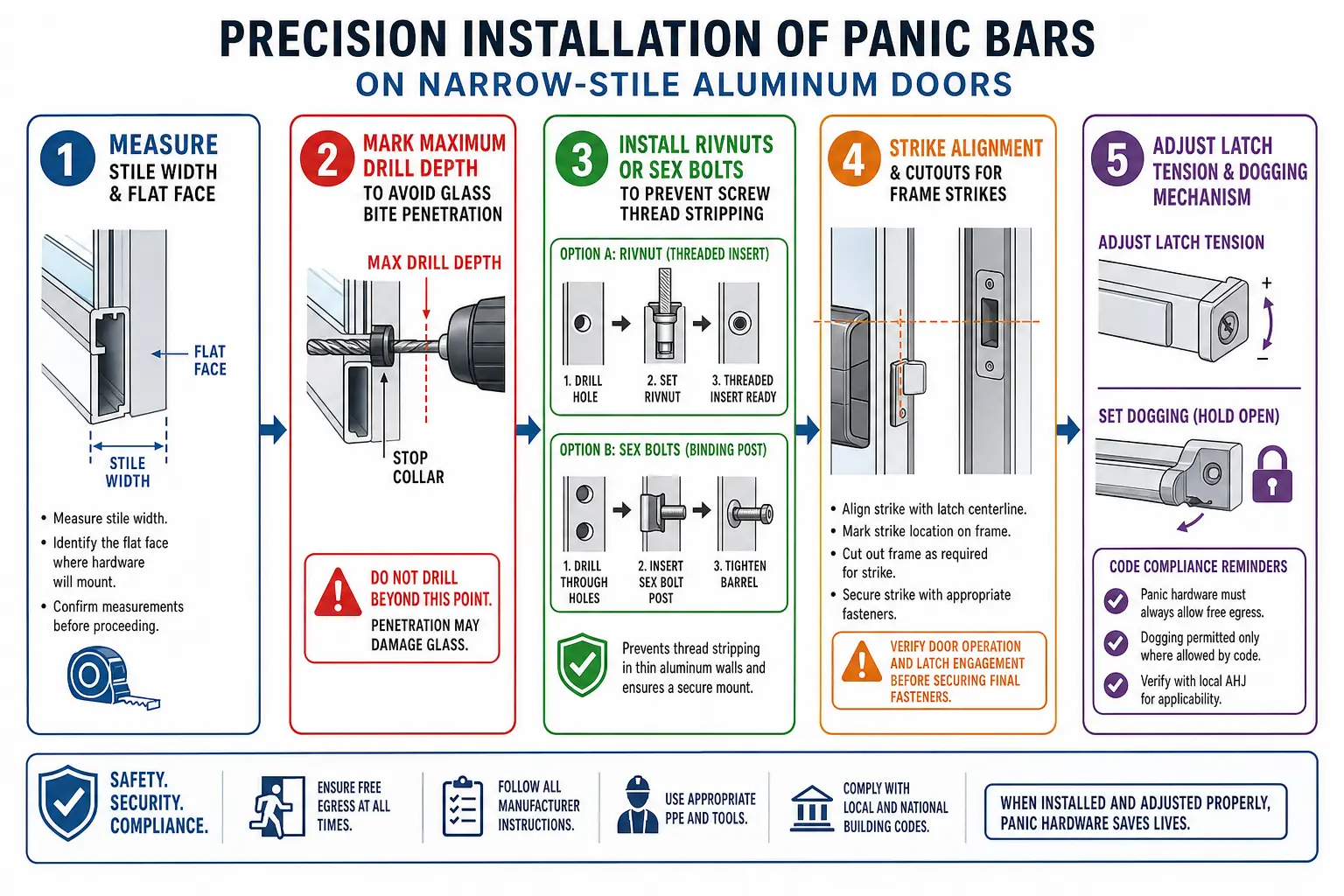
- Pre-Installation Audit: Confirm stile face dimensions and verify hardware matches ANSI/BHMA A156.3 Grade 1 standards (certified for 1,000,000 operational cycles).
- Glass-Bite Protection: Glazing channels typically sit 3/8″ inside the aluminum extrusion. Drill bit stop-collars must be used to limit penetration depth and prevent drill bits from striking hidden glass edges.
- Fastening Mechanics for 1/8″ Extrusions: Standard storefront aluminum stiles feature a thin wall thickness of only 0.125 inches (1/8″). Standard sheet metal screws will strip out after heavy cycle use. Install 1/4-20 steel Rivnuts (blind rivet nuts) or sex-bolts (thru-bolts) to anchor hardware permanently.
- Strike Alignment & Retrofitting: When converting older deadbolt preps, install cover escutcheons and align surface roller strikes on the frame jamb.
- Operational Verification: Confirm latching engagement and verify that proper door closer service settings enable full latch closure from a 70-degree sweep.
For specialized retrofits and code-compliant assembly, relying on professional panic bar installation and aluminum door repair guarantees long-term durability and life safety compliance.
Frequently Asked Questions
Can I install a standard commercial crash bar on a 2-inch storefront stile?
No. Standard panic bars require at least 4.5 inches of flat mounting surface. Installing them on a 2-inch narrow stile causes hardware to overhang the glass vision panel and forces mounting screws into the internal glass channel, risking glass breakage. You must use hardware specifically designated for narrow stiles.
Why do standard mounting screws loosen on aluminum storefront doors?
Storefront aluminum door stiles have a thin wall thickness of approximately 0.125 inches (1/8″). Standard self-tapping screws quickly strip the aluminum threads under continuous commercial use. Utilizing 1/4-20 steel Rivnuts or sex-bolts provides solid steel threads that prevent hardware sagging and loosening.
Is mechanical dogging permitted on all storefront panic hardware?
Mechanical dogging (using a hex key to hold the latch retracted) is permitted on non-fire-rated storefront doors to allow free entry during business hours. However, NFPA 80 strictly prohibits mechanical dogging on fire-rated assemblies, which must self-latch automatically to maintain fire containment.
Need professional assistance selecting or retrofitting narrow-stile exit hardware? Contact the licensed technicians at A1 Doors Services for expert site evaluations and prompt commercial door solutions.