(855) 676-0881

Optimizing Guest Experience & Accessibility with Automatic Hotel Doors


Published: Sep 8, 2026

When a guest approaches a hotel, their evaluation of your brand begins before they ever speak to a front-desk associate. Modern hospitality demands that every physical touchpoint reflects seamless luxury and proactive service. Yet, hospitality architects, developers, and general managers often struggle to balance high-end aesthetic visions with rigorous operational demands, building codes, and physical accessibility.

Understanding how to engineer this physical transition correctly is key to transforming your hotel’s threshold from a functional barrier into a premium brand asset.
The Psychology of Arrival: Why the Entrance Dictates Guest Loyalty


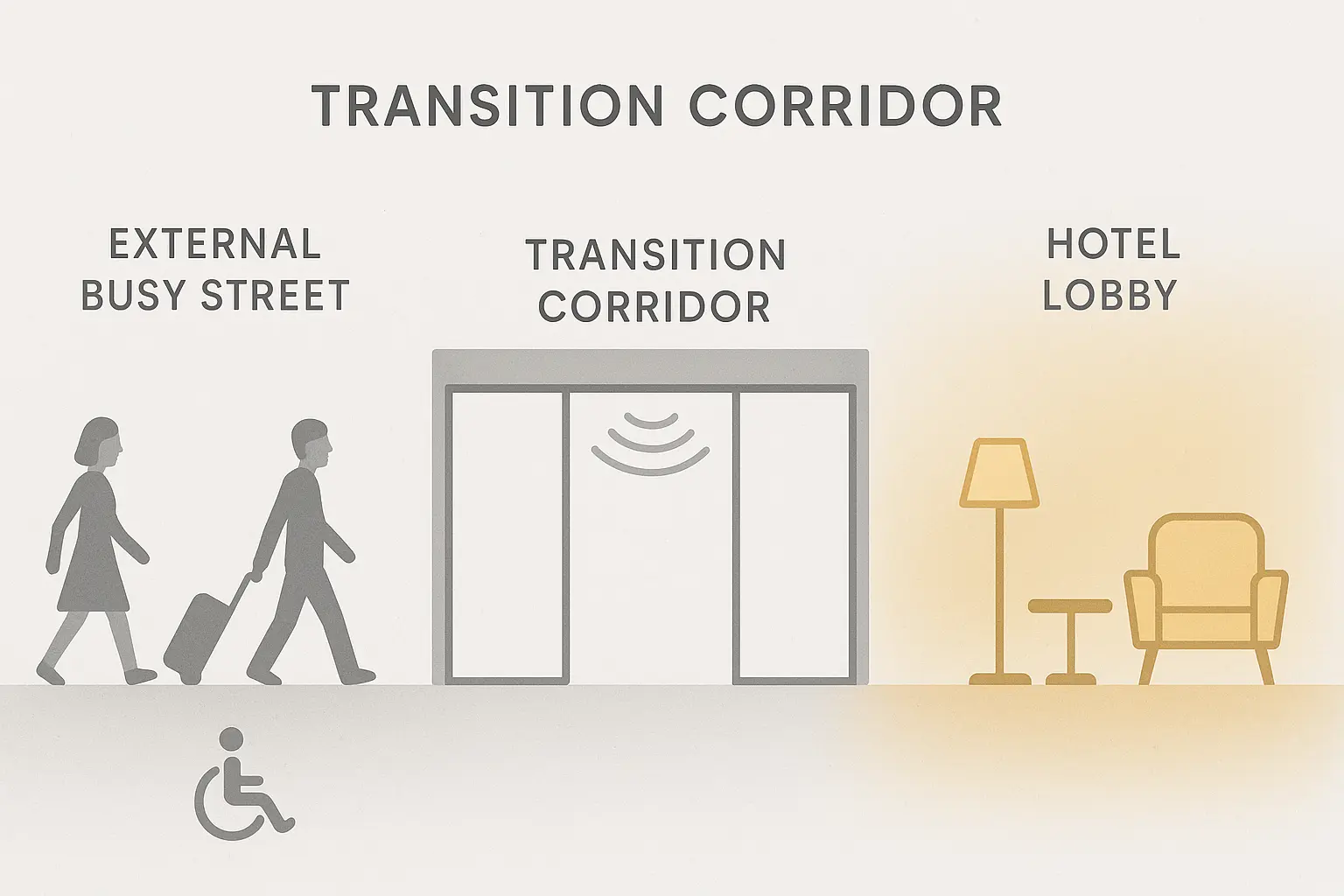
Psychologists at Princeton discovered that it takes just 1/10th of a second for a person to form an impression of a physical space. In high-end hospitality, that first fraction of a second is anchored entirely at your physical entryway. A manual entryway represents an immediate physical obstacle, signaling friction to arriving guests. Conversely, a touchless automatic entry serves as a welcoming transition corridor, instantly isolating the chaotic streetscape and introducing guests to a serene, highly curated lobby experience.

Whether guests are arriving with heavy luggage, managing strollers, or navigating mobility challenges, an automated entry represents the gold standard of service. To ensure this first impression remains flawless, partnering with an experienced provider of commercial door repair near me ensures your entryways always operate with peak efficiency and whisper-quiet precision.

This illustration clarifies how automatic doors create a seamless 'Transition Corridor,' transforming a busy, chaotic exterior into a welcoming, tranquil lobby experience—key for immediate positive guest impressions in luxury hospitality.

The Anatomy of Invisible Automation: Designing Without Bulky Headers


Architects and interior designers frequently worry that automatic door operators will disrupt their design language with bulky, clinical aluminum header boxes. Today’s advanced engineering completely solves this aesthetic dilemma:

  • In-Ground Operators: Fully concealed under-floor automatic swing operators preserve historic wood or minimalist stone facades by hiding the motor assembly completely beneath the finished floor.
  • Micro-Profile Headers: Ultra-slim 7cm to 10cm anodized aluminum or brass-clad headers integrate seamlessly with structural glass walls, maintaining clean lines.
  • Frameless Glass Systems: Utilizing structural glass fins and patch fittings rather than heavy vertical stiles maintains sightlines, allowing natural light to flood the lobby.

For over 15 years, a1 doors has specialized in implementing these high-end, low-profile automation solutions. Our personalized approach ensures that the entry system honors your building’s architectural integrity while delivering reliable mechanical performance.

Solving the Urban Lobby Dilemma: Drafts, Noise, and Ghost Activations


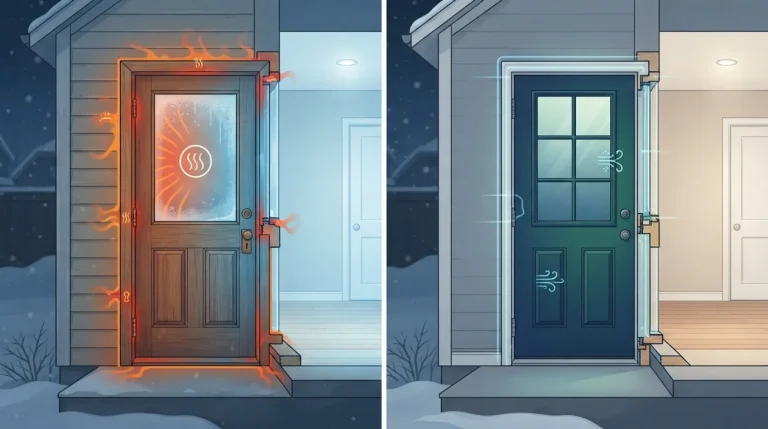
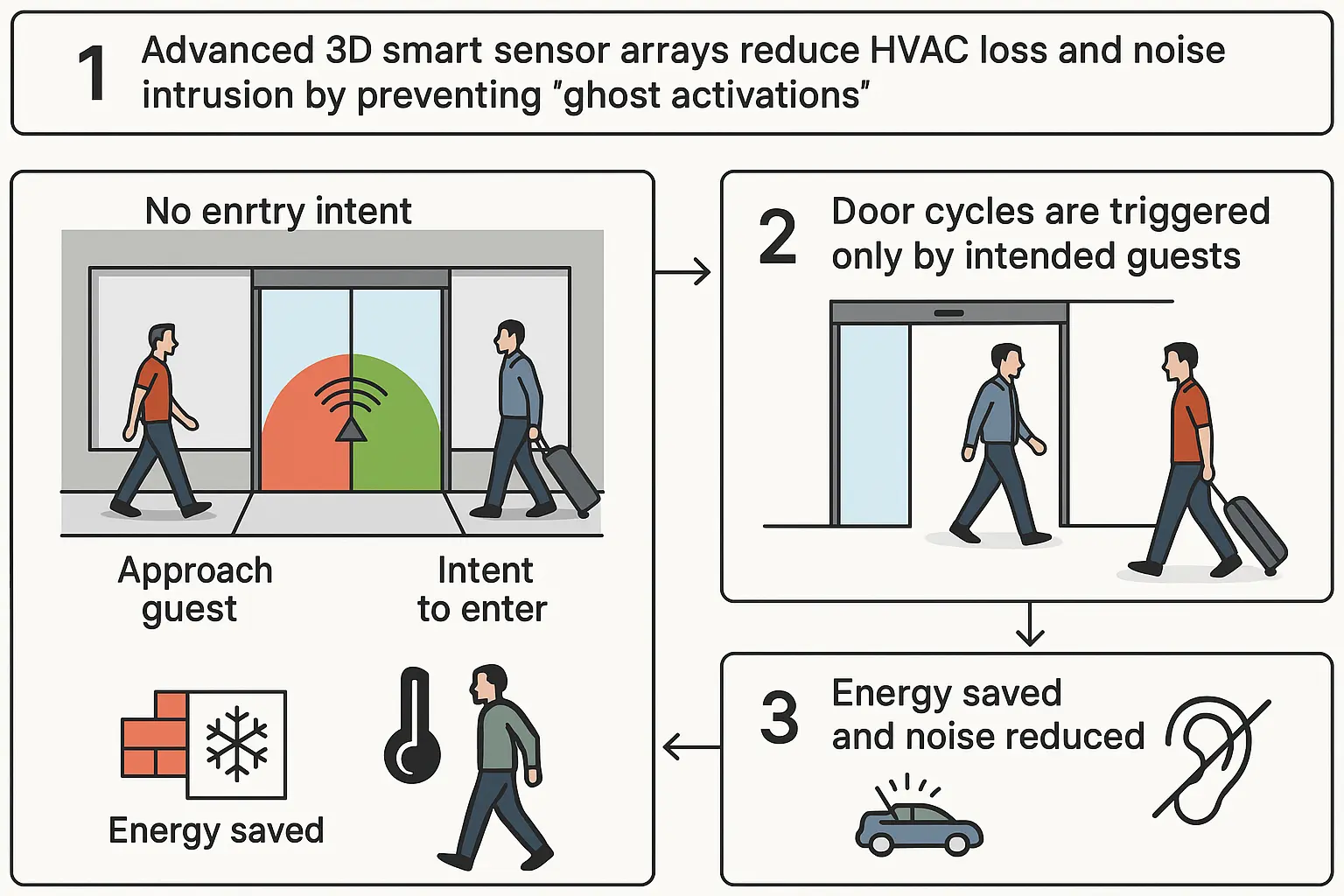
High-traffic boutique and luxury hotels face distinct environmental and sensory challenges. Standard motion sensors frequently cause “ghost activations” by triggering whenever a pedestrian walks parallel to the storefront on the sidewalk. This breaks the building’s thermal envelope, causes drafty discomfort in the lobby, and forces HVAC systems to work overtime.

Integrating 3D Time-of-Flight (ToF) motion-tracking sensors solves this issue, reducing unnecessary door cycles by up to 40%. These smart sensors track path direction, only opening the doors when a guest actively moves toward the entryway. Furthermore, keeping city noise outside requires utilizing dual-durometer rubber gaskets, silent-running nylon-coated wheels on reinforced tracks, and acoustic laminated glass with STC ratings of 35-40 to maintain a whispering-quiet lobby environment.

This step-by-step diagram explains the sophisticated sensor technology that distinguishes true guest entry from passersby, reducing energy waste and maintaining a serene lobby atmosphere.

The Unified Design Blueprint: Navigating Global Accessibility Standards


Universal design is not just a moral imperative—it is a legal requirement. Over 1.3 billion people globally live with significant disabilities. While federal ADA guidelines establish key clearances, modern hospitality developers must navigate deeper structural mandates.

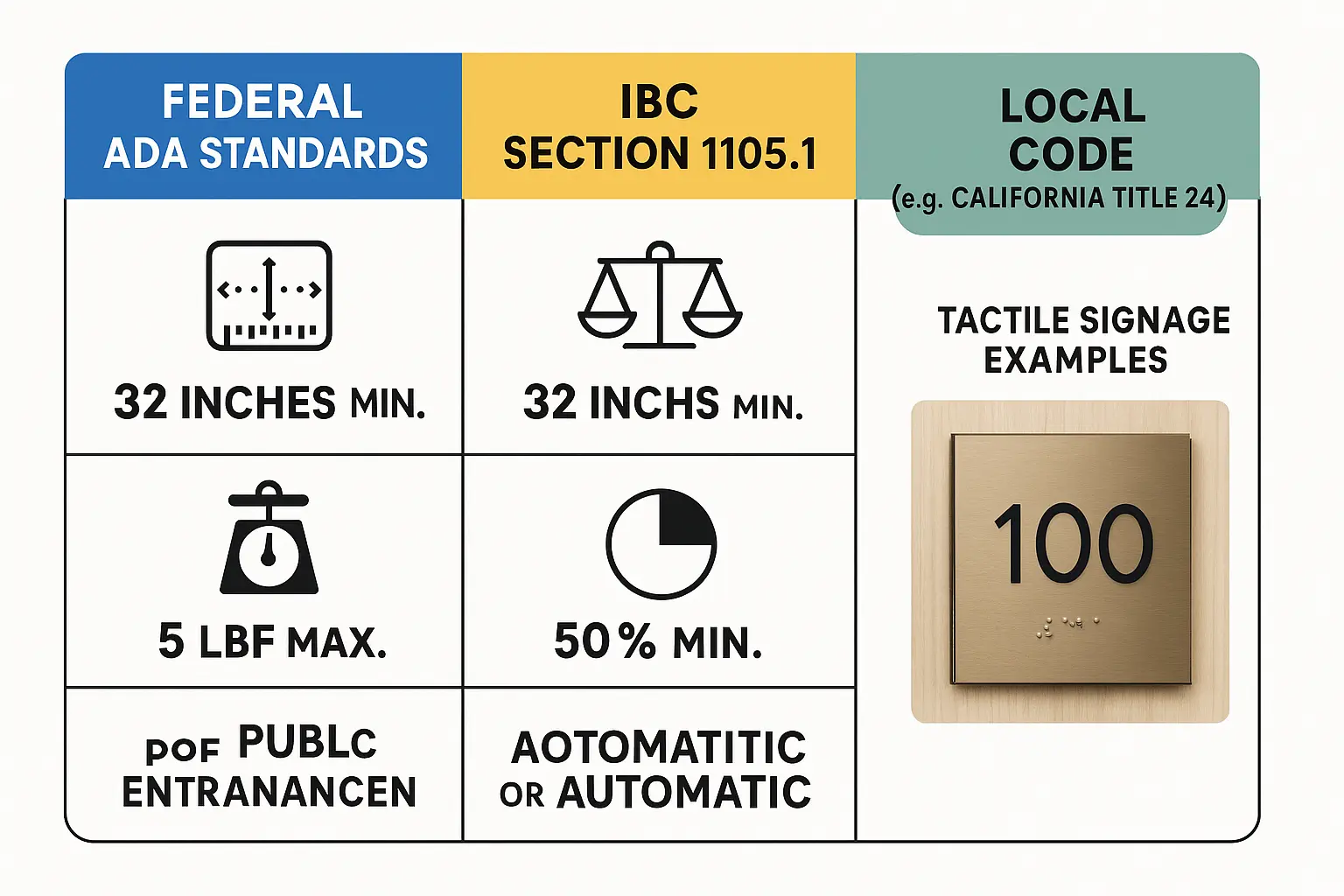
The International Building Code (IBC) Section 1105.1 and ICC A117.1 state that in newly constructed lodging facilities, at least 60% of all public entrances must be accessible. Achieving this without automatic doors is exceptionally difficult; manual doors often fail the maximum 5-lb opening force standard due to stack pressure (wind tunnel effects in high-rise buildings). Automated operators completely bypass this failure point. For projects in Connecticut, working with a specialist certified in local codes—such as securing expert door installation hartford ct—ensures your property remains fully compliant, legally protected, and welcoming to all.

This memory anchor visually summarizes complex accessibility regulations and highlights how automatic doors fulfill diverse code mandates, aiding architects, developers, and procurement professionals in compliance planning.

Operational Durability: The Procurement Officer’s Checklist


When evaluating entryway hardware, procurement teams must look beyond aesthetics to evaluate long-term operational durability:

  • ANSI/BHMA A156.10 Certification: High-traffic hospitality lobbies require sliding or revolving operators certified to handle millions of continuous, fail-safe cycles under heavy daily wear.
  • BMS Integration: Advanced operators integrate directly with Building Management Systems, allowing facility teams to monitor real-time door cycles and track micro-friction anomalies for predictive maintenance.
  • Emergency Breakout Systems: Doors must feature fail-safe breakout mechanisms connected directly to fire alarm systems, allowing manual swing-out during emergency evacuations.

Frequently Asked Questions


Are automatic doors required in hotels under ADA?

While the federal ADA Standards do not explicitly mandate automatic doors, they do mandate strict opening force limits of 5 lbs and barrier-free access. In practice, building stack pressure and wind make manual exterior doors difficult to open within this limit, meaning installing automated operators is the most reliable way to maintain compliance. Additionally, the International Building Code (IBC) requires at least 60% of public entrances in new lodging facilities to be fully accessible.

How do Time-of-Flight (ToF) sensors reduce HVAC costs?

Standard microwave sensors detect any nearby movement, leading to “ghost activations” from parallel sidewalk traffic. ToF and active infrared sensors track the specific direction and path of pedestrian movement, ensuring the door only cycles when someone is directly approaching to enter, reducing thermal loss and preserving the building’s climate envelope.

Can automatic doors be customized to match historic or luxury hotel facades?

Yes. Modern automation technology allows for concealed in-ground/under-floor operators or micro-profile headers (7cm to 10cm) clad in custom architectural finishes like brass, bronze, or matte black. This completely eliminates the bulky look of traditional commercial automatic door headers while preserving visual appeal.