Commercial Guide to Automatic Door Upgrades: Smart Sensors, Energy ROI, & BMS Integration
Published: Sep 7, 2026 | Updated: Oct 14, 2026
Introduction: The Era of the "Intelligent Entrance"
Commercial facilities face a triple convergence of challenges: rising energy bills, strict pedestrian safety liabilities, and the push for connected “Smart Buildings.” Decision-makers are no longer asking how automatic doors work. Instead, they are evaluating how to retrofit existing entrance infrastructures to work with modern security systems, reduce structural energy escape, and meet updated compliance codes.
The stakes are high. The global automatic door market is projected to reach USD $47.63 Billion by 2035, up from $24.5 Billion in 2025. Simultaneously, the global automatic door sensors market is climbing to USD $2.4 Billion by 2031. Upgrading current systems allows building managers to gain modern features without the steep capital cost of a complete entrance overhaul.
The Sensor Revolution: Upgrading for Safety and Compliance
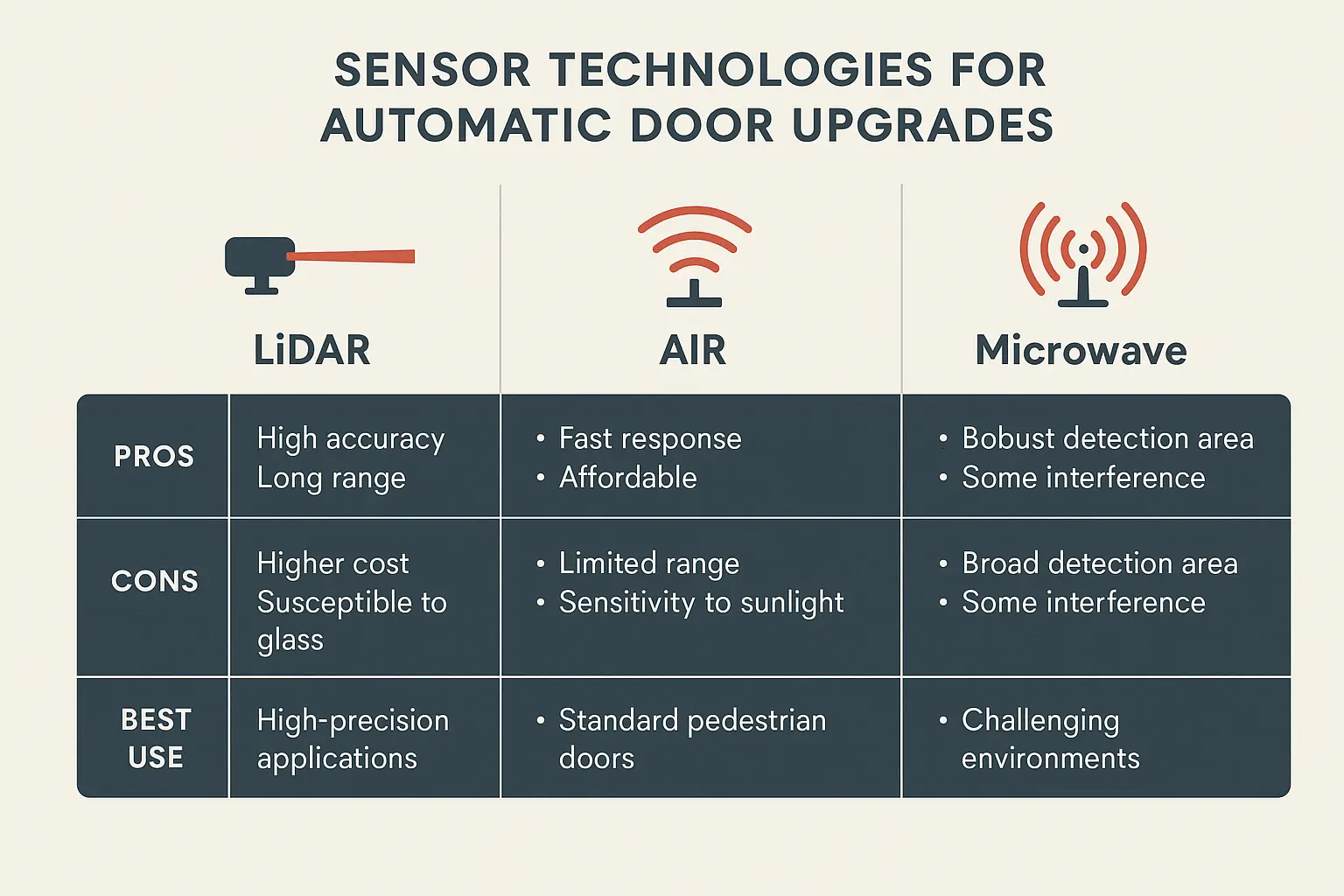
Under the newly updated ANSI/BHMA A156.10-2024 (specifically Sections 7.6.1 and 8.1.4), all automatic pedestrian doors must use monitored safety sensors. Before the door begins its closing cycle, the system operator must perform a monitoring self-test, sending a heartbeat signal to verify that the sensors are fully operational. If the sensor fails to respond, the door controller defaults to a safe, low-energy, slow-speed mode to prevent injuries.
Many older, unmonitored systems lack this safety loop. Upgrading your existing setup with advanced automatic door sensors ensures compliance and mitigates injury liability. Furthermore, modern sensors utilize “AI-driven pedestrian discrimination” to ignore lateral cross-traffic. By ignoring passersby who are not intending to enter, the doors avoid “ghosting” (opening randomly), which dramatically cuts down on runtime and building drafts.
Seamless Integration: Access Control & Building Management Systems (BMS)
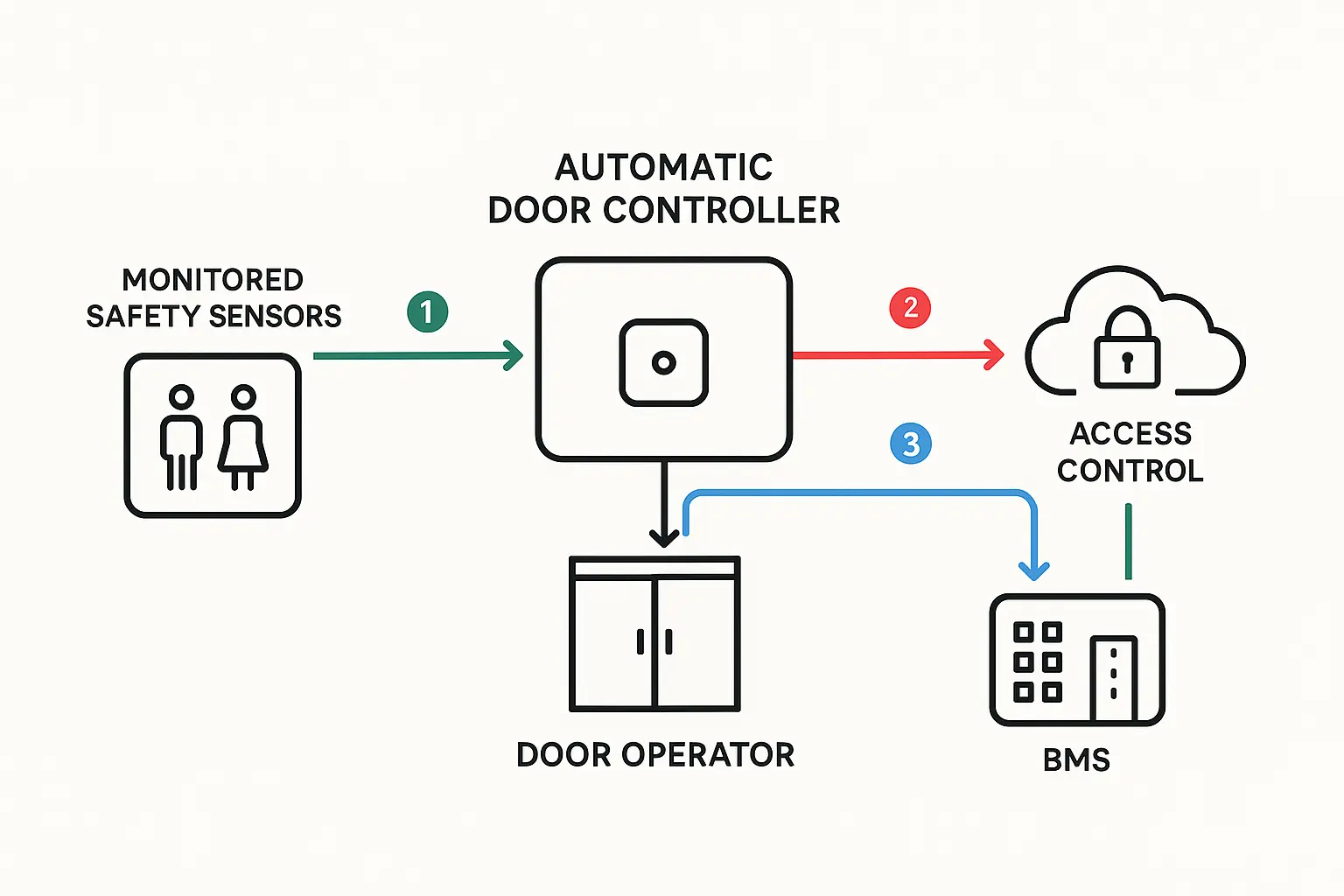
Modern commercial entrances cannot sit in isolation. When retrofitting, operators must seamlessly interface with access control software (like cloud-based systems) and local fire panels.
Integration protocols such as BACnet and Modbus allow the entrance to communicate with the building’s central control unit. This setup gives facility managers real-time visibility into traffic metrics, open/closed status, and maintenance alerts. Importantly, life-safety integration ensures that doors fail-safe (unlocking for easy exit) during a fire alarm or power outage, satisfying both ADA accessibility and local egress codes. For businesses in Connecticut, securing experienced door installation hartford ct options simplifies navigating these complicated structural safety requirements.
The Financial ROI: Cutting Commercial HVAC Costs
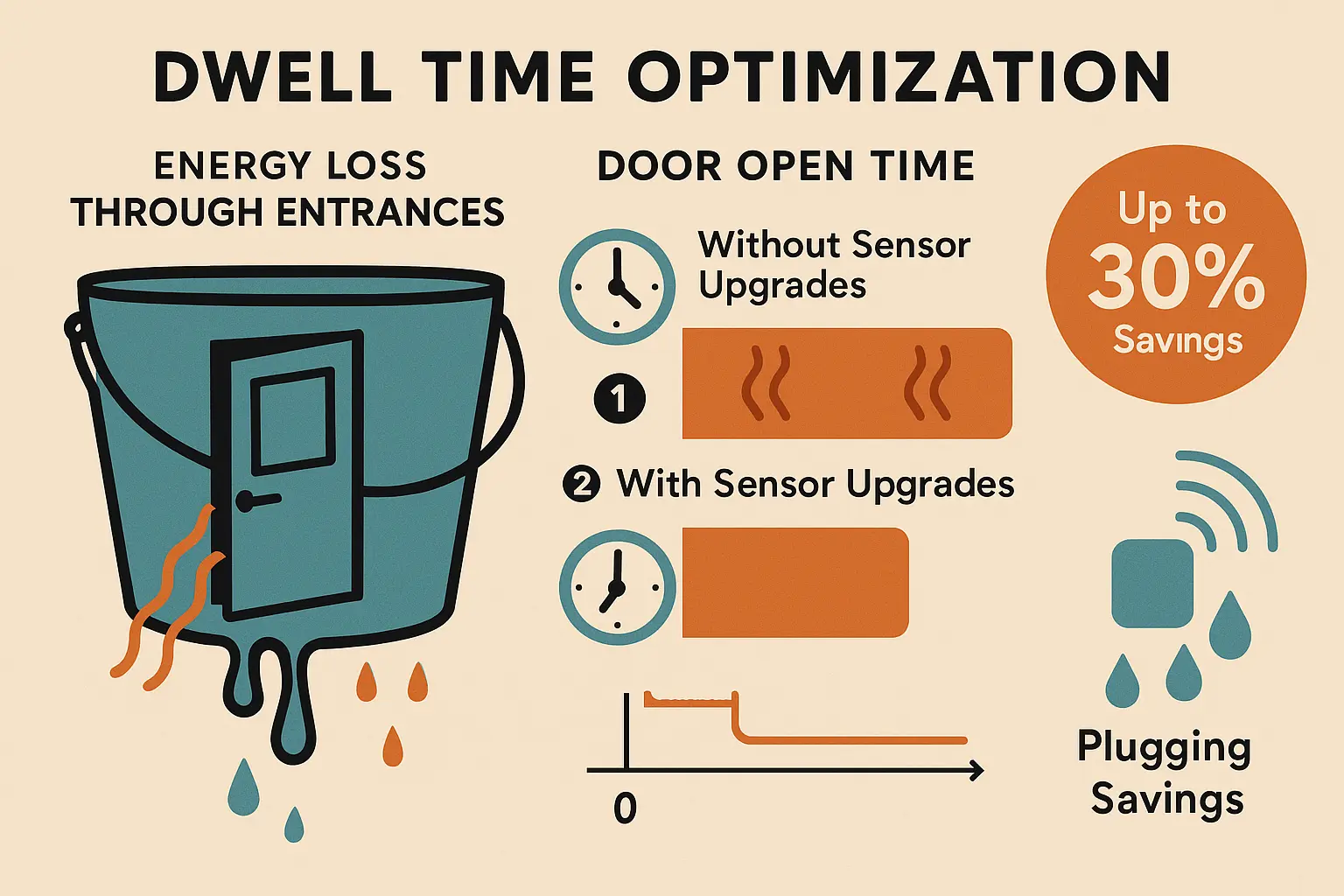
Entrances are responsible for up to 11% of a commercial building’s energy loss. Standard doors often remain open too long, letting conditioned air escape and overworking HVAC systems.
By updating older mechanical units, you can implement “Dwell Time Optimization.” Smart sensors safely compress the door-open delay from a generic 5-second interval to an adaptive 1.5 seconds immediately after a pedestrian clears the threshold. Combined with thermal barrier upgrades—such as low-E glass and heavy-duty weather seals installed by an expert commercial door repair near me team—these intelligent upgrades can reduce heating and cooling costs by up to 30% annually.
Diagnostic Checklist: Upgrade vs. Replacement
Not every automatic entrance requires a full tear-out. Use this diagnostic checklist to determine if a targeted retrofit is right for your property:
- Age of the System: If your door operator was installed before 2017, it likely lacks inputs for ANSI-compliant monitored sensors.
- Drafts and Energy Bill Spikes: Noticeable wind corridors or high HVAC runtime indicate loose weather seals or unoptimized dwell times.
- Frequent Repairs: If mechanical parts fail regularly, upgrading the internal control board and motors is a highly cost-efficient alternative to full door replacement.
- Accessibility Needs: Verify if your current swing or slide speed complies with modern ADA specifications.
Frequently Asked Questions
What is the difference between monitored and unmonitored safety sensors?
Monitored sensors perform a self-diagnostic check before every single door-closing cycle. If the sensor fails to respond to the controller’s heartbeat signal, the door reverts to a slow, low-energy safety speed. Unmonitored sensors do not self-test, meaning a sensor failure could go unnoticed, leading to pedestrian impact accidents.
How do smart sensors reduce building energy loss?
Smart sensors minimize “dwell time” (how long the door stays open) by closing immediately after a pedestrian clears the safety zone. They also utilize advanced directional technology to reject cross-traffic, preventing the door from opening when pedestrians are simply walking parallel to the entrance.
Can older automatic doors be retrofitted for modern security integration?
Yes. In most cases, existing automatic door operators can be upgraded with new digital control boards and safety sensors. This allows them to interface directly with cloud-based building access control systems, fire safety panels, and central building management networks without replacing the entire door structure.