Homeowners evaluating entry doors face a frustrating choice. Manufacturers push short, brochure-style pages with zero real-world context, while DIY forums offer cheap band-aid fixes for drafty entryways. Real energy efficiency requires understanding how your home’s thermal boundary actually functions.
Fiberglass Entry Doors: Comprehensive Guide to Durability And Design
Published: Aug 17, 2026
The Thermodynamics of Entryways
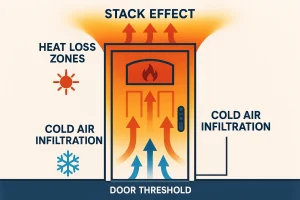
According to the U.S. Department of Energy, windows and doors account for 25% to 30% of total residential heating and cooling energy use. In cold climates, a structural phenomenon known as the “stack effect” causes warm indoor air to rise and escape through upper levels, drawing cold exterior air in through gaps at the bottom of the entryway.
To combat this, simply insulating around door frames with low-performance foams isn’t enough. Professional installers focus on high-density door stop insulation and comprehensive perimeter seals to break this pressure loop. For homeowners seeking an extra barrier against harsh winters, integrating a durable storm door replacement can add a valuable dead-air insulating zone.
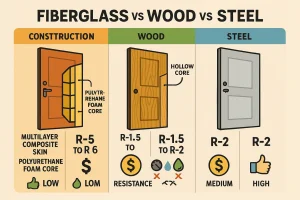
Material Showdown: Fiberglass vs. Wood vs. Steel
When selecting a new door, your choice of core material dictates your long-term comfort and return on investment.
- Solid Wood: Stunning aesthetics but poor thermal efficiency (typically R-1.5 to R-2). Wood is prone to warping, rotting, and demands expensive ongoing maintenance, with starting costs often exceeding $5,000.
- Steel: Cost-effective ($200 to $1,000) and secure, but prone to denting and thermal bridging. In humid or coastal areas, steel inevitably rusts.
- Engineered Fiberglass: The optimal compromise, costing between $800 and $2,500. Polyurethane-insulated fiberglass doors provide up to four times the R-value of wood (reaching R-5 to R-6), lowering energy bills by up to 15%. They retain an exceptional resale ROI of 75% to 80% and do not warp or rust.
If your home currently features deteriorating metal or wooden systems, investing in professional aluminum door repair or upgrading to modern composite systems will immediately secure your thermal boundary.
Solving the Critical Draft Gaps
Gap 1: The “Frozen Handshake” (Thermal Bridging at Locksets)
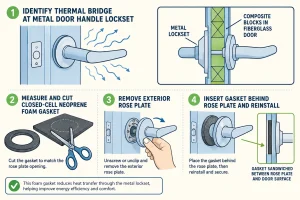
Standard metal locksets act as direct heat conductors. When cold exterior air chills the outer handle, that thermal energy transfers directly to the interior trim, causing frost or condensation. You can install a specialized door handle insulation kit or fabricate a DIY panel door isolator by cutting thin closed-cell neoprene gaskets to fit directly behind the exterior metal rose plates, breaking the metal-to-skin thermal bridge.
Gap 2: The Hollow Core Dilemma (Acoustics vs. Insulation)
A common online recommendation is insulating a hollow core door by drilling holes and injecting expanding polyurethane foam. Do not attempt this. Expanding foam will buckle the thin wood veneer, permanently warping the door frame. Instead, install high-density rubber seals on your door stop insulation tracks. For true energy and acoustic insulation, hire expert interior door installers near me to replace hollow slabs with solid composite alternatives.
Gap 3: Under-Threshold Infiltration
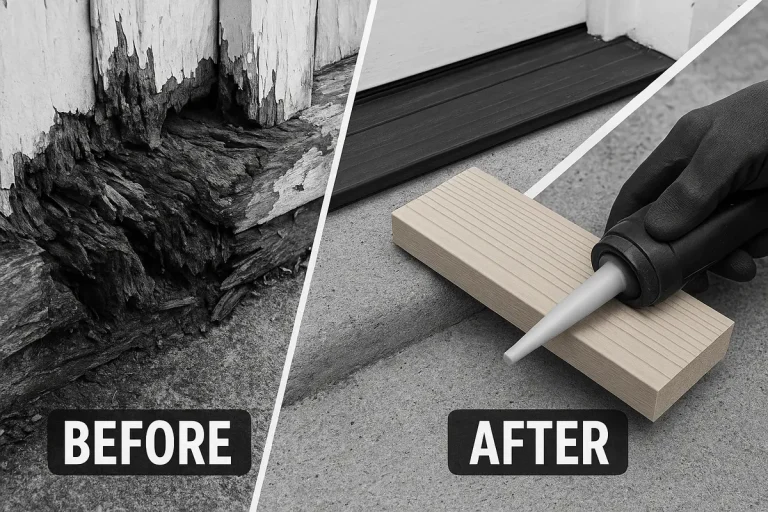
Cold drafts frequently creep under the threshold. True insulation under door threshold installations require running a double bead of heavy-duty polyurethane caulk along the concrete subfloor before setting the sill. Ensure you adjust the threshold’s integrated riser screws to lift the vinyl seal flush against the door’s bottom sweep.
Gap 4: Moving Boundaries (Dutch & Barn Doors)
Specialty doors present unique challenges. When insulating a barn door, attach high-pile self-adhesive compression brush seals along the lateral air gaps. For insulating a dutch door, choose a fiberglass system featuring interlocking composite astragals with built-in silicone bulb seals at the horizontal joint.
Gap 5: The Pet Portal Draft
When insulating cat door retrofits, use dual-flap magnetic pet doors that create an insulated dead-air pocket. Always seal raw, exposed polyurethane foam cores with 100% silicone sealant to prevent moisture infiltration before installing the frame.
Engineering Aesthetics: Wood-Grain and Glass Inserts
Modern fiberglass replicates natural wood grains using Nickel Vapor Deposition molds. To maintain efficiency when insulating a glass door, avoid single-pane inserts. Opt for multi-pane, Low-E glass lites filled with Argon gas to stop heat transmission.
If your home requires specialized structural services, reaching out to a local professional for door repair near me ensures your home’s entryway is secure, square, and completely insulated.
Frequently Asked Questions
Can fiberglass doors crack in extreme cold?
High-quality compression-molded fiberglass is engineered to withstand extreme temperatures without cracking. Standard professional installations hold up against sub-zero winters.
Is it worth repairing a drafty wood door over buying fiberglass?
While temporary seals help, natural wood continues to expand and contract. Fiberglass provides a permanent, maintenance-free solution with a 75% to 80% ROI.
How do I know if my threshold needs adjustment?
If you can see light under your door or feel a breeze, use a screwdriver to turn the threshold riser screws counterclockwise until the seal gently touches the door sweep.