(855) 676-0881

Exterior Door Installation in Cold Weather: Sill Pans, Foams & Sealants


Published: Nov 16, 2026

Open every day · 7 AM – 7 PM

Need a Quick Fix?

Tell us what’s wrong with your door — we’ll call you back and get it sorted.

Installing entry systems in sub-freezing conditions requires a firm grasp of building science. When ambient temperatures drop below 40°F (4°C), standard installation techniques risk catastrophic envelope failure. Material contraction, altered chemistry cure rates, and hidden moisture migration can compromise a unit long before spring arrives.

For contractors and property owners evaluating winter projects, proper material selection and sequencing are critical to avoiding rotted subfloors, bowed frames, and voided manufacturer warranties.
The Physics of Cold-Weather Door Sealing


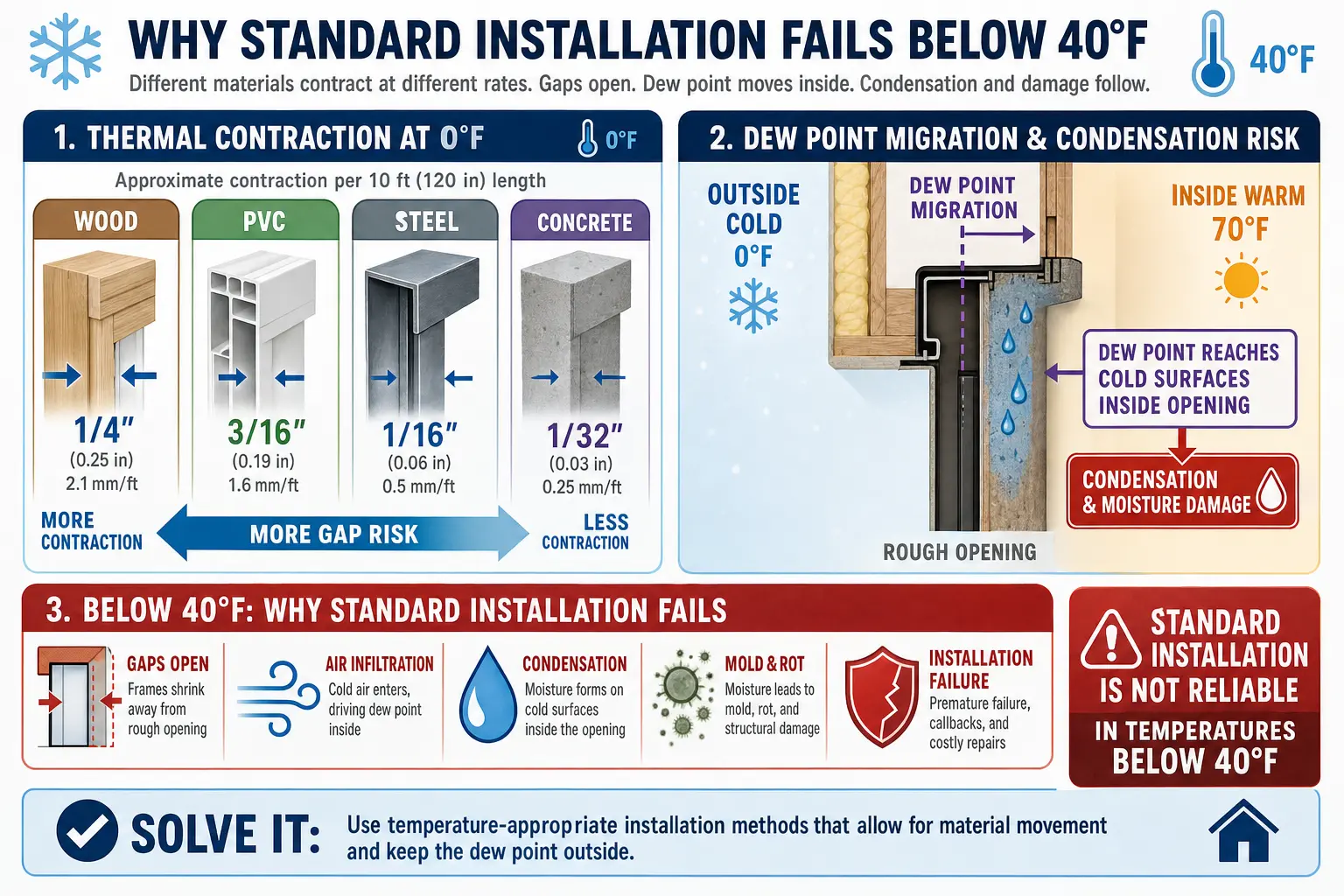
Sub-40°F installations present severe thermal physics challenges. Wood framing, PVC jambs, steel skins, and concrete substrates contract at drastically different rates. This differential movement stresses joint interfaces, creating 1/32-inch micro-gaps between thresholds and subfloors.

Over 85% of exterior door framing rot originates at these un-sloped sill corners where wind-driven moisture penetrates thermal breaks. Furthermore, winter air forces interior warmth toward cold outer wall cavities. When warm, humid indoor air meets cold framing inside the rough opening, immediate condensation occurs.

This visual explains how different materials contract unevenly in cold weather, increasing gaps and condensation risks in door rough openings, causing common installation failures below 40°F.

Following proven protocols for exterior door installation ensures these physical stresses don’t turn into structural rot.

Sill Pan Selection and Drainage Dynamics Below Freezing


Water management under freezing conditions relies on positive mechanical drainage rather than surface sealants alone. ASTM E2112 standards mandate that sill flashing maintain a positive outward slope of at least 1/4 inch per foot (7° to 8°) to eliminate hydrostatic pressure under wind-driven rain.

Sill Pan Type Cold-Weather Flexibility Subfloor Thermal Separation Installation Risk in Winter
Pre-Formed Rigid TPO/ABS (e.g., SillDry, Jamsill) High (Does not crack or stiffen) Integrated structural shimming reduces thermal bridging Low; pre-sloped channels bypass cold sealant failure
Flexible Self-Adhered Membranes Low (Becomes brittle <40°F) Zero thermal break High; asphalt/butyl adhesives fail to grip cold lumber without primer

When bedded improperly, cold temperatures freeze cheap caulking under the sill pan, preventing complete seating. If you are already dealing with subfloor damage from past winter leaks, properly replacing exterior door jamb and threshold assemblies with pre-sloped ABS/TPO pans is mandatory to restore structural integrity.

Spray Foam Insulation Chemistry in Sub-Freezing Conditions


Standard single-component polyurethane spray foams depend on ambient heat and moisture. Below 40°F, internal can pressure plummets, dropping foam yield by up to 50% and causing cell structures to collapse into hard, non-insulating masses.

To prevent draft bypass, installers must use arctic-rated formulations (such as Tytan Sub-Zero or Great Stuff Pro Cold Weather), which cure safely down to 14°F (-10°C) provided the can temperature is maintained at 50°F (10°C) or higher prior to discharge.

A critical installation risk in winter is the foam expansion trap:

  • Polyurethane foams cure extremely slowly in cold, dry air.
  • If applied too heavily, the outer skin hardens while the core remains uncured.
  • When ambient temperatures rise later, the trapped core expands, bowing vinyl or wood door jambs inward and jamming the door slab.
  • Deadly Error: Overspraying foam directly against the rear dam of a sill pan can block its weep channels, trapping water directly against the subfloor.

Exterior Joint Sealants: Silicone vs. Polyurethane vs. MS Polymer


Selecting the correct perimeter joint sealant requires understanding low-temperature cure mechanics and joint movement capabilities rated under ASTM C920.

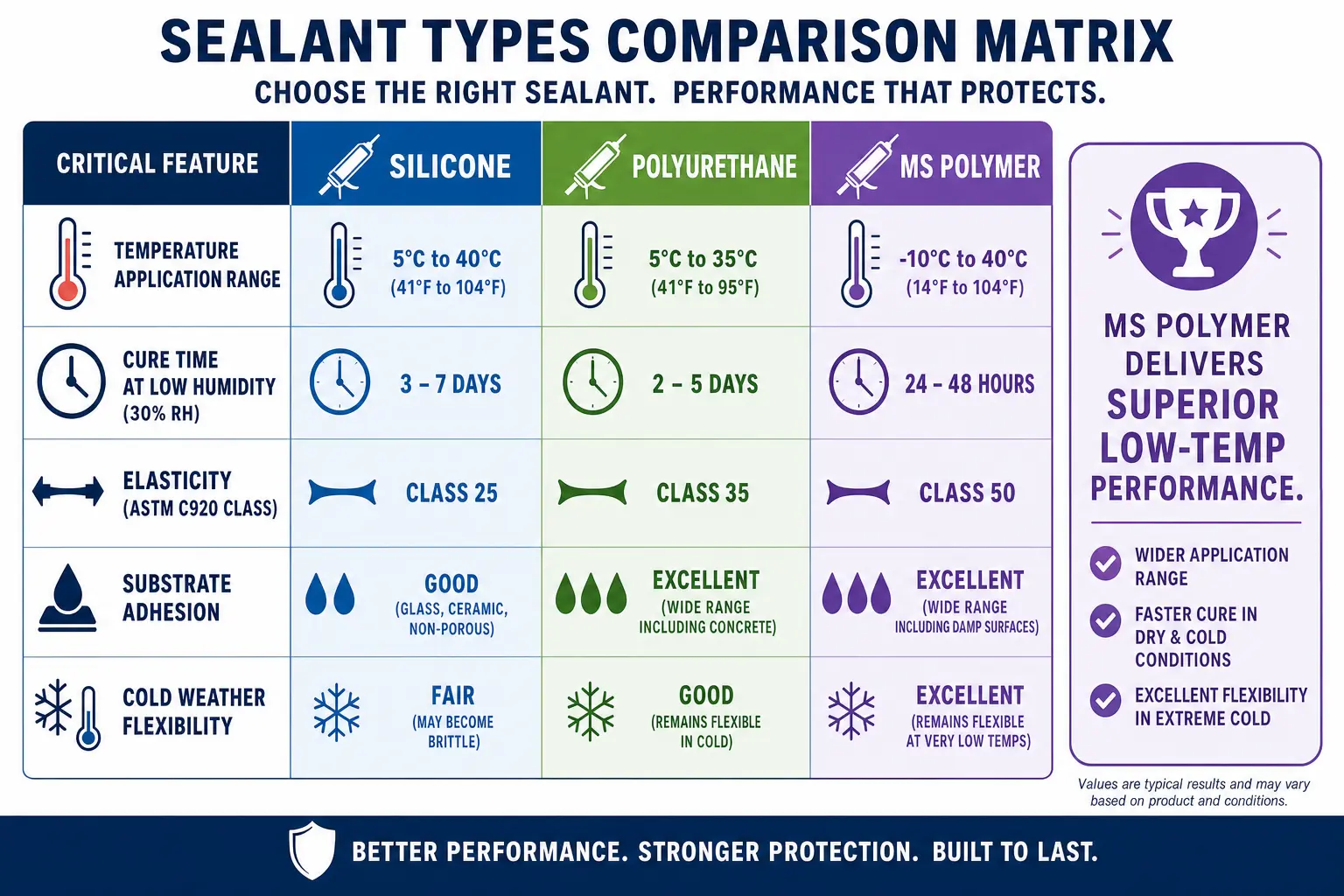
A quick-reference matrix to remember key differences between sealants for cold-weather door installations, aiding material selection with ease.

Traditional polyurethane sealants rely on atmospheric moisture. At 35°F and 20% relative humidity, full cure times balloon from 24 hours to 7–14 days, leaving joints vulnerable to contamination. 100% Silicones handle low temperatures well but suffer from poor paintability and weak adhesion to damp winter substrates.

Modified Silane Polyethers (MS Polymers / STPE) represent the gold standard for sub-zero installs. Capable of application down to 0°F (-18°C), MS Polymers offer ASTM C920 Class 50 movement capability (±50% joint movement), bond to damp surfaces without gassing, and cure reliably regardless of low ambient humidity.

Step-by-Step Sub-Zero Installation Protocol


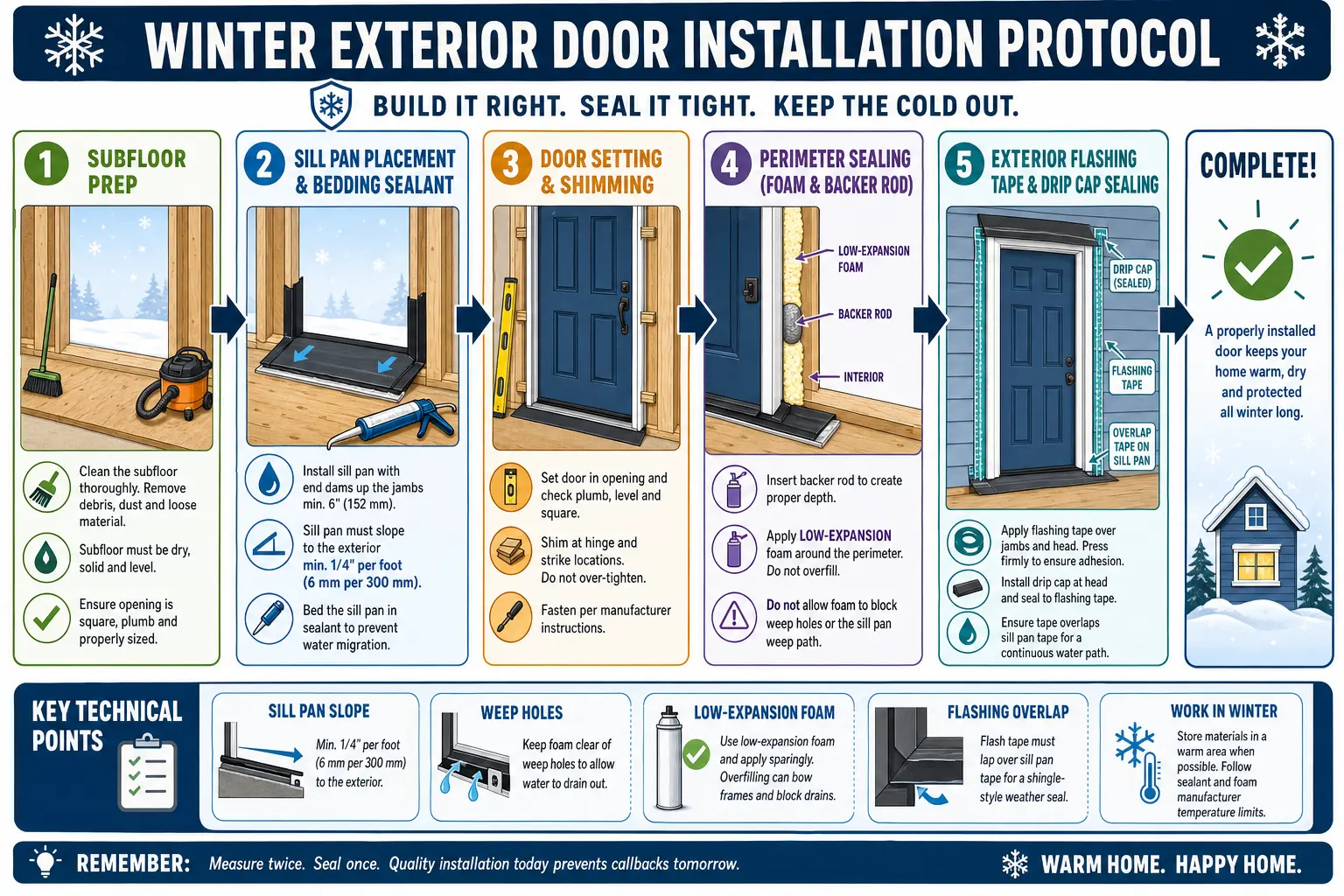
To maintain warranty compliance under ASTM E2112, follow this cold-weather installation sequence:

Follow this clear, sequential guide to correctly install exterior doors in freezing temperatures while preserving warranty compliance and preventing water damage.

  1. Subfloor Preparation: Clean snow and ice completely. Apply a dedicated cold-weather primer if using self-adhering membrane flashing on sub-40°F wood framing.
  2. Sill Pan Seating: Apply continuous beads of MS Polymer sealant under the rigid pre-sloped sill pan. Set the pan, ensuring a 1/4″ per foot slope outward.
  3. Setting Frame & Hardware: Position the entry unit onto the pan. Shim behind hinge points and mechanically anchor the frame. Whether performing a full unit upgrade or a specialized replace front door project, secure squareness before applying sealants.
  4. Perimeter Air Seal: From the interior, insert closed-cell backer rod around the 1/2″ rough opening gap. Dispense low-expansion arctic spray foam over the backer rod, stopping short of the sill pan weep drainage channels.
  5. Weatherproofing Barrier: Install continuous exterior flashing tape over side brickmolds and head drip caps. If integrating a secondary unit, ensure proper structural integration using verified methods for storm door replacement.

Frequently Asked Questions


Can you spray foam an exterior door in freezing temperatures?

Yes, but you must use an arctic-rated low-expansion polyurethane foam specified for temperatures down to 14°F (-10°C). Standard spray foams fail below 40°F, losing yield and failing to cure, which causes bowing jambs when ambient temperatures warm up later.

Why do polyurethane sealants take so long to dry in winter?

Polyurethane sealants require ambient heat and atmospheric moisture to cross-link and cure. In cold winter conditions with low relative humidity (e.g., 35°F at 20% RH), skin-over and full cure times extend from 24 hours up to 7 to 14 days, increasing the risk of joint contamination.

How do I prevent spray foam from blocking sill pan weep holes?

Always leave a 1-inch clear buffer zone near the bottom interior edge of the jamb when applying spray foam. Integrate a backer rod near the rear dam of the pre-sloped sill pan to create a physical barrier that prevents expanding foam from creeping into the drainage channels.


Executing successful winter installations comes down to chemistry and building physics. By combining rigid pre-sloped sill pans, arctic-rated low-expansion foams, and high-performance MS Polymer sealants, your openings remain draft-free and watertight for decades. For expert guidance or professional installation tailored to severe climates, consult with our licensed specialists at A1 Doors Services.