

Automatic Door Parts and Component Replacement
Most automatic door faults come down to one worn component, not a failed door. A1 Door Services supplies and fits replacement parts for commercial automatic entrances across Texas, Connecticut and Alabama — on current systems and on equipment that has not been manufactured for twenty years. Parts are fitted by the technician who diagnosed the fault, so the component that goes in is the one the door actually needed rather than the one that was easiest to order.
 (855) 676-0881
Get in touch with us
Call us 24/7: (855) 676-0881
Or Let Us Call You
Components We Replace
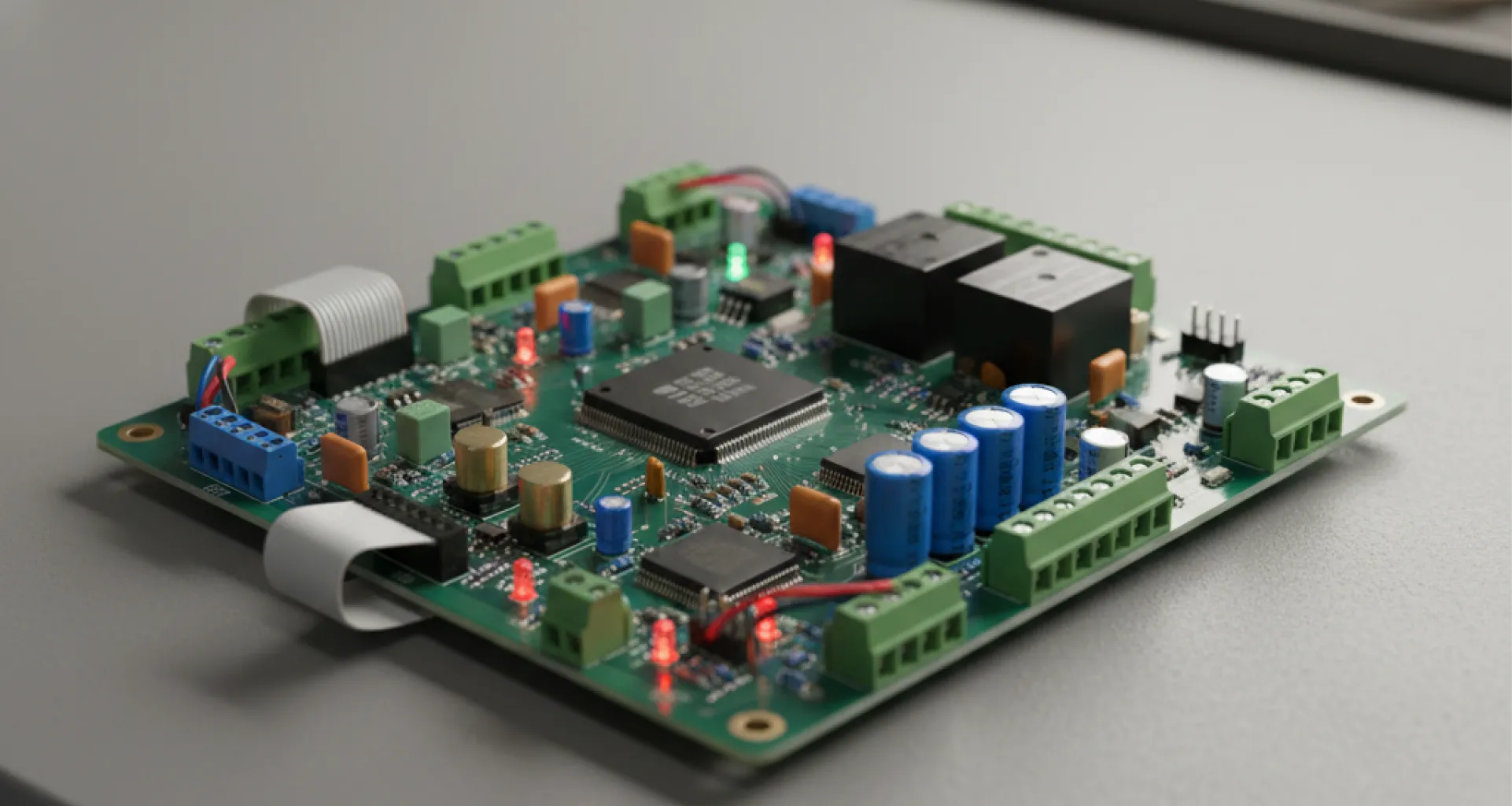
Drive components
Motors, gearboxes, drive belts, pulleys and tensioners on sliding systems; arms, linkage, spindles and bushings on swing systems; canopy and ring drives on revolving doors.
Running gear
Carriers, hanger rollers, anti-riser rollers, bottom guides, floor track sections and guide channels.
Controls and electronics
Control boards and logic modules, encoders, limit switches, power supplies, transformers, relay boards and low-voltage wiring.
Sensors and activation devices
Motion, presence, threshold and safety sensors, push plates, wave actuators, key switches, foot pulls and wireless transmitters and receivers.
Seals and weatherproofing
Weather stripping, brush and mohair seals, meeting-stile seals, sweeps, thresholds, drop seals and door bottoms.
Panels, glass and hardware
Stiles and rails, glazing gaskets and beads, tempered and laminated units, locks and electric strikes, pivots, hinges and breakout hardware.
Diagnosing Which Part Actually Failed
Replacing the wrong component is the worst outcome on an automatic door: you have used up a part, a visit and the customer’s patience, and the door is still broken.
A door that stalls part way can be the belt, the motor, the carriers, the track or the board. A door that opens at nothing can be a sensor or a relay. A board that has failed twice in a year is usually reporting a supply problem rather than its own.
We diagnose at the door before ordering anything, and where a part has worn out early we identify what caused it. Carriers that lasted eight months are a symptom of the track, not of the carriers.
Obsolete and Discontinued Systems
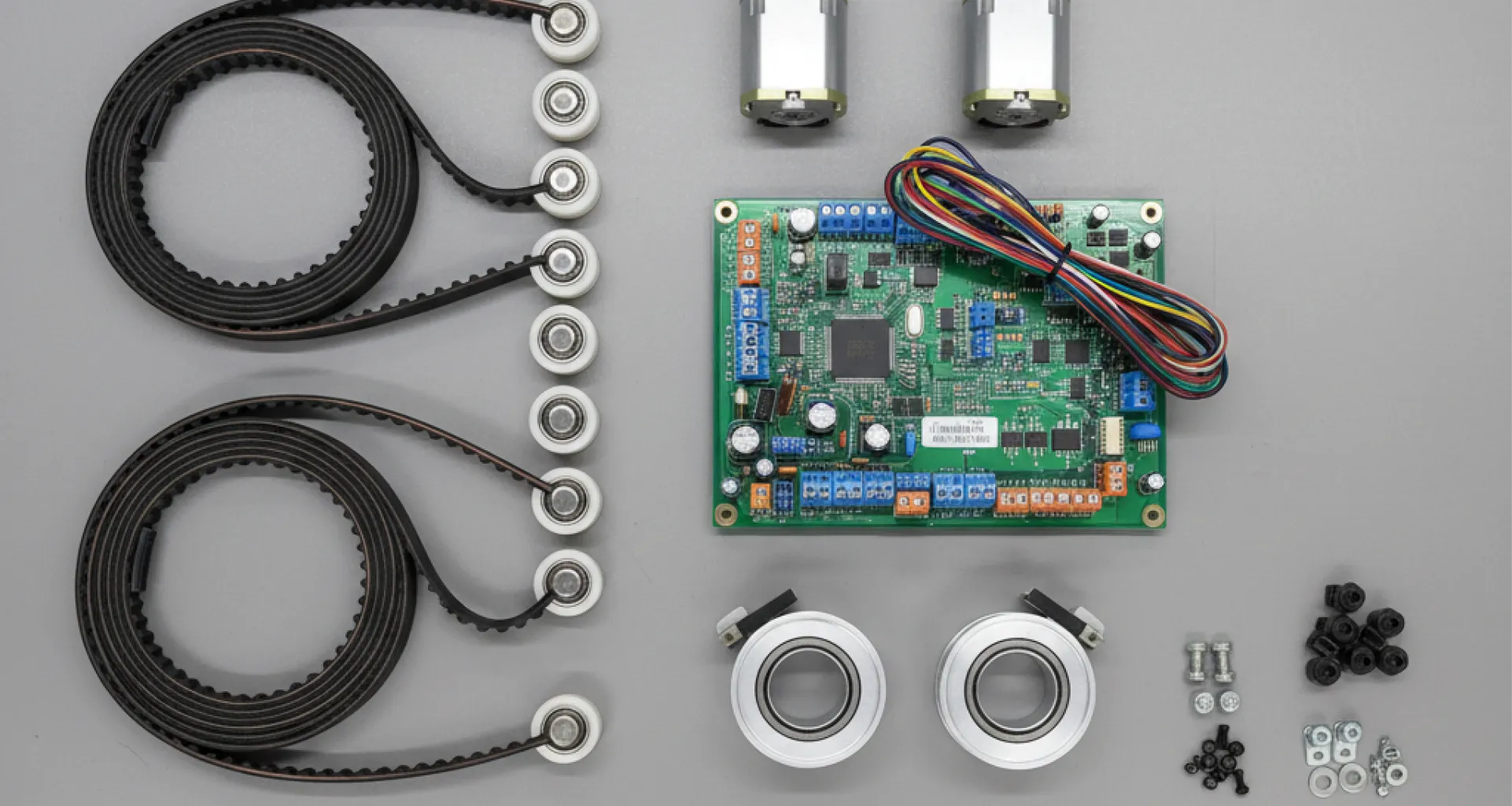
A large share of the automatic doors in service today were made by companies that no longer exist or by product lines that were discontinued years ago. That does not automatically mean the door has to be replaced.
We cross-reference discontinued components to current equivalents — boards, sensors, belts, carriers, arms and complete operators — confirm the replacement will fit both the header and the duty, and re-commission the door around it.
Where nothing current will fit, we say so plainly, so the choice between repairing and replacing is made on facts rather than on optimism. Stringing a customer along on an obsolete door helps nobody.
Parts by Door Type
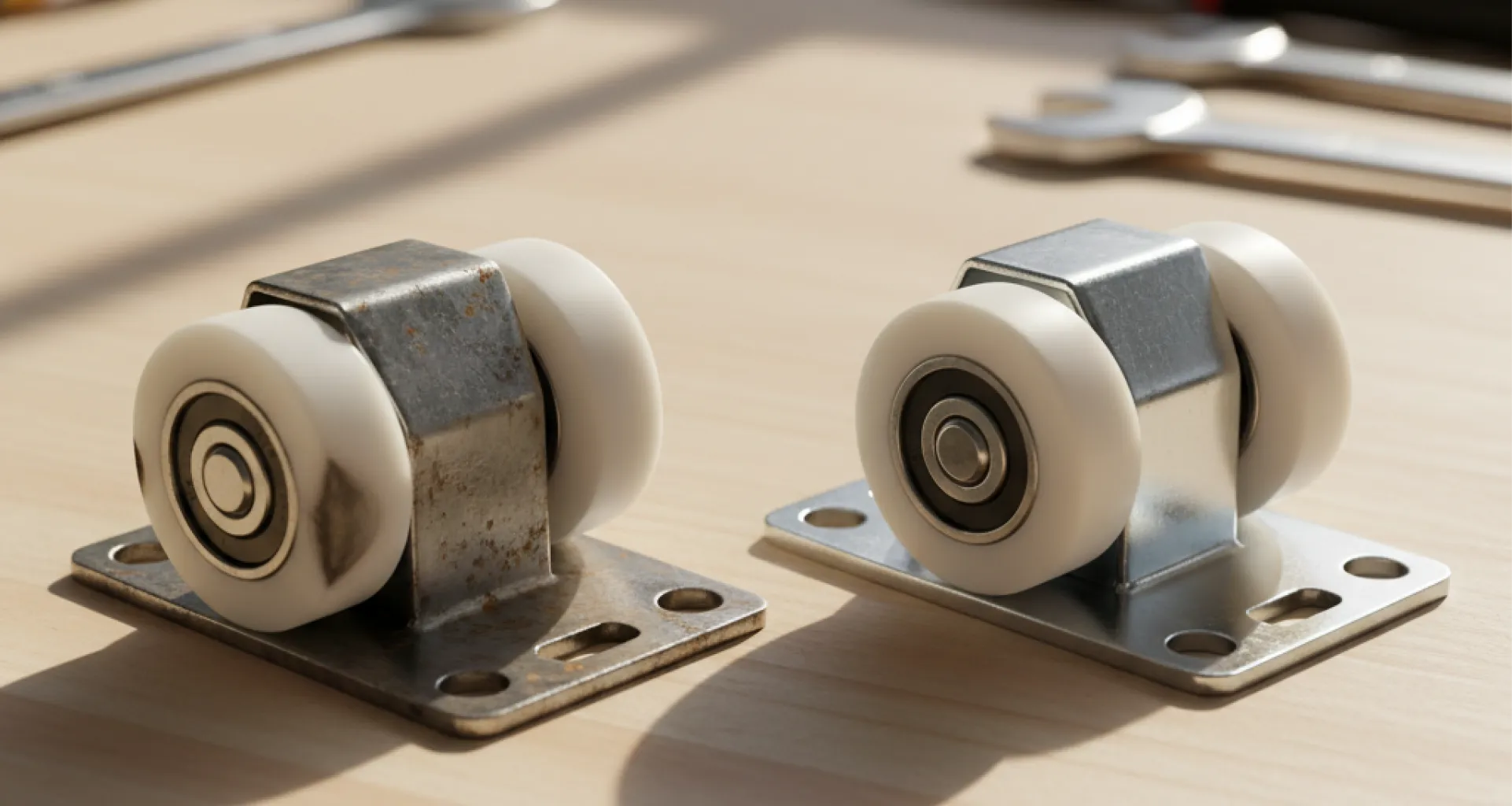
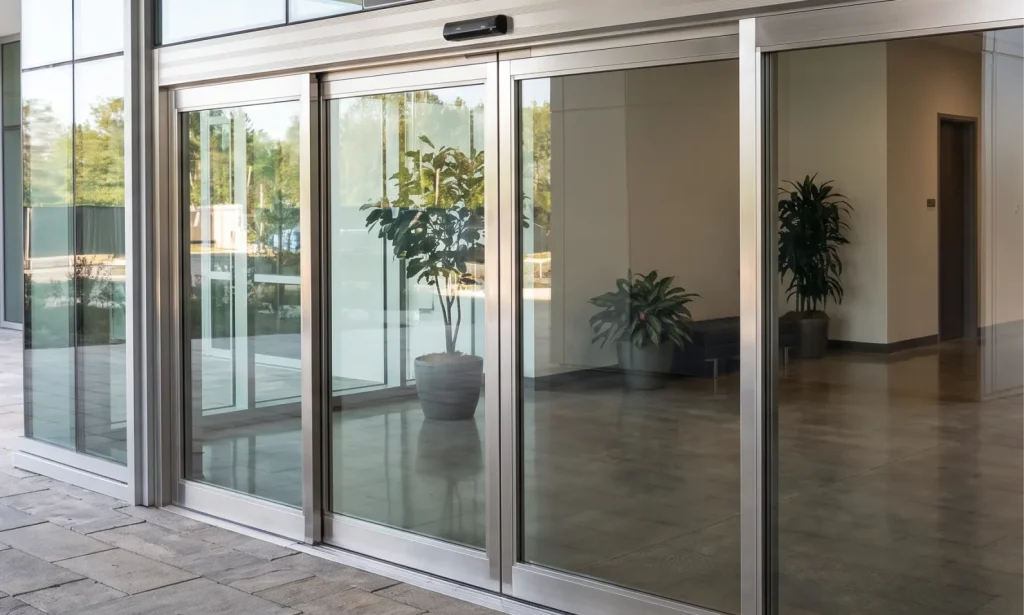
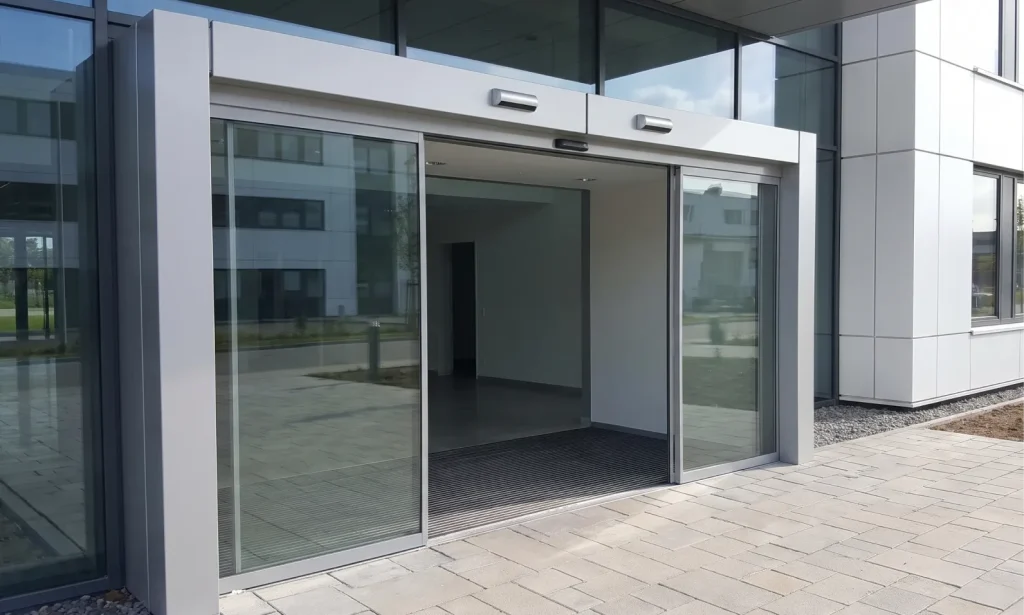
Sliding entrances consume belts, carriers, hanger and anti-riser rollers, bottom guides and track sections faster than anything else, along with meeting-stile seals and breakout hardware.
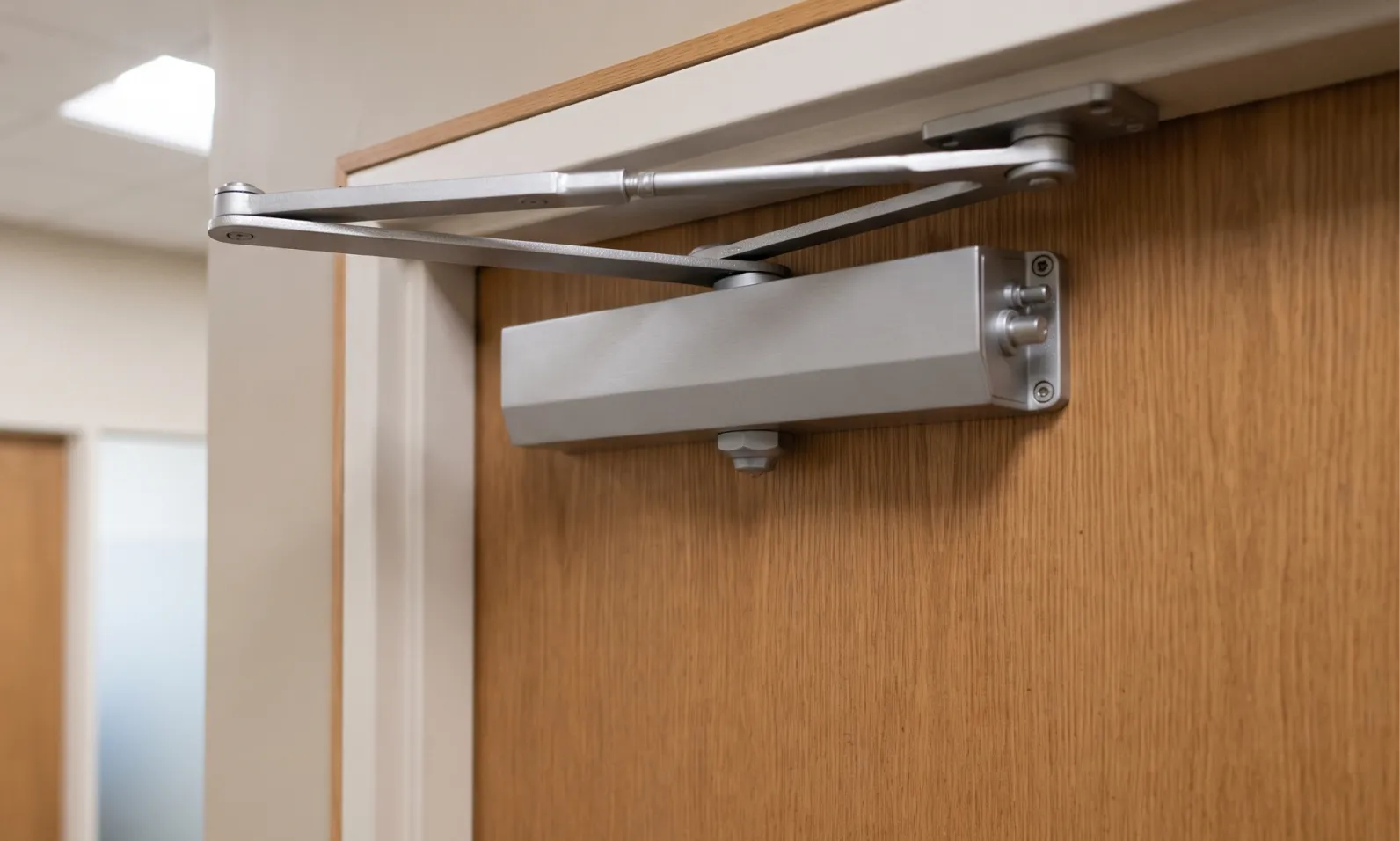
Swing operators wear at the arm, linkage, spindle and bushings, and their actuators — the wall plates people press dozens of times a day — fail long before the operator does.
Revolving doors need drive components, bearings, wing seals, glass and the four sensor families. ICU and hermetic doors are mostly about seals, gaskets and breakaway hardware.
Across all types, seals, sweeps and thresholds are the cheapest parts on the door and the most commonly left too long.
Parts Carried on the Truck
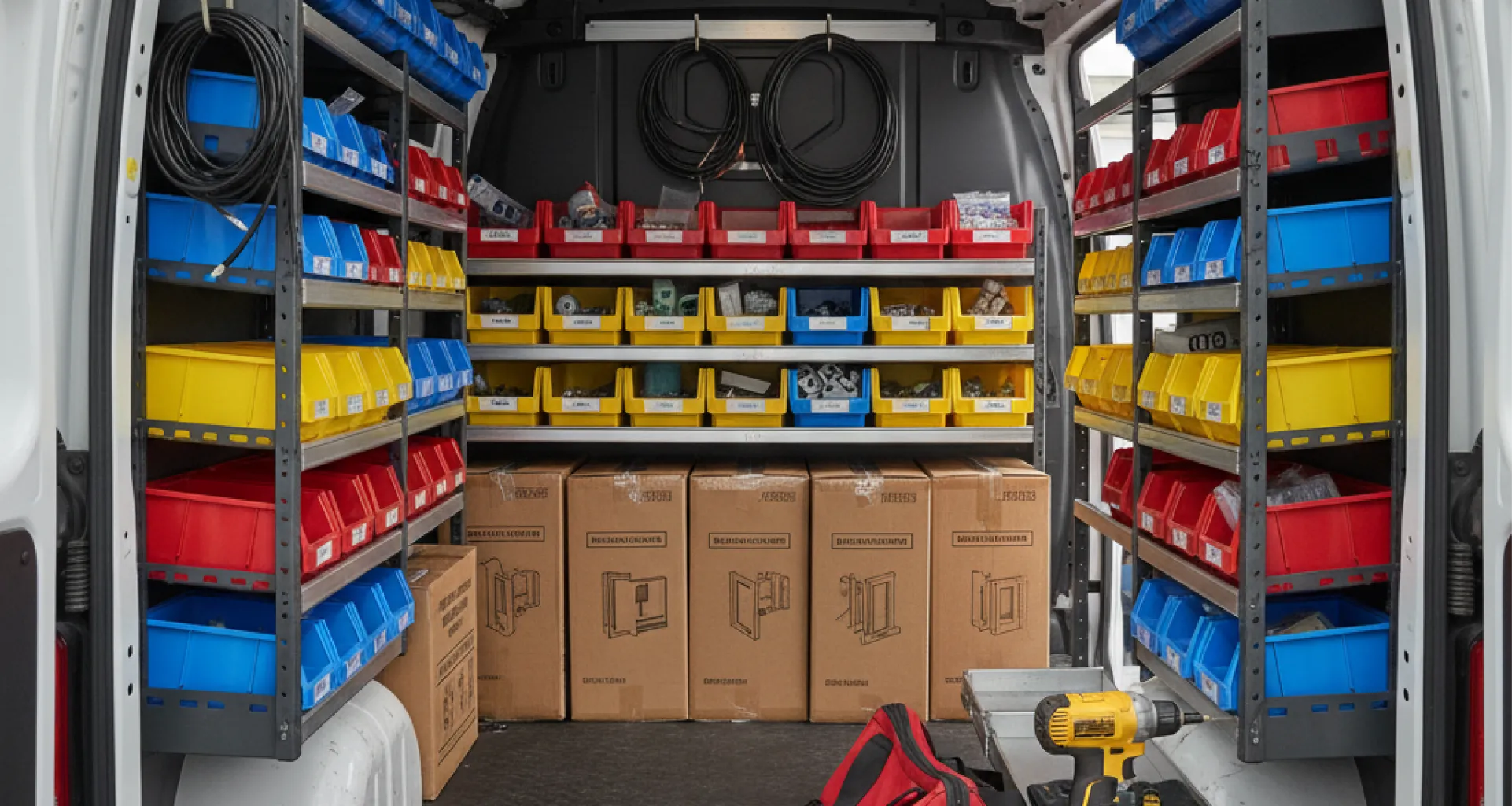
The components that fail most often are stocked on our vans, which is why a large share of calls are completed on the first visit: drive belts, carriers and rollers, common control boards, motion and presence sensors, push plates and actuators, bottom guides, seals, sweeps and threshold sections.
Anything not on the truck is identified, ordered and scheduled during the same visit, with the door made safe or kept in service in the meantime.
Parts Fitted, Not Just Supplied
Automatic door components are not drop-in items. A new carrier set on a bent track wears out again within weeks. A new board on a failing motor solves nothing. A new sensor that has not been aimed leaves the door behaving exactly as it did before.
Every part we replace is fitted, set up and function-tested as part of the same visit — timing, force, detection zones and breakout re-checked afterwards, not assumed.
Parts Replaced During Scheduled Service
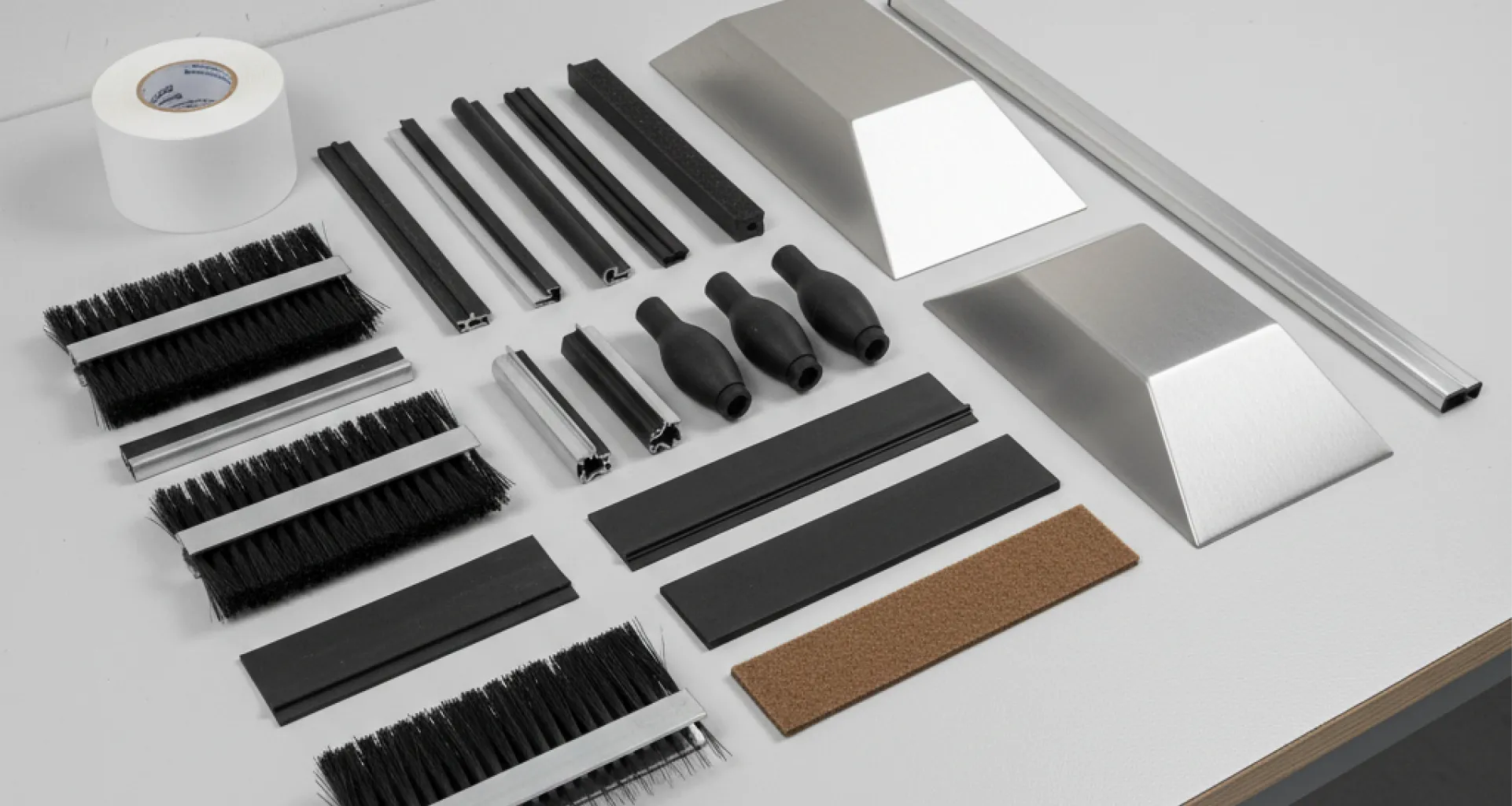
Most part replacement should never be a call-out at all. Belts, carriers, rollers, guides, seals and sweeps all wear on a predictable timeline, and a maintenance visit that replaces them at the right point avoids the out-of-hours call they would otherwise become.
On sites we maintain, wear parts are replaced during the scheduled visit from truck stock, and anything approaching the end of its life is flagged in the report before it fails.
Sourcing Parts for Doors Nobody Else Will Touch
The most common reason a building is told its automatic door cannot be repaired is that the contractor cannot find the part, not that the part does not exist. Discontinued boards, superseded sensors, obsolete carriers and long-gone operator lines all have current equivalents more often than not.
We cross-reference by dimension and function rather than by part number alone, confirm the replacement will fit the header and carry the duty, and re-commission the door around it. That keeps buildings running on equipment that would otherwise be replaced years early.
Where a system genuinely cannot be supported any longer, that is a replacement conversation rather than a repair — and it is better had early.
Wear Parts and How Long They Last
Drive belts, carriers, hanger rollers and bottom guides are consumables on any high-cycle entrance, and their life is measured in cycles rather than years. A grocery entrance will go through a set of carriers several times faster than an office door of the same model.
Seals, sweeps and thresholds last longer but are replaced far less often than they should be, because a leaking entrance still opens and closes normally. Control boards and sensors fail unpredictably, but sensors drift long before they fail outright.
Knowing which group a component belongs to is what turns a parts list into a maintenance plan rather than a series of surprises.
Panels, Glass and Hardware
Beyond the drive and the running gear, the parts most often replaced on an automatic entrance are the ones people touch: panel stiles and rails, glazing gaskets and beads, tempered and laminated glass units, locks and electric strikes, pivots and hinges, and breakout hardware.
These are measured on site rather than ordered from a model number, because entrance panels vary between production years even within the same product line. Glass is fitted once it arrives and the door is realigned and re-tested afterwards rather than simply reglazed.
Service Areas
Texas — Austin, Cedar Park, Cypress, Richardson, McKinney, Sherman, Paris. Connecticut — Hartford, New Haven, Danbury, Greenwich. Alabama — Birmingham.
Tell us the make, model and what has failed — we will confirm what is available and fit it.
Our Services




Frequently Asked Questions
Can you get parts for an old automatic door?
Often yes. Many discontinued components cross-reference to a current equivalent. Where nothing fits, we say so rather than stringing out repairs.
Do you supply parts without fitting them?
We supply and fit. Automatic door components need setting up and function-testing after they go in, and that is part of the same visit.
Which parts wear out first?
Drive belts, carriers and hanger rollers, bottom guides, seals and sweeps. Sensors drift out of adjustment before they fail outright.
Do you stock parts for brands you did not install?
Yes. Vans carry the common components across the major makes, and anything else is sourced and scheduled.
Is it worth repairing an obsolete door?
It depends on whether a current equivalent fits and what else on the door is worn. The survey answers that before any work starts.
Why did the part we replaced fail again so quickly?
Usually because the cause was not addressed. Carriers that wear out early point to the track; boards that fail repeatedly point to the supply; an operator that keeps failing is often undersized for the leaf.
Can wear parts be replaced before they fail?
Yes, and that is what a maintenance schedule is for. Belts, carriers, rollers, guides and seals wear predictably and are replaced from truck stock during the scheduled visit.