

Automatic Door Sensor and Activation Device Repair
Sensors cause more automatic door calls than any other component, and unlike belts and rollers they fail without anyone touching them. Detection patterns drift, presence sensors lose sensitivity, and a moved display, a repositioned cart corral or a new floor finish can put a door outside the behaviour it was set up for. A1 Door Services replaces, repairs, aims and tests automatic door sensors and activation devices across Texas, Connecticut and Alabama, on every major make and on systems no longer in production.
 (855) 676-0881
Get in touch with us
Call us 24/7: (855) 676-0881
Or Let Us Call You
Sensors We Replace and Adjust
- Overhead motion sensors
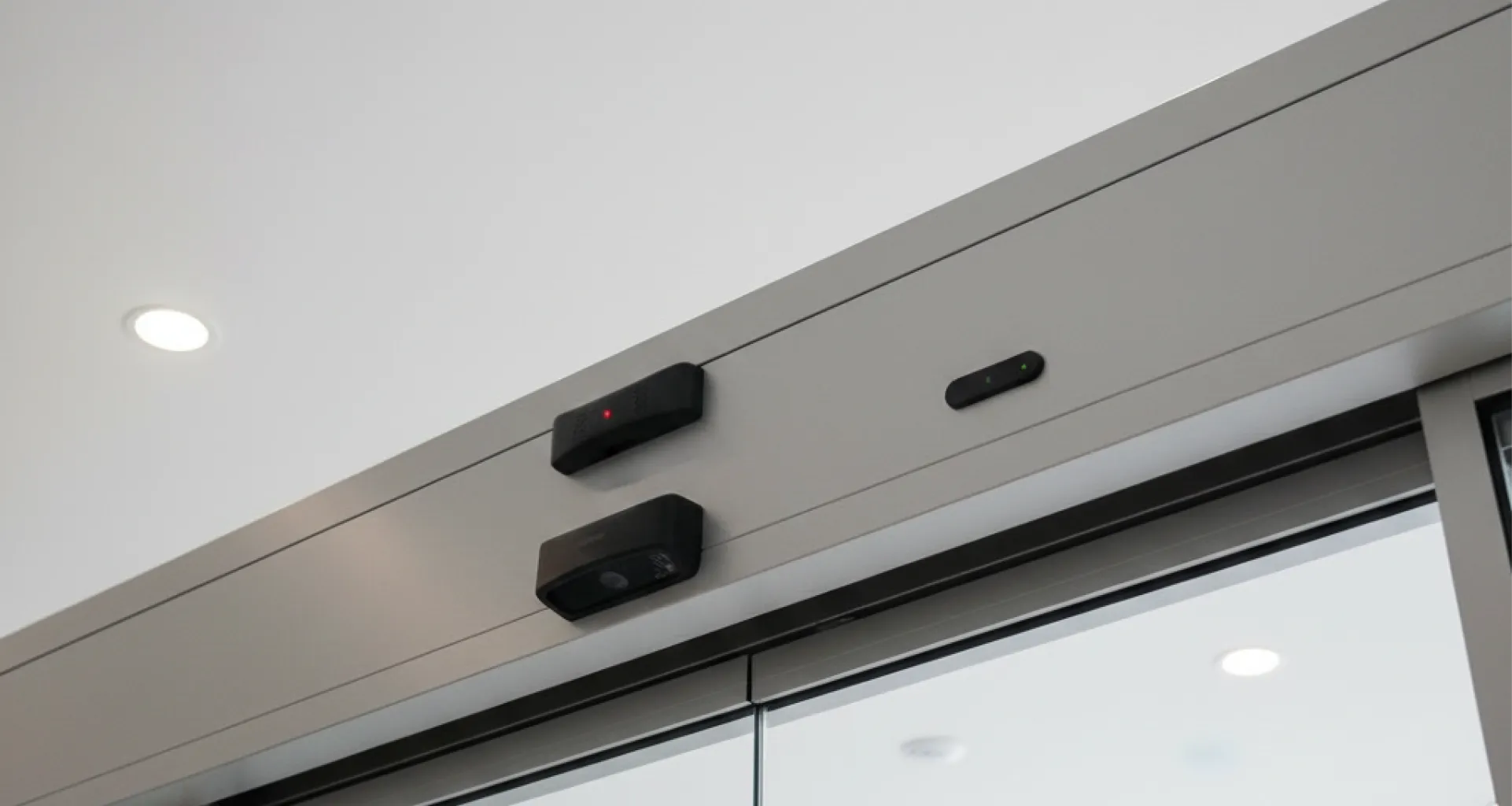
- Detect someone approaching and trigger the door. When they drift, the door either opens at nothing or fails to see people coming from one direction.
- Presence sensors
- Hold the door open while someone is in the opening. A failing presence sensor is what lets a door close on a person, and it is the fault we treat most urgently.
- Threshold and door-mounted sensors
- Cover the doorway itself and, on swing doors, the leading edge and the swing path.
- Photo eyes and safety beams
- Reverse or hold the door when the beam is broken. Common on sliding entrances, gates and overhead systems.
- Revolving door sensor groups
- Wing, end-wall, bottom-rail and entry-point sensors, each tested and aimed separately because they behave differently.
Activation Devices
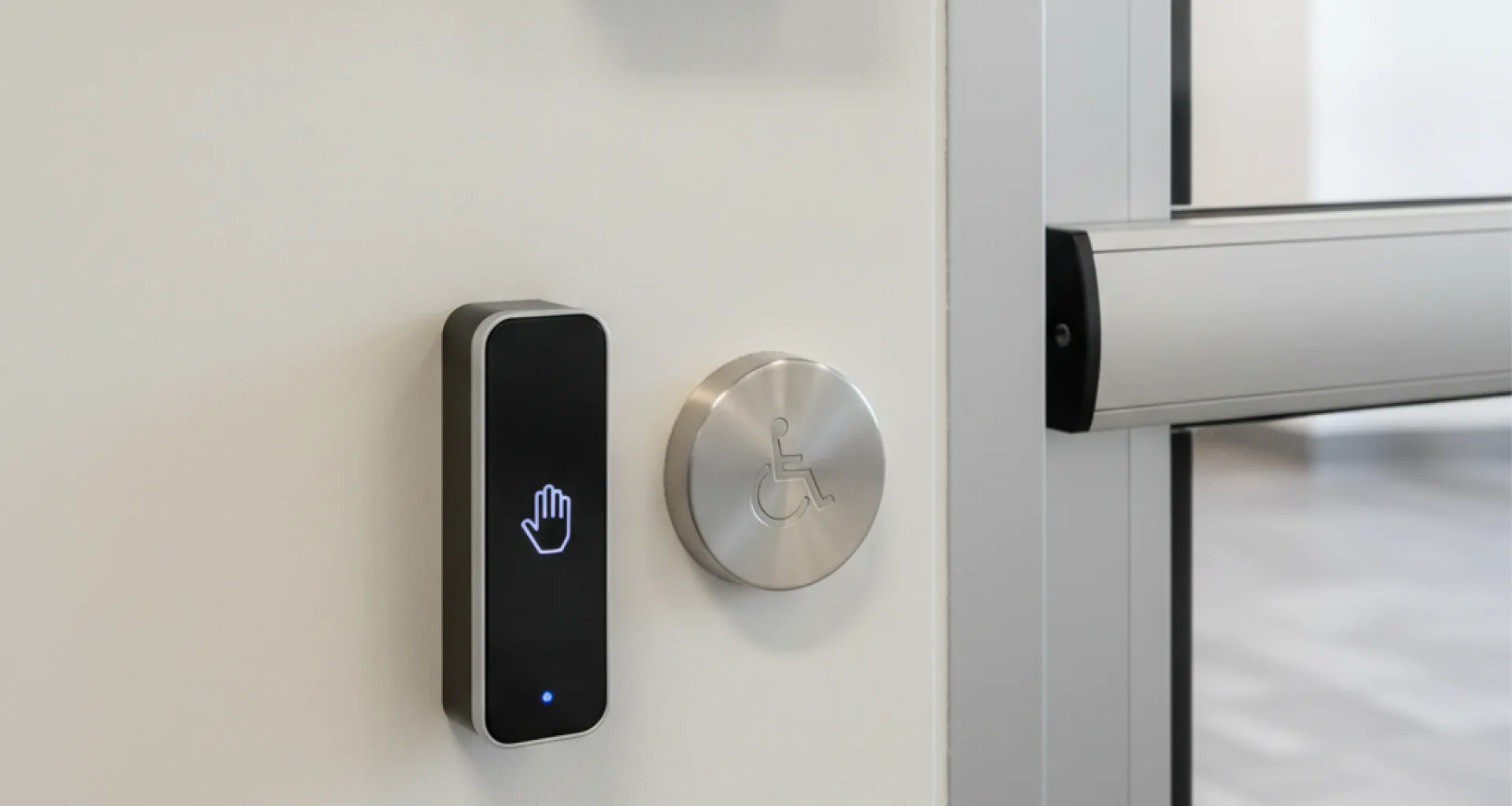
Push plates, key switches, foot pulls, wireless transmitters and receivers all wear out or lose their connection. A door that only opens on the second or third press is an actuator fault, not an operator fault — and it is regularly diagnosed the other way round.
We replace and rewire activation devices, repair wiring runs that have been damaged, replace batteries and receivers on wireless kits, and reposition actuators that were fitted somewhere people cannot comfortably reach from the direction they approach.
On accessible openings the actuator position is checked from a wheelchair as well as standing, because a plate at the wrong height makes an otherwise compliant door unusable.
Touchless and Wave-to-Open Upgrades
Wave sensors replace push plates on openings where hand contact with surfaces matters — clinics, restrooms, laboratories, food service and patient areas. They fit to the operator that is already there, so a whole corridor or department can be converted without changing any doors.
Foot-activated and elbow-height actuators are used where staff routinely approach with full hands. Conversion is normally a single short visit per opening, and it can be rolled out floor by floor or site by site.
Aiming, Masking and Testing
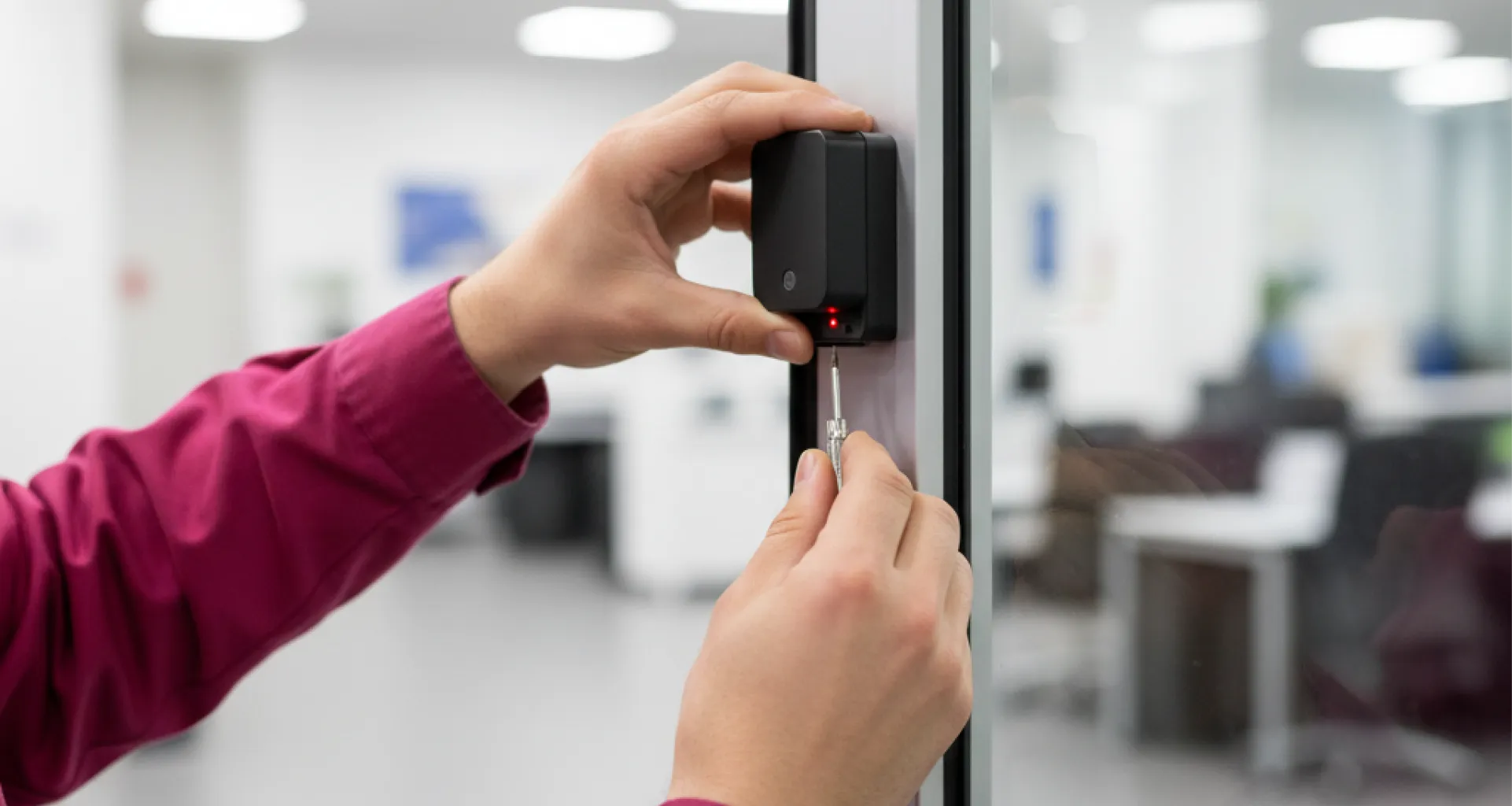
Replacing a sensor is the easy half. The detection zone then has to be aimed and masked to the opening it serves — away from passing foot traffic, reflective surfaces, moving displays, weather and anything else that will trigger it — and the hold-open time set for the way people actually move through the door.
Every sensor we fit or adjust is function-tested through a full cycle from each approach direction before we leave. A sensor that works when you walk at it straight on and fails when you approach from the side has not been commissioned, it has just been installed.
Sensor Faults by Door Type
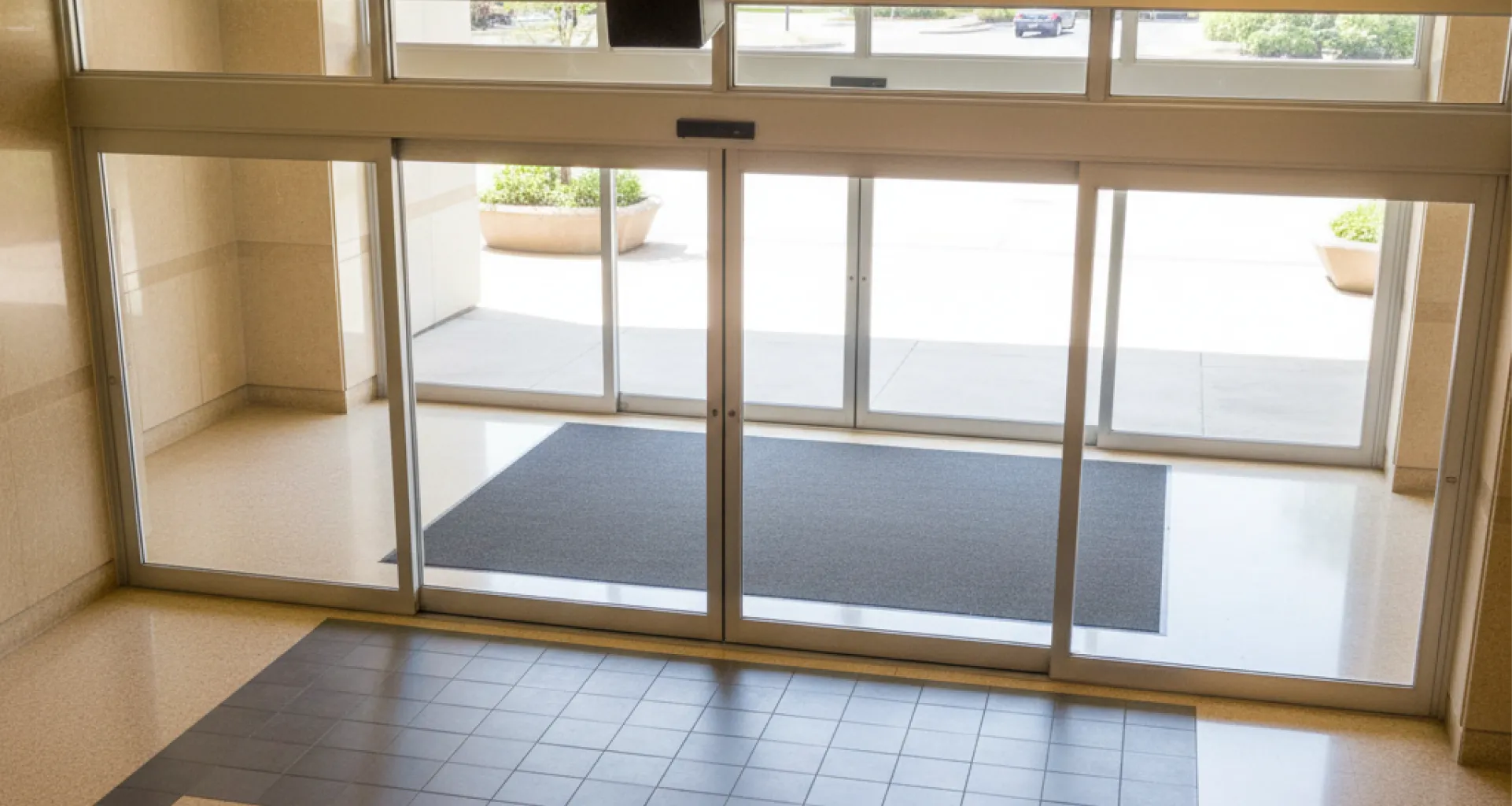
On sliding entrances the usual failures are the overhead motion sensor drifting, threshold presence detection weakening, and the safety beam being knocked out of alignment by cart traffic.
On swing doors it is the overhead presence sensor covering the swing path, the leading-edge sensor on the door itself, and the approach-side detection on full-energy systems.
On revolving doors, one of the four sensor groups is almost always the reason the door keeps stopping, and because they look similar to anyone not servicing them regularly, the wrong group is replaced surprisingly often.
Symptoms That Point to a Sensor
- Door opens when nobody is there.
- Door does not open when someone approaches, or only opens sometimes.
- Door starts closing while someone is still in the opening.
- Door stays open and will not close.
- Door opens, closes, then reopens for no visible reason.
- Door only responds to the second or third press of the plate.
- Door behaves differently depending on which direction you approach from.
Obsolete and Discontinued Sensors
Sensors on doors installed fifteen or twenty years ago are often no longer produced, and the original detection patterns cannot be reproduced by simply bolting on whatever is current.
We cross-reference discontinued sensors to current equivalents, confirm the replacement will cover the same zone, and re-commission the door around the new device rather than assuming it will behave the same way.
Sensors in Scheduled Maintenance
Sensor drift is gradual, which is exactly why it belongs on a schedule rather than in a call-out. Every maintenance visit re-tests the detection and safety zones against the opening they serve, re-aims and re-masks where they have moved, and replaces devices that no longer hold their setting.
In buildings where the layout changes often — retail floors, schools, hospitals during works — this is the single most valuable thing done during a service visit.
Sensor Faults After a Layout Change
A sensor is commissioned against the space in front of the door on the day it is fitted. Change that space and the sensor is wrong, even though nothing about the sensor has failed.
New shelving, a moved cart corral, a relocated queue barrier, a reflective floor finish, seasonal displays, a temporary hoarding — all of them can make a door open at nothing or stop detecting people approaching from one side.
After any refit or layout change, the sensors on the affected entrances should be re-tested and re-masked. It is a short visit and it prevents the run of nuisance call-outs that usually follows a store reset or a department move.
Safety Devices and the Annual Inspection
Sensors are the largest single group of items checked during an annual automatic door safety inspection, because they are what stands between a powered door and the person in front of it.
The inspection covers detection zone coverage on the approach and in the doorway, presence detection while the opening is occupied, safety device response, and hold-open time. Anything out of range is corrected during the visit where possible and reported where a part is needed.
Where a sensor is found to be failing rather than drifting, the door is taken out of automatic operation until it is replaced.
Activation Faults That Look Like Operator Faults
A large share of what gets reported as a failing automatic door operator is actually the device that tells it to open. Push plates crack, internal switches wear, wiring runs get pinched behind a wall, wireless transmitters lose their pairing and batteries die quietly.
The symptom is the same either way — the door does not open when someone presses — which is why actuators are checked before operators. Replacing a wall plate is a short visit; replacing an operator that never failed is not.
Service Areas
Texas — Austin, Cedar Park, Cypress, Richardson, McKinney, Sherman, Paris. Connecticut — Hartford, New Haven, Danbury, Greenwich. Alabama — Birmingham.
Describe what the door is doing and we will bring the sensors that behaviour normally points to.
Our Services
Frequently Asked Questions
Why does my automatic door open when nobody is there?
The motion sensor is detecting something it should be ignoring — passing traffic, weather, a reflective surface or a moving display. Re-aiming and masking the detection zone normally fixes it.
Why is the door closing on people?
A presence sensor has failed or lost sensitivity. That is a safety fault, and the door should be taken out of automatic operation until it is corrected.
How long do automatic door sensors last?
Typically several years, but detection patterns drift long before a sensor fails outright, which is why they are re-tested at every service visit.
Can just the sensor be replaced instead of the whole door?
Yes, and it usually can. Sensors are a component, not part of the door, and most are replaceable in a single visit.
What is the difference between a motion sensor and a presence sensor?
A motion sensor detects someone approaching and opens the door. A presence sensor detects someone standing in the opening and holds it open.
Can our existing doors be made touchless?
Yes. Wave actuators fit to the operator already installed, so no door replacement is involved and a whole corridor can be converted in a short visit.
Our sensor is obsolete — can it still be replaced?
Yes. Discontinued sensors are cross-referenced to current equivalents, and the door is re-commissioned around the new device rather than assuming it covers the same zone.