

Automatic Doors for Retail and Grocery Stores
A retail entrance opens and closes more times in a month than most office doors do in a year. Everything about servicing them follows from that — the wear is faster, the intervals are shorter, the parts list is different and the work happens when the store is closed. A1 Door Services installs, repairs, replaces and maintains automatic entrances for grocery, big box, pharmacy and convenience retail across Texas, Connecticut and Alabama, on single stores and across multi-site portfolios.
 (855) 676-0881
Get in touch with us
Call us 24/7: (855) 676-0881
Or Let Us Call You
Automatic Door Installation for Retail Sites
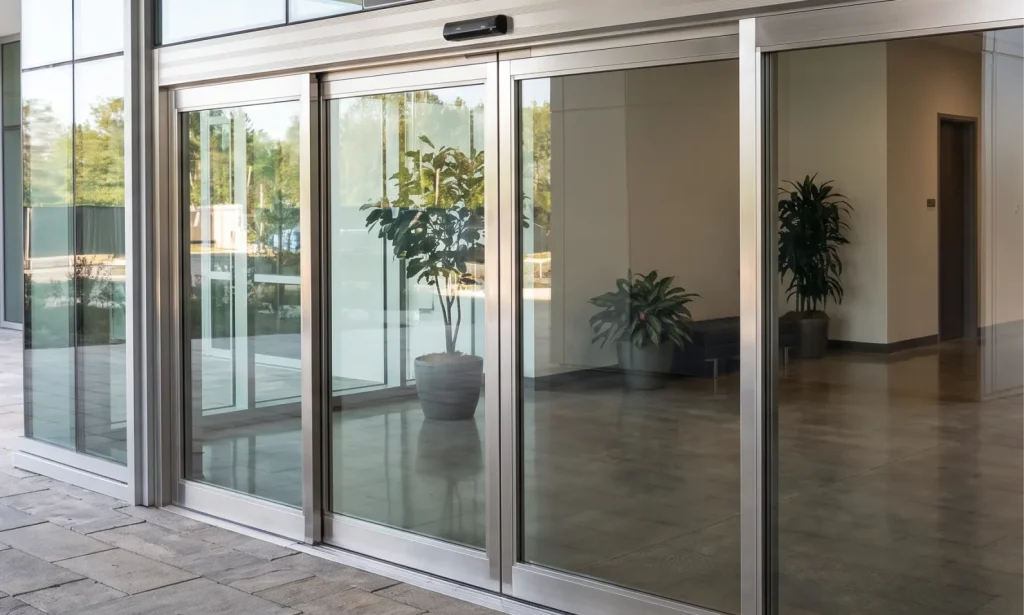
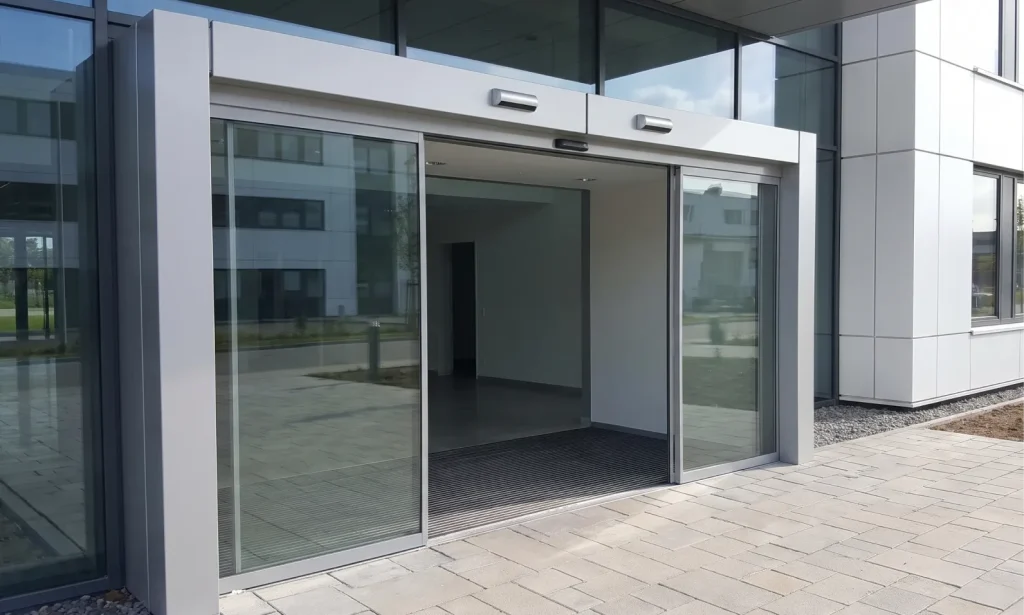
New retail entrances are specified for cycle count first and appearance second. Bi-parting sliders are the default on grocery and big box because they clear a wide opening fastest; telescopic systems are used where the clear width is needed but the wall space is not there; single-slide and low-energy swing systems suit convenience, pharmacy and small-box formats.
Cart and trolley traffic changes the specification: heavier bottom guides, tougher floor tracks, longer hold-open times and detection tuned to pick up a shopper pushing a loaded cart rather than walking freely.
Vestibule pairs, exit lanes and air curtains are installed with the entrance where the store needs to control air, weather and one-way flow. New builds and refits are staged overnight or before opening so trading hours are never lost.
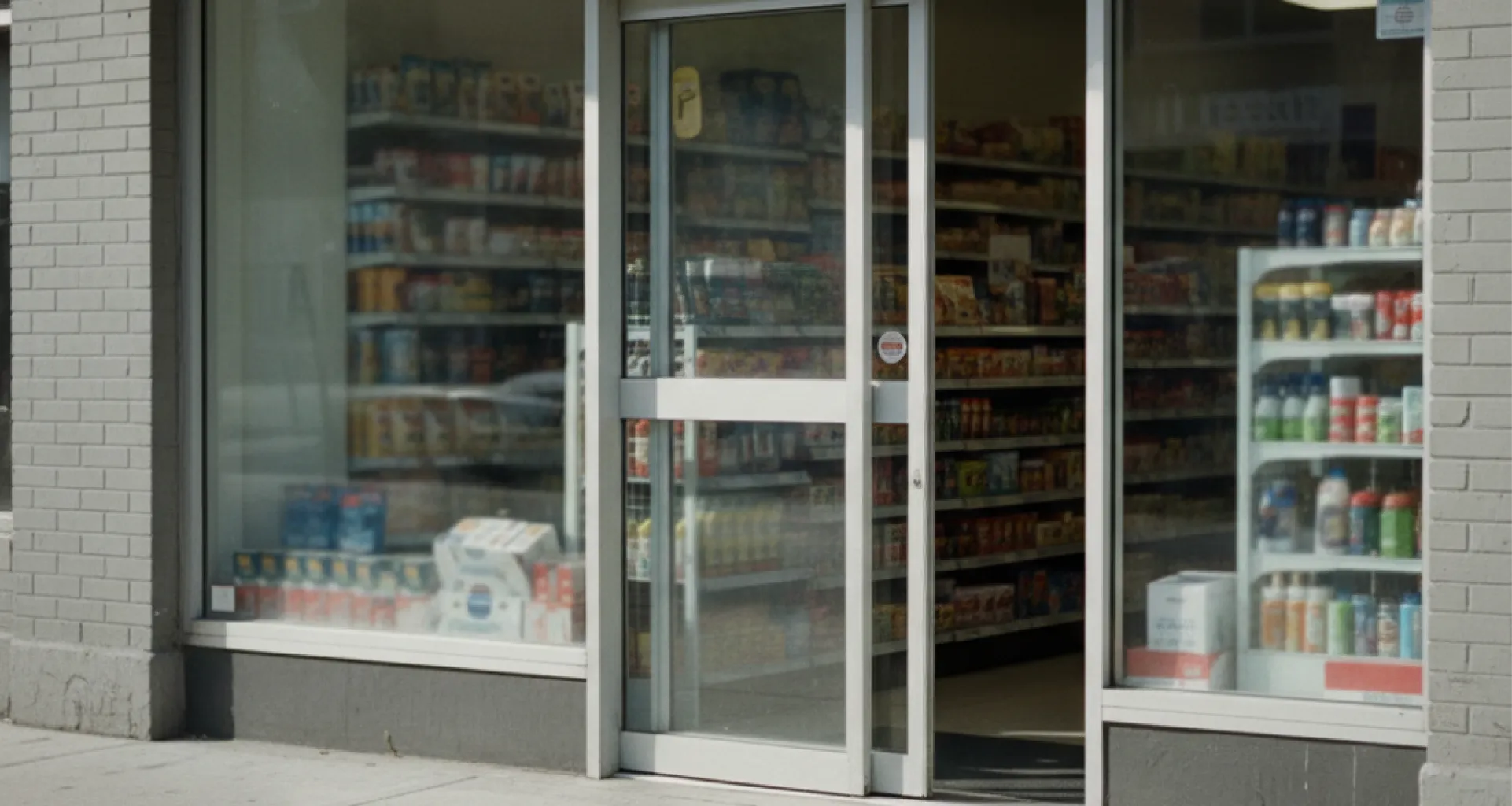
What Wears Fastest on a Retail Entrance
- Drive belts and carriers, from sheer cycle count.
- Bottom guides and floor tracks, from grit, water, salt and cart wheels.
- Weather seals, sweeps and thresholds, from constant opening and street exposure.
- Sensors, from cart traffic, display changes and seasonal layout moves.
- Panels and glazing, from carts, deliveries and impact.
- Header and frame alignment, from doors being forced when they stick.
Automatic Door Repair in Stores
Retail doors fail more often than any other building’s because they cycle more, and the failures repeat unless the underlying cause is dealt with. A carrier set that lasts eight months is telling you about the floor track, not about the carriers.
We repair drives, belts, motors, carriers, rollers, bottom guides, tracks, control boards, panels and seals, and correct the frame and header alignment that causes the same fault to come back. Repairs are done during trading hours where it is safe to do so, and overnight where it is not.
In multi-leaf entrances we can work one leaf at a time so a route into the store stays open while the repair is in progress.
Scheduled Maintenance for High-Cycle Entrances
High-cycle grocery and big box entrances are usually on a monthly or quarterly interval; convenience and small-box stores are typically quarterly to semi-annually. The point of the schedule in retail is not tidiness — it is that almost every retail door failure is visible weeks before it happens.
Each visit covers belt tension, carrier and roller condition, floor track cleaning and alignment, bottom guide wear, sensor re-aiming, operator timing and force, seal compression, threshold condition and the breakout mechanism. The annual safety inspection is folded into one visit a year.
Stores move fast internally, so sensors are re-tested against the current layout rather than the one they were commissioned against.
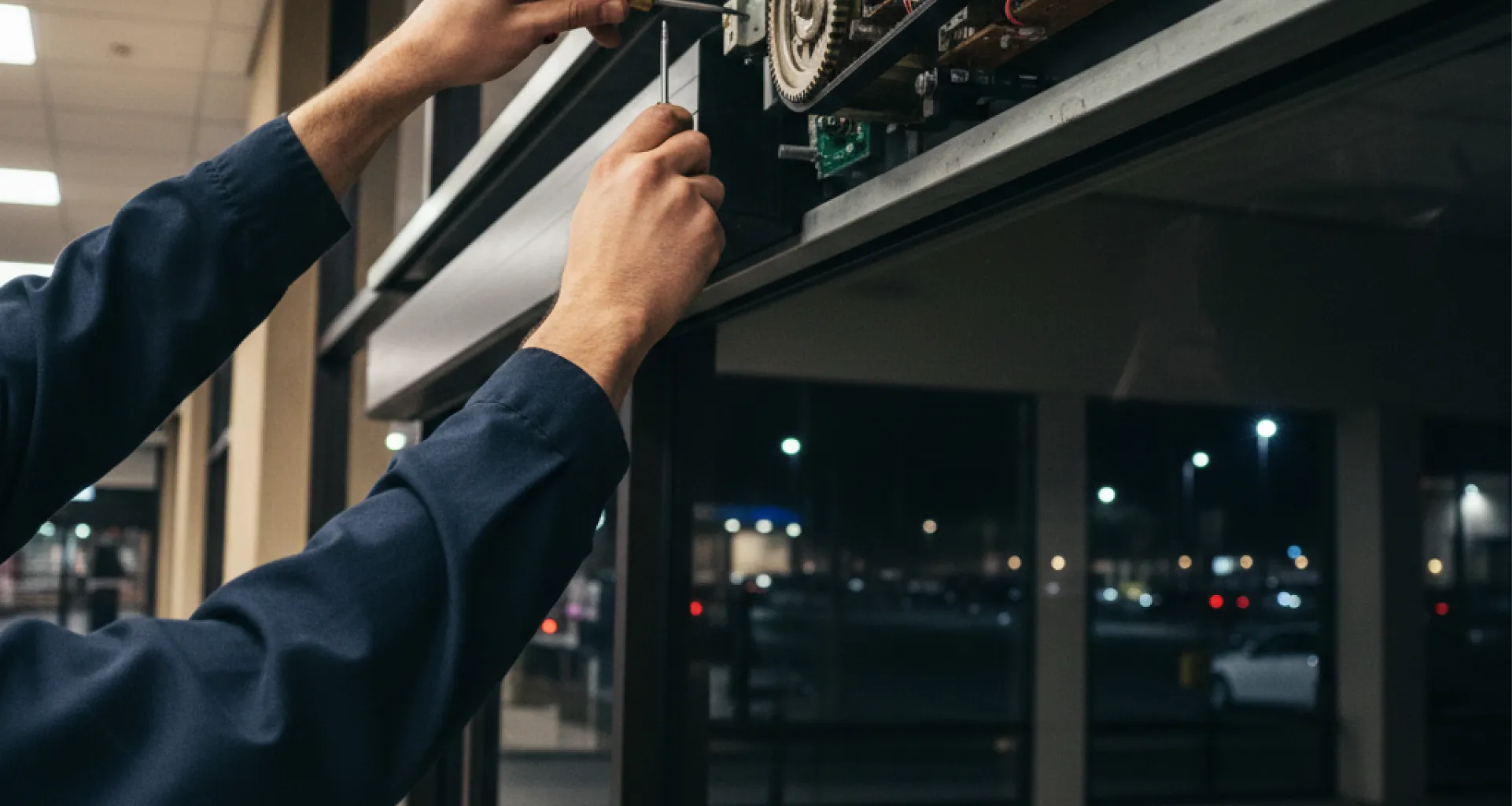
Emergency Response for Stores
The two calls we take most often in retail are an entrance stuck open at closing and an entrance that will not open at opening. Both are answered around the clock, and both are dealt with the same way: make the door safe, make the store secure or usable, then repair.
Broken entrance glass from impact, weather or forced entry is boarded and secured the same visit, with the opening measured for the replacement panel while we are on site.
Multi-Site Retail Programmes
Chains, franchise groups and grocery banners are covered building by building on one schedule and one point of contact, rather than a separate arrangement per store. Mixed manufacturers across a portfolio are normal and do not change how the schedule runs.
Rollout work — converting a whole banner to touchless activation, replacing an ageing entrance format across a region, or bringing a newly acquired group of stores onto one interval — is planned store by store around trading hours.
Entrance Energy Loss and Comfort
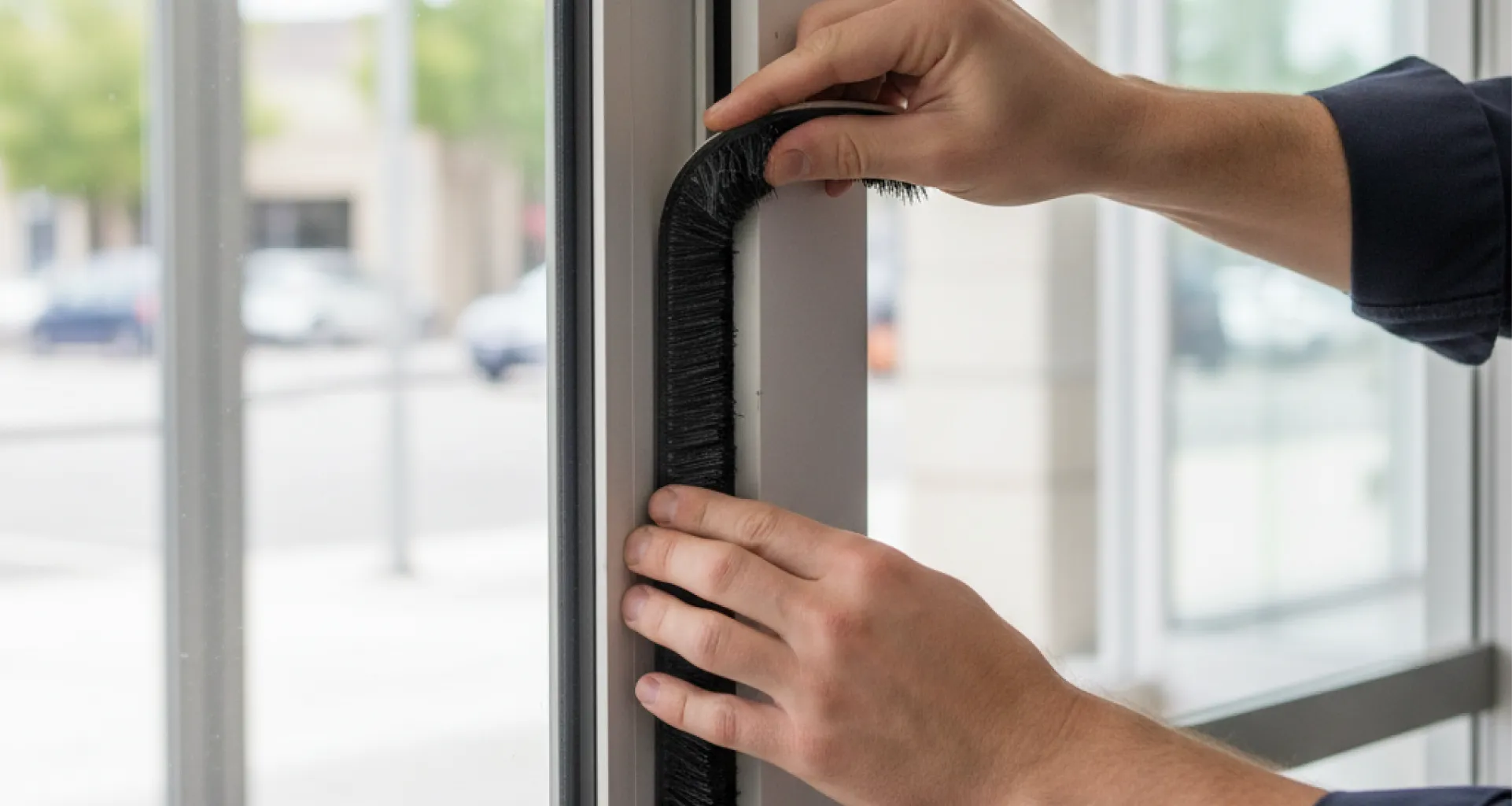
A worn seal, a slow closing cycle or a threshold that no longer sits flat lets conditioned air straight out of the store. On a high-cycle retail entrance that adds up quickly, and in a grocery store it is a refrigeration problem as much as a comfort one.
It is also usually fixed with seals, sweeps, threshold work and a corrected closing cycle rather than anything major — which is why it is worth raising at a maintenance visit rather than waiting for a complaint.
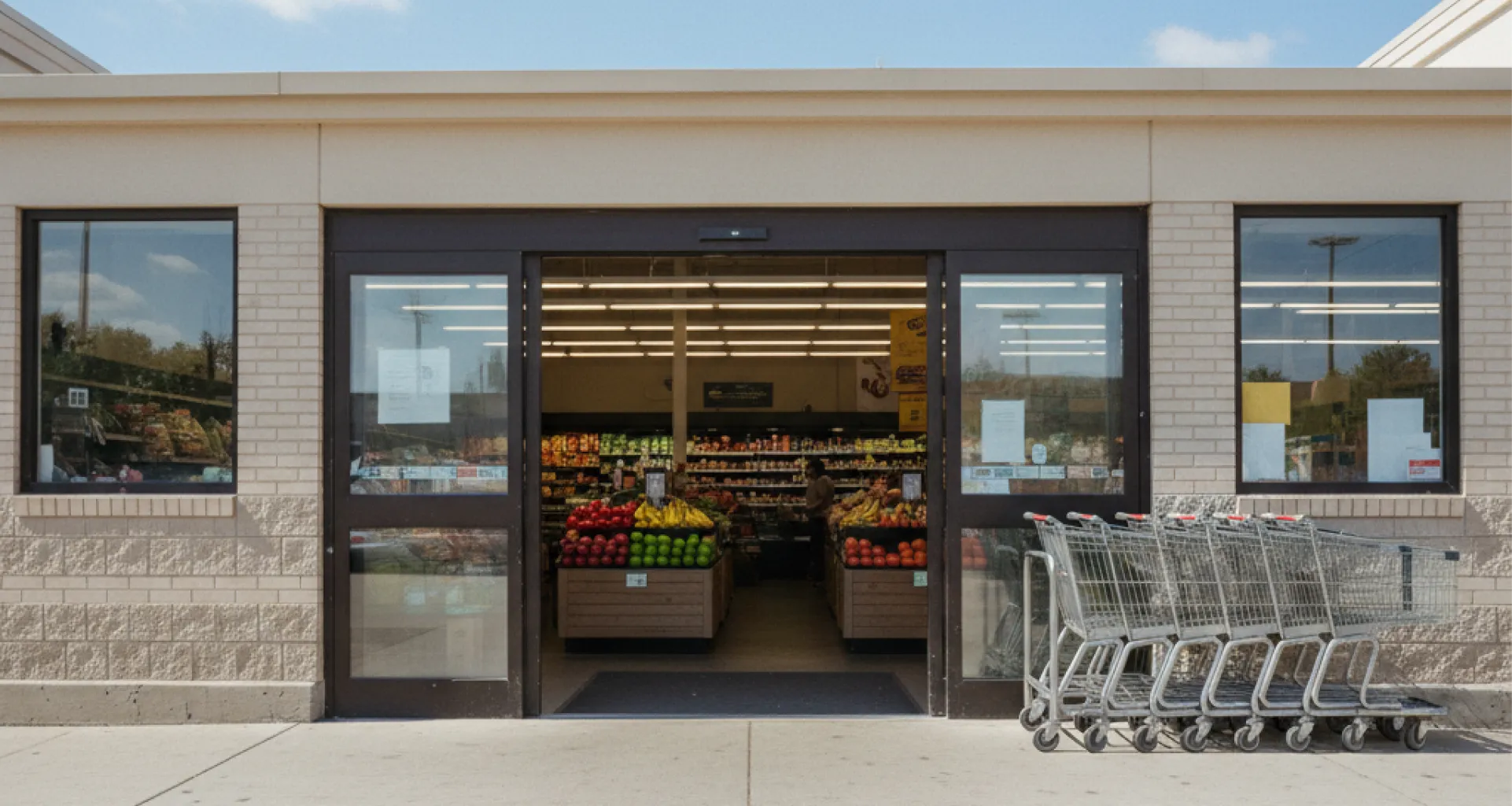
Exit Lanes, Vestibules and One-Way Flow
Larger stores separate entry and exit, and the doors that manage that flow need different settings from a single shared entrance. Exit lanes are usually one-way, activated only from inside, with detection tuned so people leaving with loaded carts are not stopped mid-opening.
Vestibule pairs and doors in series control weather, air loss and noise between the street and the sales floor. Both doors have to be sequenced so a customer is never held between two closed leaves, and that sequencing drifts as operators age.
We install, repair and re-sequence exit lanes and vestibules as part of the same visit as the main entrance.
Pharmacy, Drive-Up and Back-of-House Openings
Retail sites carry more doors than the front entrance. Pharmacy counters and consultation rooms need accessible operators. Drive-up and transaction windows need servicing for smooth, sealed operation. Cooler and freezer doors, stockroom entrances and receiving doors all sit on the same site and the same schedule.
Covering them together means one contractor and one visit per store rather than three separate arrangements, which matters most on multi-site portfolios where raising a separate call for every opening creates more admin than the work itself.
New Store Openings and Refits
New builds and refits run to a fixed opening date, and the entrance is usually one of the last things installed and the first thing anyone notices. We work to the construction programme, coordinate with the shopfitting, glazing and electrical trades, and commission the entrance before the store hands over.
For banner refreshes and format changes across a group, entrance replacement is rolled out store by store overnight, with each site trading normally the following morning.
Automatic Door Replacement in Trading Stores
Entrance replacement in retail is an overnight job. The old system comes out after close, the new header, operator and panels go into the existing frame, and the store opens on time the following morning.
Where the frame has to be replaced as well, the opening is secured overnight and the work is split across two nights rather than closing the store. In multi-entrance sites we replace one entrance at a time so the building always has a way in.
Service Areas
Texas — Austin, Cedar Park, Cypress, Richardson, McKinney, Sherman, Paris. Connecticut — Hartford, New Haven, Danbury, Greenwich. Alabama — Birmingham.
Send us the store list and we will schedule the work around your trading hours.
Our Services
Frequently Asked Questions
How often should a grocery store entrance be serviced?
High-cycle grocery and big box entrances are usually on a monthly or quarterly interval. Convenience and small-box stores are typically quarterly to semi-annually.
Can you work overnight so we do not lose trading hours?
Yes. Replacements and scheduled maintenance are normally done overnight or before opening, and repairs during trading are staged one leaf at a time.
Can one arrangement cover all of our stores?
Yes. Multi-site retail is scheduled centrally, with one point of contact across the portfolio and mixed manufacturers handled on the same schedule.
Why do retail doors fail more often than other buildings?
Cycle count. A retail entrance can run tens of thousands of cycles a month, which wears belts, carriers, guides and seals far faster than in an office or a school.
Can you fix an entrance that lets cold air in?
Usually yes, and usually with seals, sweeps, threshold work and a corrected closing cycle rather than a new door.
Which entrance type suits a busy grocery store?
A bi-parting slider in most cases, because it clears a wide opening fastest. Where the wall space will not take it, a telescopic system gives the same clear width in less room.
Our door keeps failing in the same way — why?
Almost always an untreated underlying cause. Carriers that wear out quickly point to the floor track; a door that drags after every repair usually points to the header or frame.