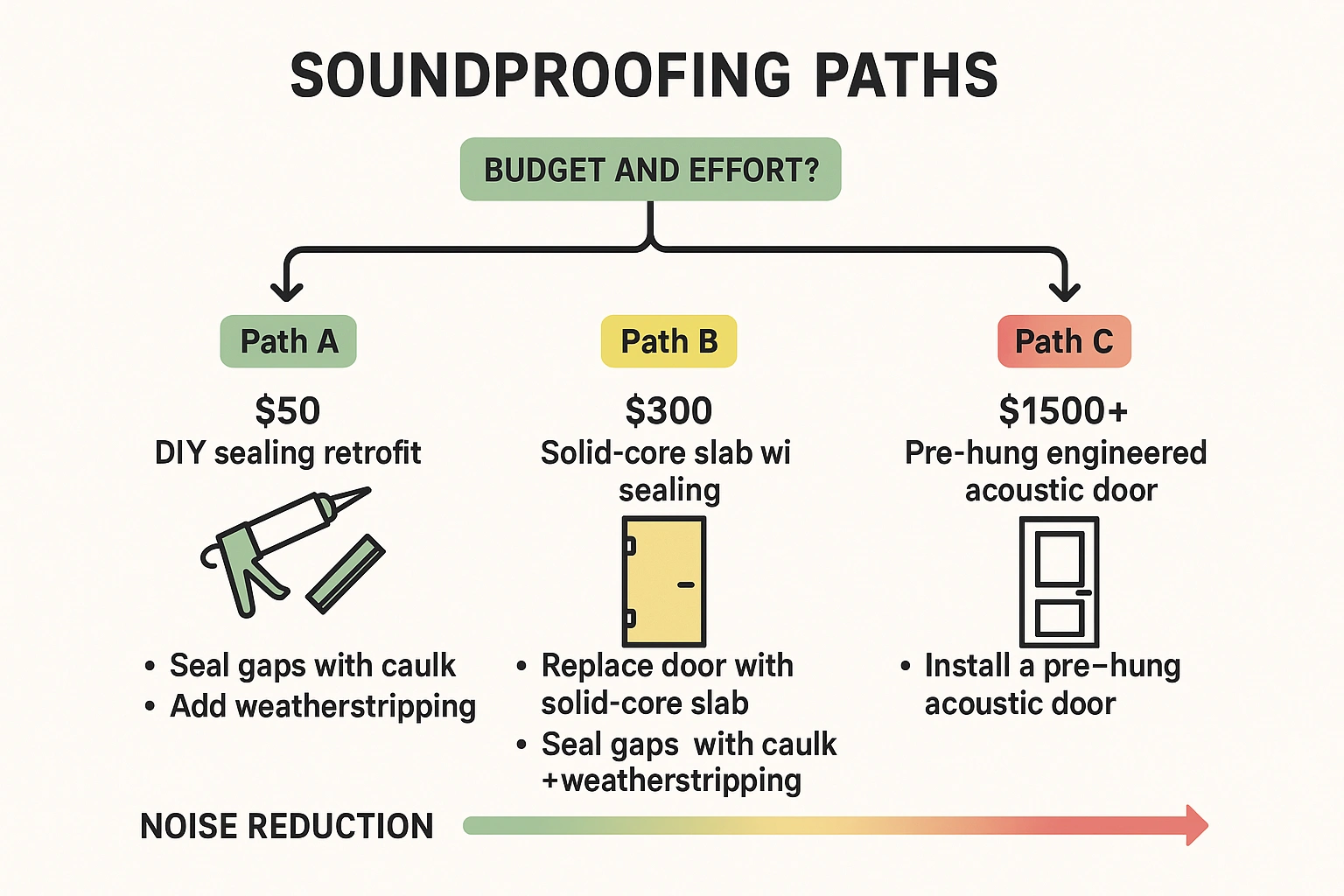
To help you decide on the right balance of cost, effort, and performance, we have mapped out three distinct approaches:
Path A: The $50 DIY Retrofit (For Renters & Budgets)
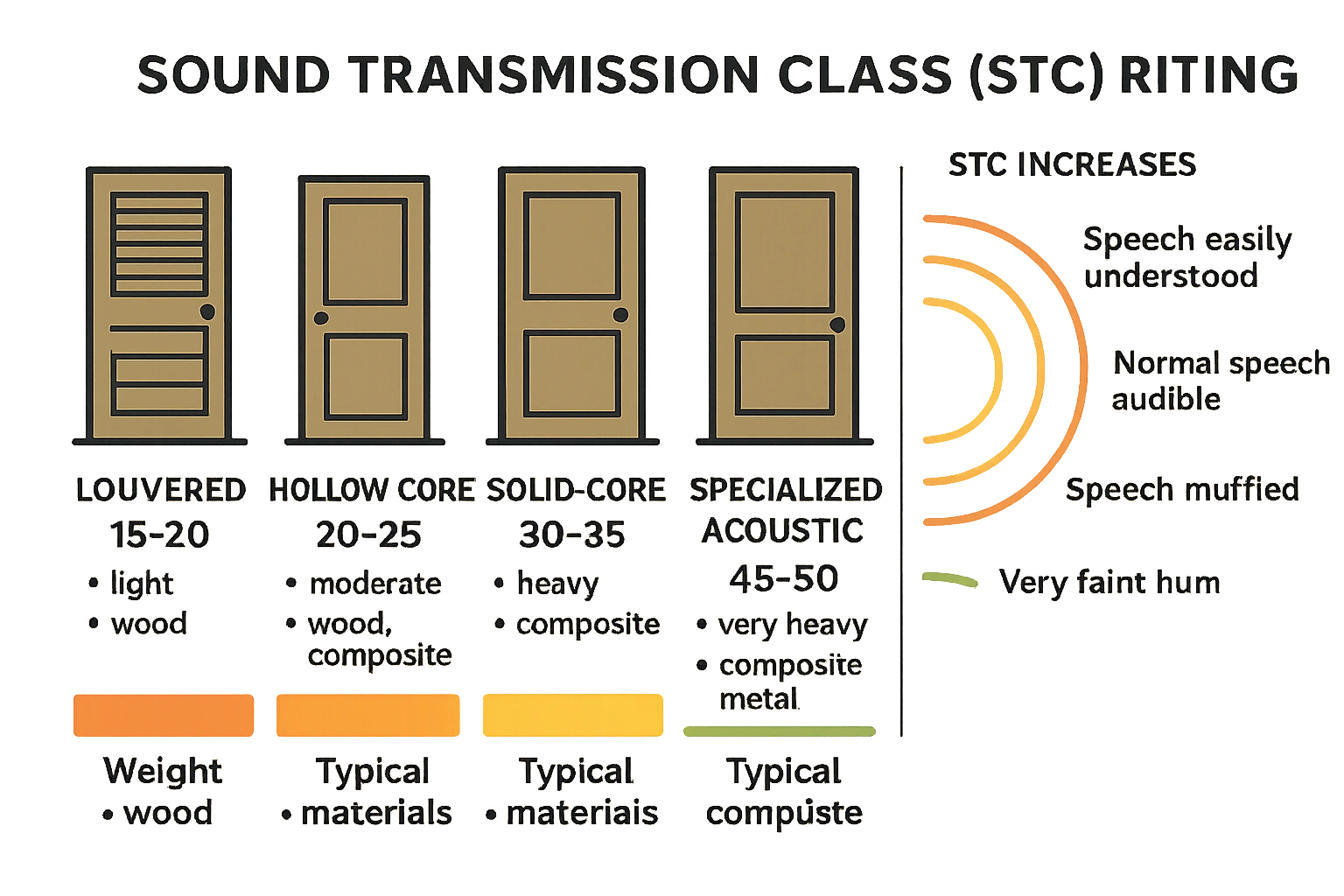
If you cannot replace your door, focus on the gaps. Install high-density silicone compression weatherstripping around the door stop and a heavy-duty sliding or adhesive bottom sweep. This can elevate a hollow door from a poor STC 16 to a tolerable STC 22 by eliminating air leaks.
Path B: The $300–$500 Slab Swap & Seal (The Residential Sweet Spot)
Replacing a hollow door slab with a solid MDF (Medium-Density Fiberboard) or solid wood slab provides the necessary mass (moving from 25 lbs to roughly 75–110 lbs). Combined with professional perimeter gaskets and an automatic bottom drop seal (which drops down to seal the floor gap when the door closes), this path achieves an STC of 32 to 36. If you go this route, hiring specialized interior door installers near me ensures the heavy slab sits perfectly square and the seals compress with absolute precision.
Path C: The $1,500+ Engineered Acoustic System (For Studios & Media Rooms)
This option involves installing a pre-hung, factory-engineered acoustic door system featuring integrated magnetic gaskets, a heavy steel or timber frame, and specialized dense cores. This system delivers an STC of 45 to 55+, blocking even amplified music.