

ADA & Low-Energy Commercial Door Operators
An accessible entrance is only accessible if the operator works, the actuator is reachable, and the door opens with the force and timing the standards require. A1 Doors Services installs, repairs, and surveys ADA and low-energy automatic door operators for commercial and public buildings, with licensed technicians and 15+ years of experience.
 (855) 676-0881
Get in touch with us
Call us 24/7: (855) 676-0881
Or Let Us Call You
ADA Door Operator Installation
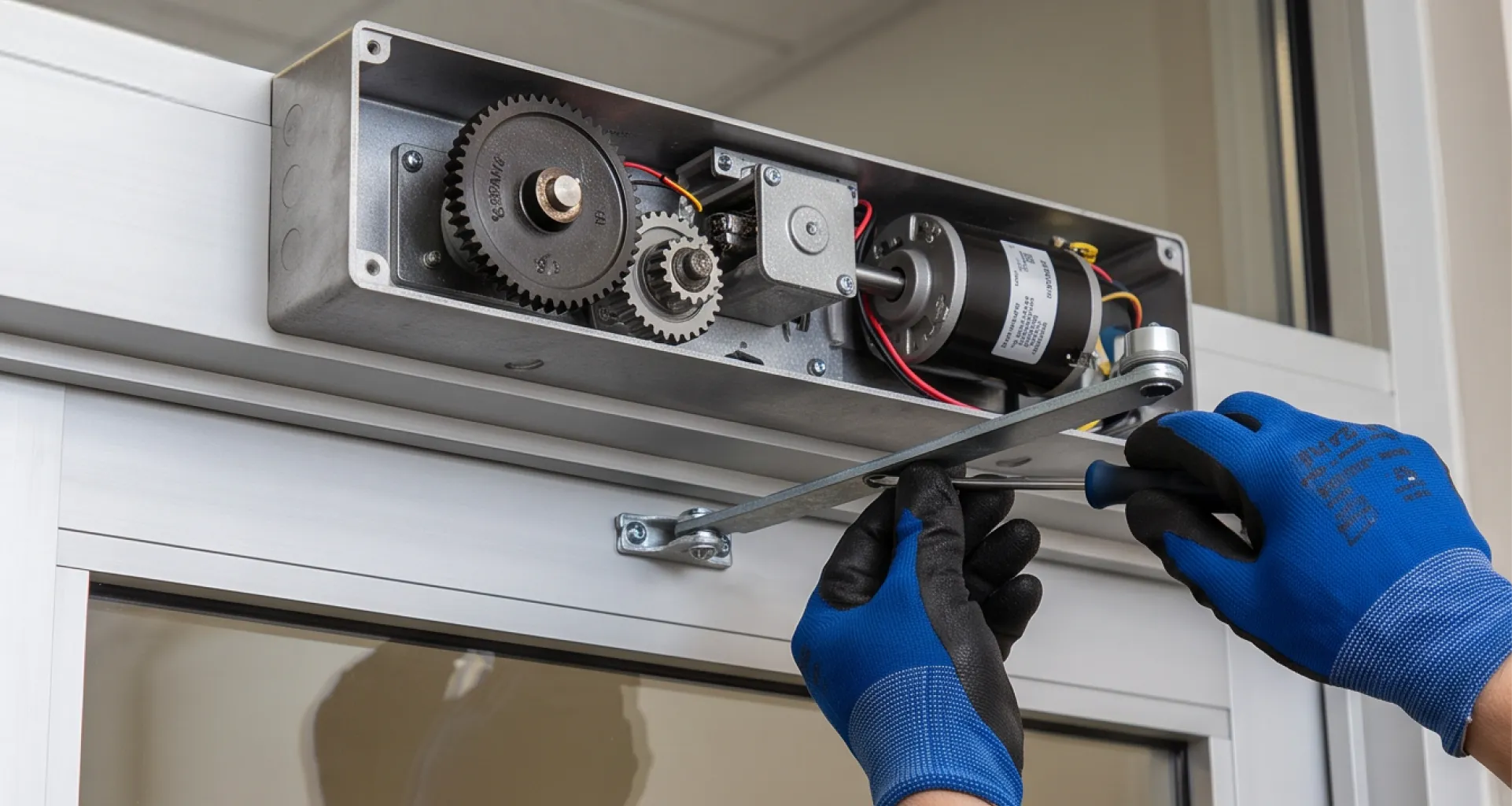
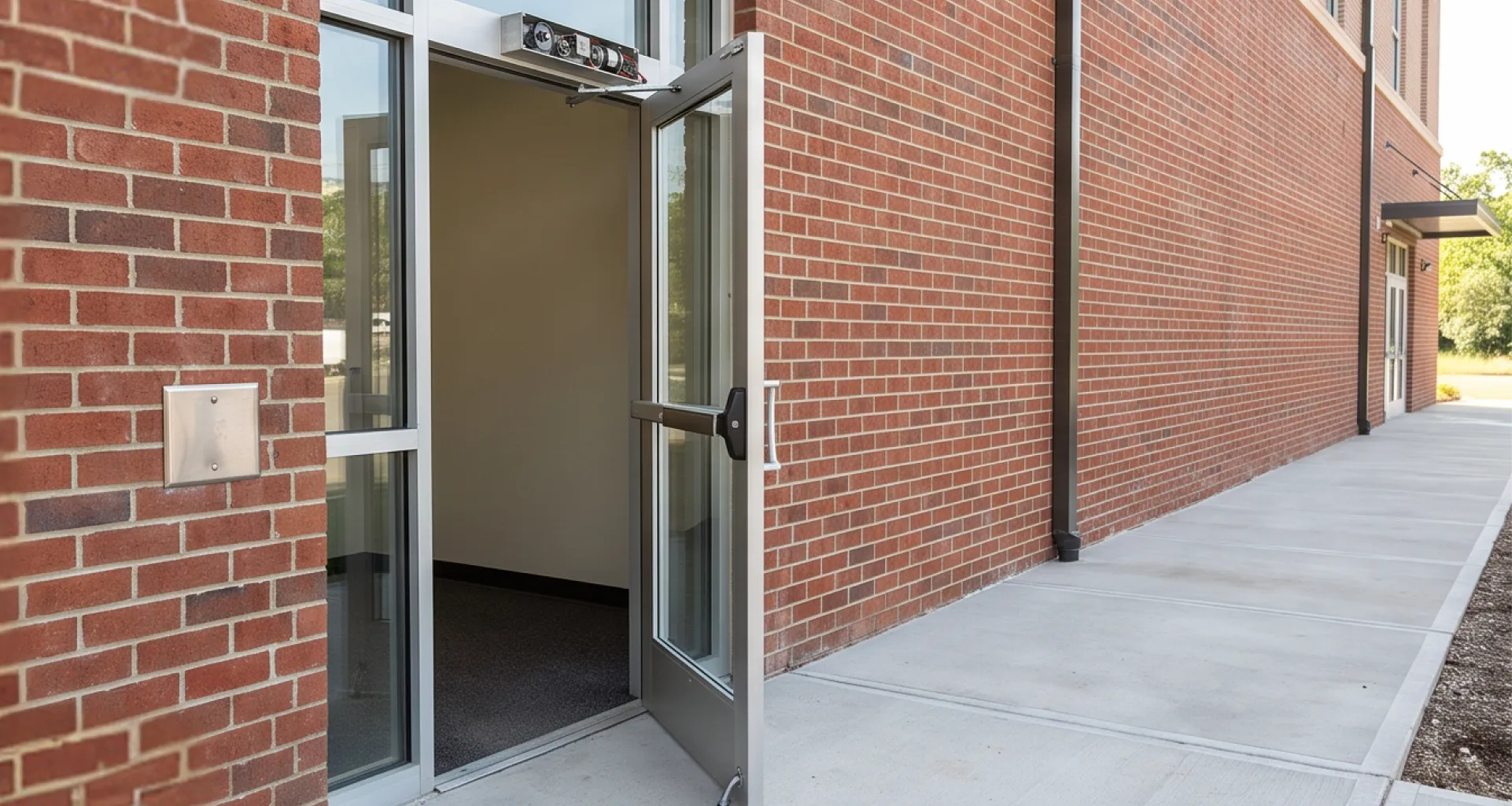
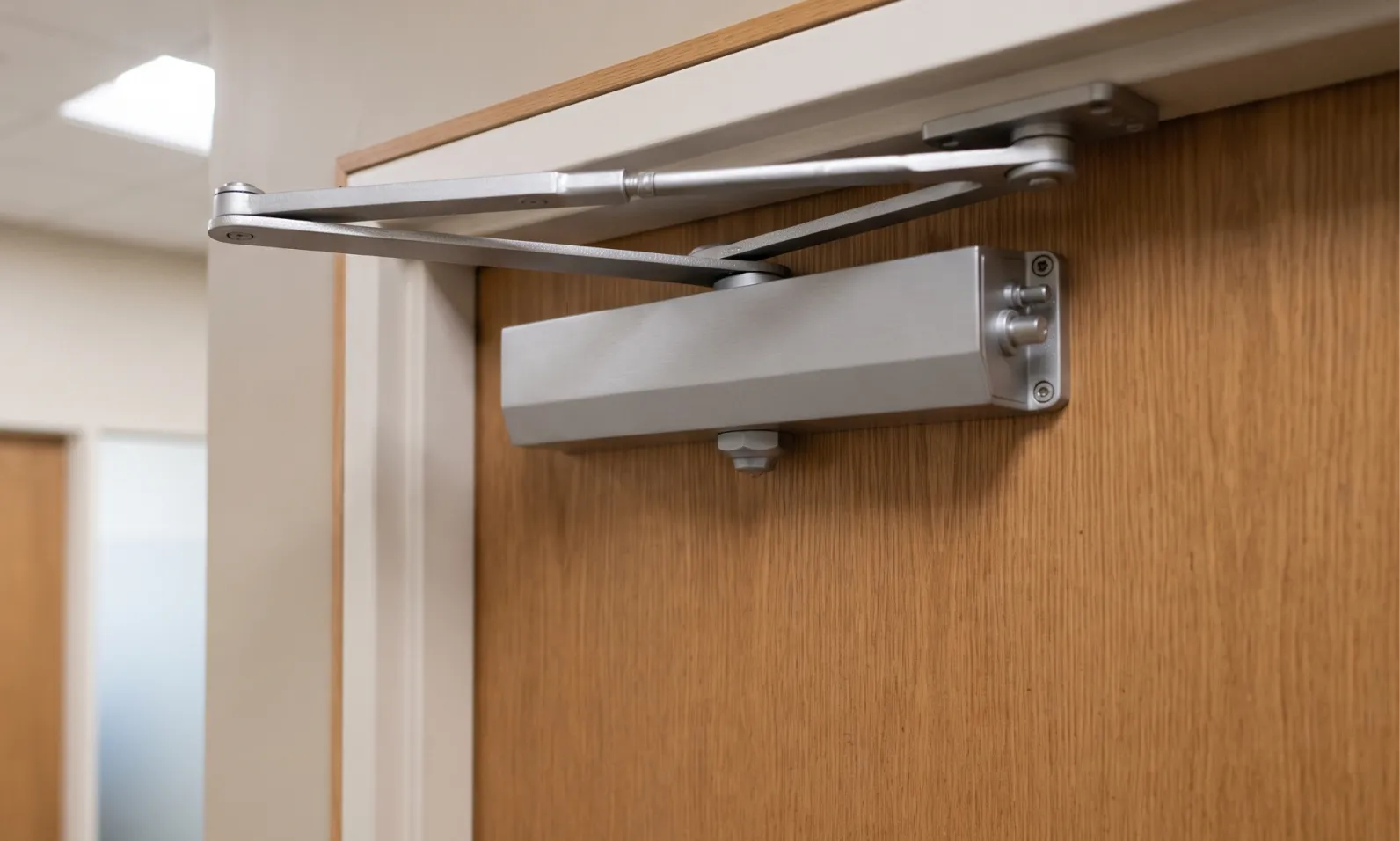
We install overhead low-energy swing operators on new and existing doors, with wall-mounted or bollard-mounted actuators positioned to meet approach and reach requirements. The operator is sized to the door leaf and traffic, wired, and then adjusted on site — opening speed, opening force, back-check, and hold-open time all set within the permitted ranges rather than left at factory defaults.
Low-Energy Door Operators
A low-energy door operator opens slowly and gently under a knowing act — a push plate or a switch — which is why it doesn’t require the guarding and sensing a full-power operator does. It’s the right choice for the vast majority of accessible entrances, interior corridors, and restroom doors.
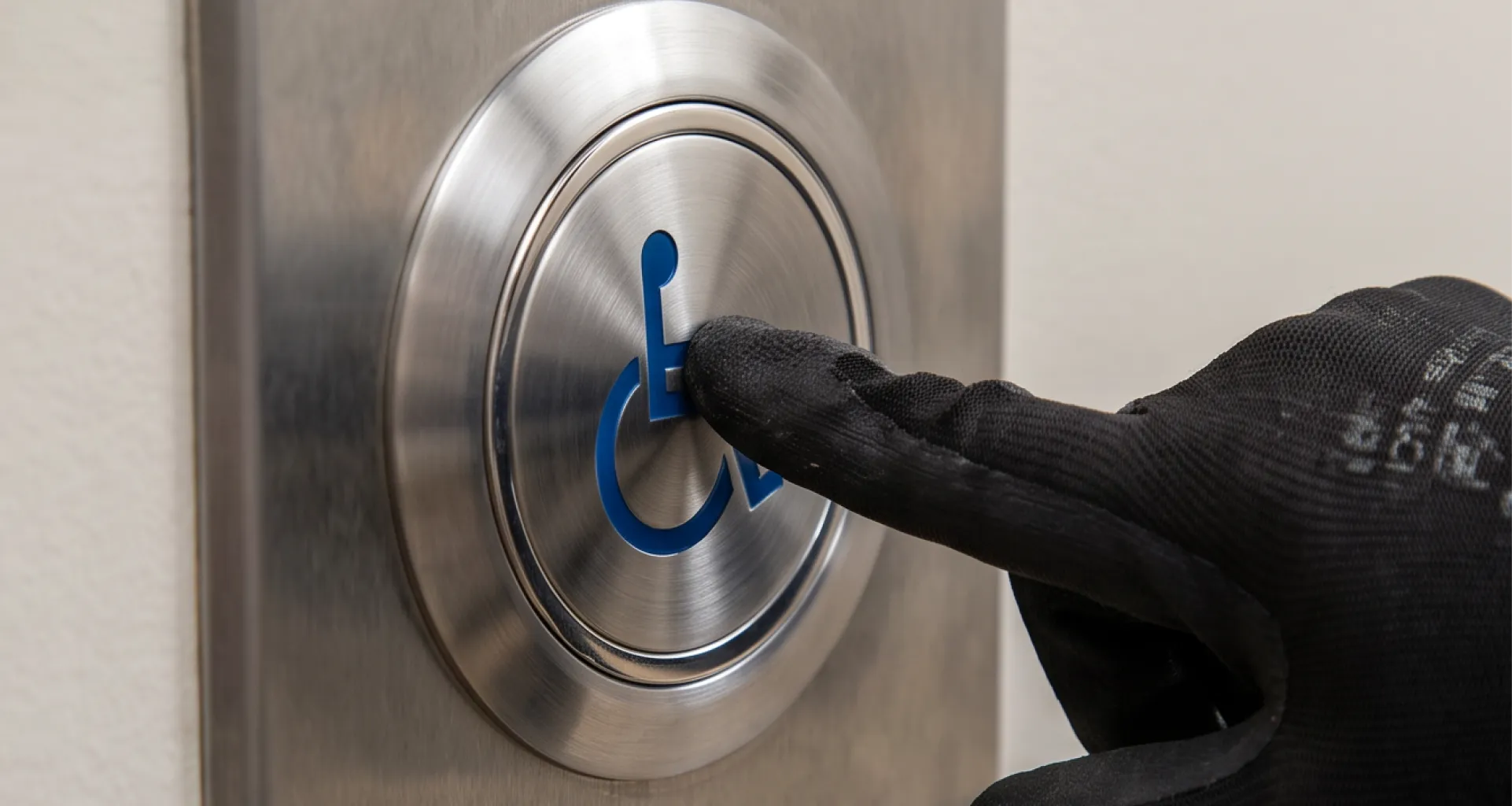
Push-Plate & Push-Button Actuators
We fit stainless steel and blue plastic push plates, jamb-mounted buttons, touchless wave sensors, and bollard actuators, wired hard or wireless. Placement matters as much as the hardware — an actuator that sits inside the door swing is a failed installation no matter how well it’s wired.
ADA Door Repair & Compliance
When an accessible entrance stops working, it isn’t just an inconvenience — it’s an access barrier. We repair operators, arm linkages, control boards, actuators, and wiring, and re-adjust openings that have drifted out of compliance over time.
Common corrections include opening force that has crept too high, doors closing faster than the permitted sweep time, hold-open times that have shortened, actuators that have stopped transmitting, and arms that bind or overrun.
ADA Compliance Surveys
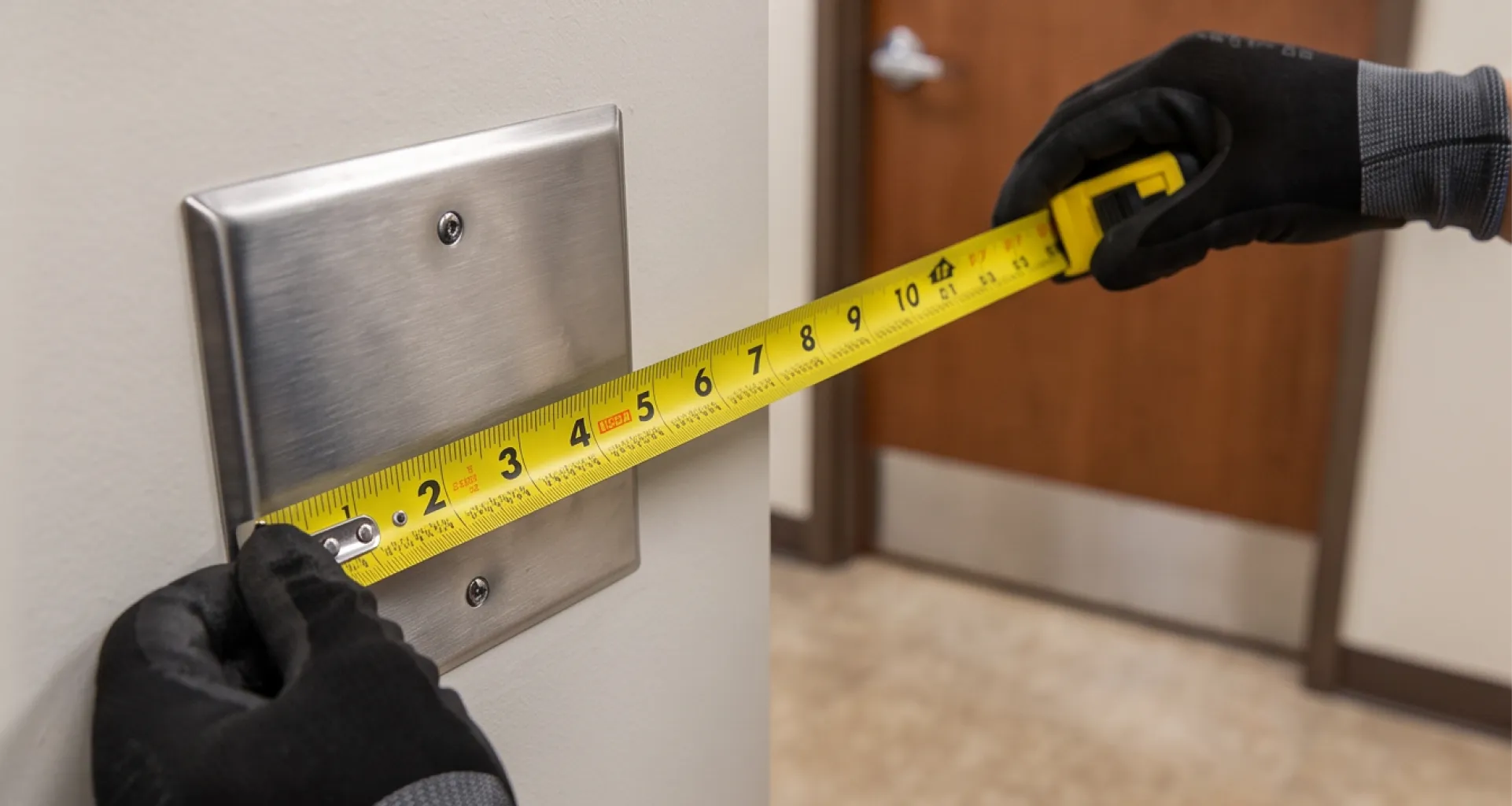
If you’re not sure where your entrances stand, we survey them and tell you. Each opening is measured and tested against the applicable requirements, and you get a written record of which openings comply, which don’t, and what each one needs.
A survey covers actuator mounting height and setback, clear approach and manoeuvring clearance, opening and closing force, opening speed and sweep time, hold-open duration, threshold height, and door hardware operability.
Where ADA Door Operators Are Required
- Primary public entrances to commercial and public buildings
- Medical, dental, and healthcare facilities
- Schools, colleges, and libraries
- Government and municipal buildings
- Restrooms and interior doors on accessible routes
- Multi-family common entrances and amenity spaces
How We Work
- Survey the entrance. Door weight, swing, approach clearance, power availability, and actuator positions.
- Specify and install. Operator sized to the leaf, actuators positioned to meet reach and clearance requirements.
- Adjust and test. Force, speed, sweep time, and hold-open set and verified within the permitted ranges.
- Hand over and document. Settings recorded, operation demonstrated, and a written record left with you.
Why Choose A1 Doors Services for Accessible Entrances
- Operators adjusted and verified on site, not left at factory settings
- Retrofits onto existing swing doors wherever the leaf and frame allow
- Written survey records you can hand to a building owner or tenant
- Licensed technicians with 15+ years on commercial door hardware
- Same-day response when an accessible entrance goes out of service
Handicap Door Opener Installation Near You
A1 Doors Services installs and services accessible door operators across Austin, Cedar Park, Cypress, Richardson, and Sherman, TX; Birmingham, AL; and Danbury, Greenwich, Hartford, and New Haven, CT.
Call +(855) 676-0881.
Our Services
Frequently Asked Questions
What’s the difference between a low-energy and a full-power operator?
A low-energy operator opens slowly under a knowing act — a push plate or button — and doesn’t need the guarding a full-power operator requires. Full-power operators open faster, usually on motion detection, and need additional safety sensing and guarding.
Can an operator be added to an existing swing door?
In most cases, yes. We check the leaf weight, frame condition, header space, and power availability, then retrofit an overhead operator and actuators without replacing the door.
How high should an ADA push plate be mounted?
Within the reach range required by the standards and outside the door swing, with clear floor space at the actuator. We measure and set each one on site rather than working to a single default height, because approach direction changes the answer.
Our operator works but the door feels heavy — is that a problem?
It can be. Opening force is a measurable requirement, and operators drift out of adjustment over time. We test the force and reset it.